Krisp launches Voice Translation SDK to add real-time multilingual calls to CX
Krisp's Voice Translation SDK lets contact centers run two-way, real-time translation in 60+ languages on Windows, macOS and web apps, production-tested since 2025.
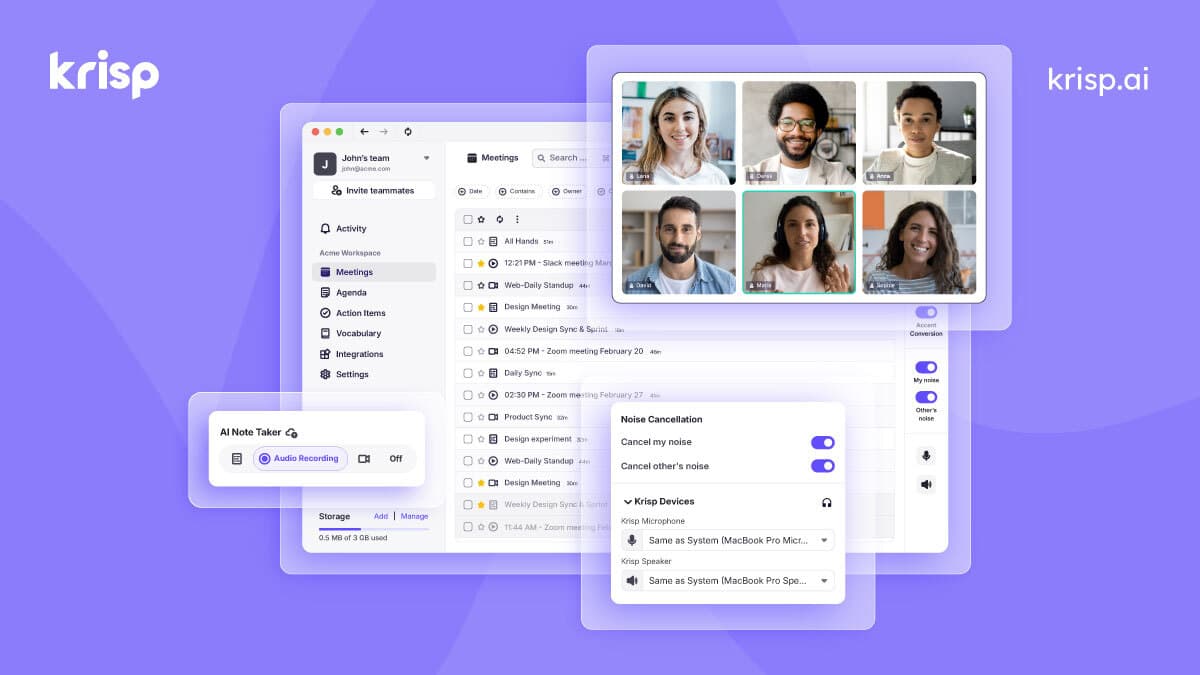
Krisp announced a Voice Translation SDK that enables customer-experience platforms and contact centers to embed real-time, two-way voice-to-voice translation supporting more than 60 languages into Windows, macOS and web applications. The company said the SDK has been live in production CX environments since 2025 as part of its Call Center AI platform and is now available for developers to explore and request access.
SAN FRANCISCO, February 18, 2026. In a release, Krisp framed the move as a direct response to the operational friction created by language barriers in global support. “In global customer experience, every language barrier directly impacts speed and customer satisfaction,” said Davit Baghdasaryan, Co-Founder and CEO of Krisp. “Real-time voice translation has to work inside live production environments at scale. By making Voice Translation available as an SDK, we’re enabling CX platforms to embed multilingual voice directly into live systems. Removing language friction changes the economics of global support.”
Krisp positions the SDK as engineered for synchronous, live conversations rather than offline or text-first translation workflows. The company says the technology balances latency, accuracy and conversational continuity to preserve natural turn-taking, and that it is designed to recognise diverse accents and operate in noisy, real-world environments. Krisp explicitly warns that reducing latency too aggressively can compromise context and increase errors, while waiting too long can disrupt conversational flow.
Developer-facing resources include a Playground in the Krisp SDK portal and a simple JavaScript example demonstrating real-time translation from English to Spanish. Integrations require developers to request SDK access through Krisp’s Developers page. The company also says translation quality is continuously evaluated across languages and domains using a combination of automated metrics and human review, with detailed results available to customers on request.
Krisp is best known for background noise suppression and voice enhancement technologies, and the company emphasised that the Voice Translation capability was production-tested in large-scale CX deployments prior to the SDK release. Krisp’s organization page on LinkedIn lists 48,566 followers, and the product announcement has been circulated through its corporate channels.

The practical implications are straightforward for customer-service operations: real-time automated translation could speed resolution times and reduce reliance on human interpreters in multilingual support, altering staffing models and outsourcing patterns for global contact centers. For consumers, the technology promises faster access to native-language support during live calls, but its real-world accuracy across diverse accents, dialects and high-noise conditions remains unspecified in the company materials.
Key details not disclosed in Krisp’s announcement may shape adoption. The company did not publish latency figures, benchmark accuracy metrics, a complete list of supported languages, pricing or licensing terms, named customer references, whether processing is cloud-based or on-device, or any compliance and data-handling specifics such as GDPR, CCPA or sector-specific protections. The SDK’s availability on mobile platforms was also not mentioned.
For developers and CX leaders considering the SDK, the next steps are to request access via Krisp’s Developers page and test the Playground demo, while evaluating performance, privacy controls and commercial terms before replacing human interpreters in live, regulated, or high-stakes support scenarios.
This article was produced by Prism’s automated news system from verified source data, official records, and press releases, then run through automated quality and moderation checks before publishing. The system is built and supervised by the people who set the standards it runs under. Read our full AI policy.
Did this article answer your question?