LA Chargers spotlight service dogs in training through Pup program
The Chargers turned a veteran’s surprise with Storm into a public look at how few service dogs make it through years of training.
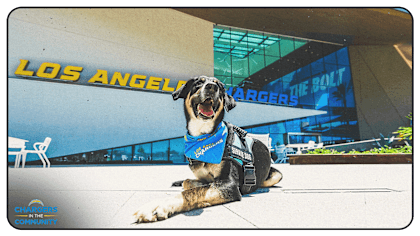
The Los Angeles Chargers surprised Marcus, a military veteran and Los Angeles County firefighter, with Storm, the dog the team had spent a year training in local prisons to become his service animal. The reveal put a human face on a service-dog pipeline that depends on rescue groups, incarcerated trainers and nonprofit sponsors long before a dog ever reaches a veteran or other person with a disability.
Since 2020, the Chargers have used their Chargers Pup program to spotlight a service dog in training with local partners. One of those partners, Mission Hills-based Paws for Life K9 Rescue, has run a prison training program since 2014, pairing rescue dogs with incarcerated individuals for rehabilitation and training. The team has used the program to follow dogs through months of work rather than treating service animals as a finished product at the moment of placement.
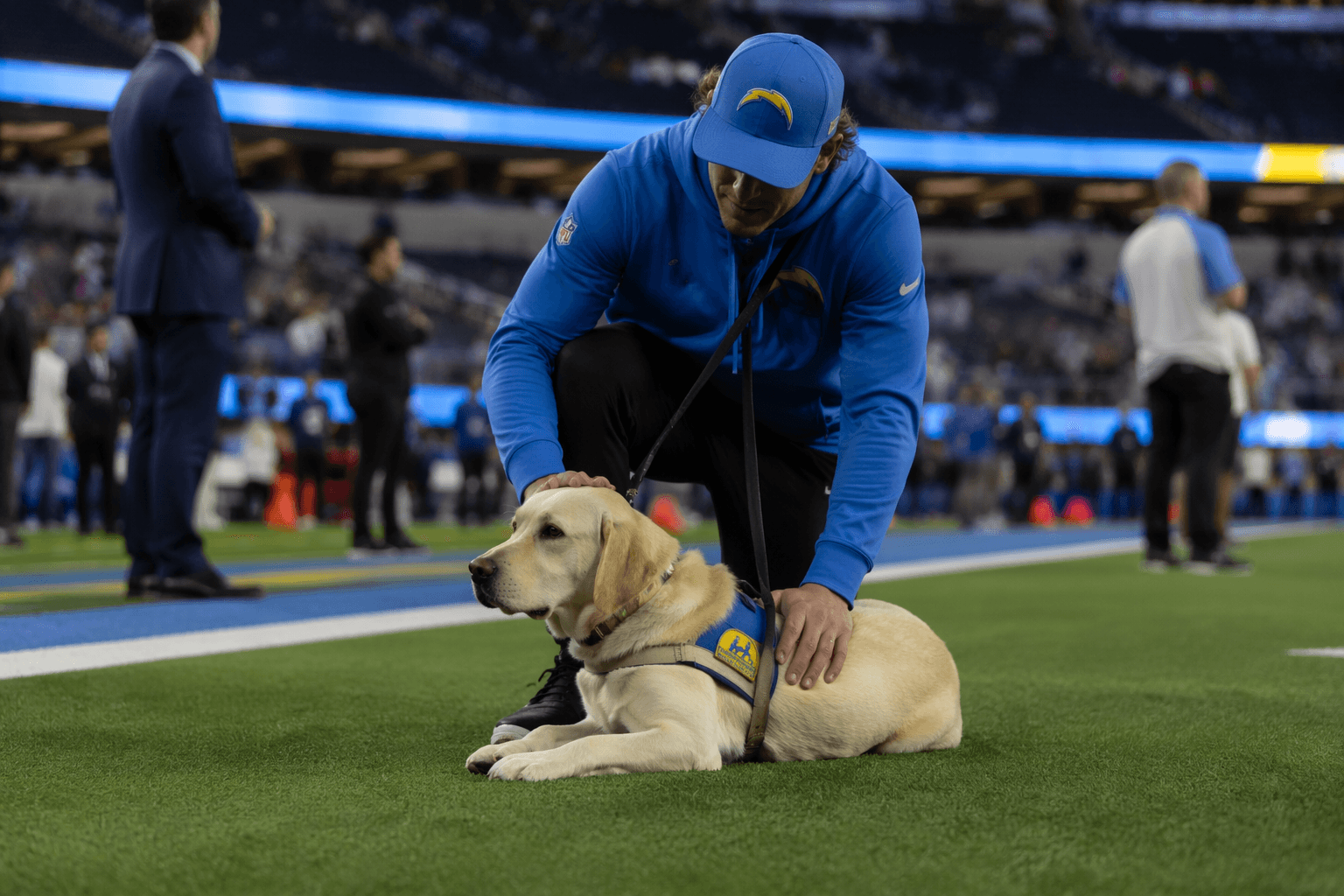
That long runway was on display in 2023, when the Chargers said they were entering their third year with Lazy Dog Restaurants and Paws for Life K9 Rescue to train River, a three-year-old Golden Retriever rescued from LA Animal Services’ East Valley Animal Shelter. The dog was named in honor of Philip Rivers and was being prepared for placement with a military veteran with PTSD. River and Storm both reflected the same point: service dogs are not just companions, but highly trained working animals intended to support people facing disability, trauma and daily access barriers.
Federal and state rules help explain why the training matters. The ADA defines a service animal as a dog individually trained to do work or perform tasks for a person with a disability, and businesses are generally required to allow service animals in public spaces even when they have a no-pets policy. California’s Department of Rehabilitation says the ADA does not require a vest, while the state attorney general notes that people authorized to train service dogs may take dogs out for training purposes.
Canine Companions, another nonprofit tied to the Chargers’ broader service-dog effort, says it has placed service dogs with more than 8,500 people with disabilities. That scale shows both the reach of the work and its limits: every placement depends on training that can take years, making sports visibility useful for awareness but not a substitute for the supply of trained dogs. Heather Birdsall, the Chargers’ vice president of community relations, has helped steer a program that links veteran support, animal welfare and public education in one of the rare settings where fans can watch the process unfold in real time.
This article was produced by Prism’s automated news system from verified source data, official records, and press releases, then run through automated quality and moderation checks before publishing. The system is built and supervised by the people who set the standards it runs under. Read our full AI policy.
Know something we missed? Have a correction or additional information?
Submit a Tip