La Grande blood drive collects record 309 units; upcoming local dates
Residents learn how La Grande’s record blood drive helped regional supply and where to sign up for March donation opportunities.
1. Record turnout: 309 units collected at the La Grande drive
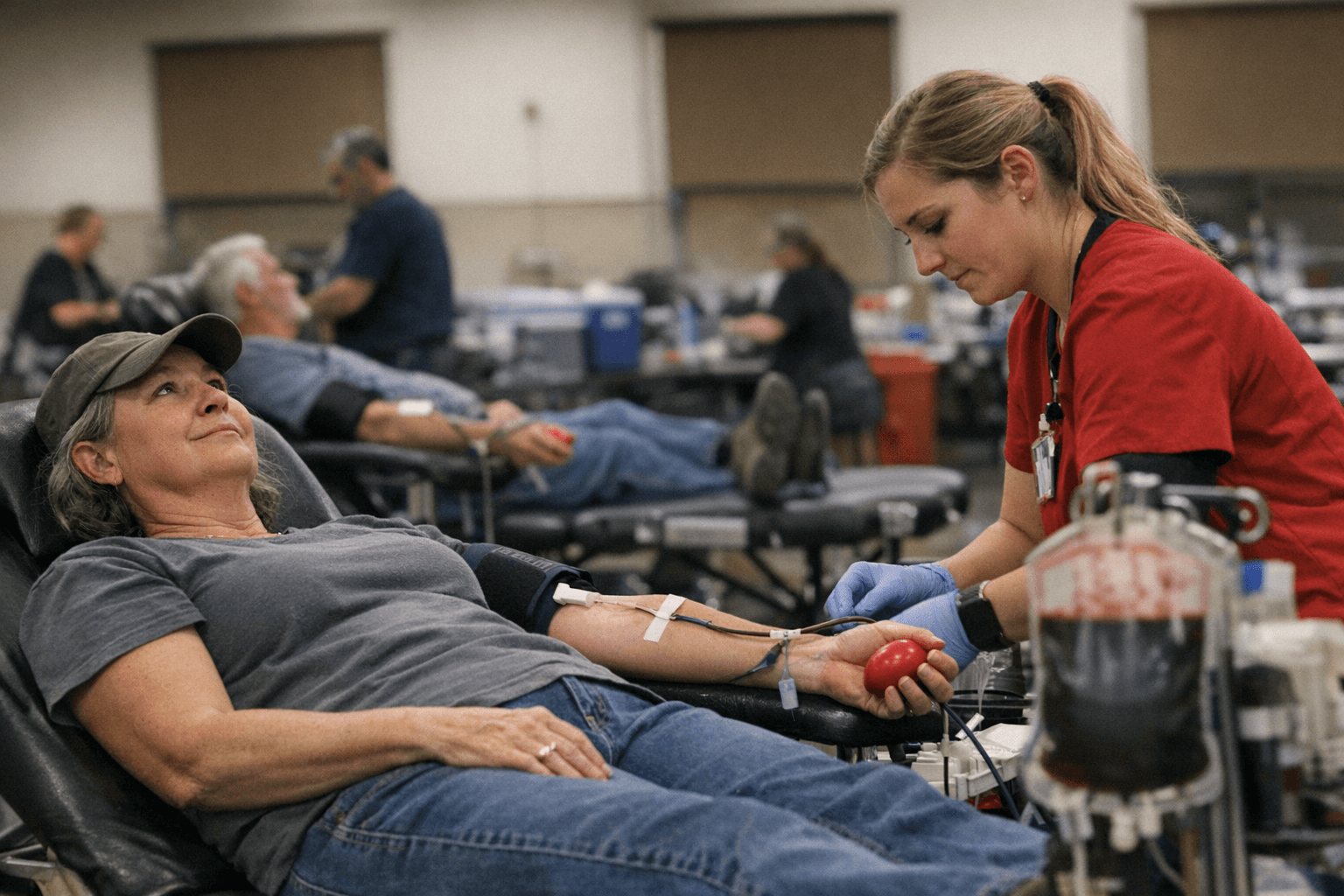
The community blood drive in La Grande on January 16, 2026, collected a record 309 units of blood, a turnout local coordinators called exceptional. That total is higher than typical winter drives in the region and gives hospitals and clinics across Union County and neighboring areas a stronger cushion for routine surgeries and emergency needs. For a rural health network where every unit matters, this surge makes a measurable difference in local preparedness.
2. Local coordination and leadership
Sheldon Strand, a Community Blood Draw Coordinator, played a central role in organizing the event and praised Red Cross staff and volunteers for their work. His acknowledgment highlights the partnership between local coordinators and the Red Cross that made the record collection possible. This kind of local leadership is often the difference between an average turnout and a community record.
3. Efficient operations and low donor wait times
Organizers reported that staff and volunteers kept donor wait times low, which helped streamline the flow of donors throughout the day. Efficient check-in, clear donor routing, and fast post-donation monitoring reduced bottlenecks and encouraged more people to give without long disruptions to their day. For busy residents, knowing a drive runs smoothly removes a common barrier to donating.
4. Volunteer contributions and community spirit
Volunteers from around Union County staffed registration, snacks, and observation areas, reflecting a strong local commitment to civic health. Volunteer efforts not only assisted the Red Cross team but also created that hometown atmosphere that encourages repeat donors. The turnout underlines a culture of mutual aid in La Grande and surrounding towns, where neighbors step up for each other’s health needs.
5. Regional impact on blood supply
The higher-than-usual collection strengthens the regional blood supply, helping area hospitals manage elective surgeries, trauma cases, and ongoing patient care. In a region where transport times and supply logistics can complicate resupply, local donations reduce dependence on distant distribution centers. This direct contribution supports the resilience of Union County’s health services.
6. What the result says about community support
Beyond the raw numbers, the drive signals deep community support for local healthcare — people responding proactively to help patients they may never meet. A successful local drive builds public confidence in health infrastructure and can motivate employers, faith groups, and civic organizations to host or promote future events. That civic momentum is valuable when sustained over multiple drives through the year.
7. Upcoming local drives and dates to save
Residents who want to follow up can mark their calendars: the next La Grande drive is scheduled for March 17–18, and a Baker City drive follows on March 23–24. These events present fresh chances for those who missed January’s drive or for regular donors to give again after the required interval. Keeping these dates in mind helps Union County maintain momentum from the January success.
8. How to register and the Red Cross tip
To sign up, the Red Cross suggests searching by area code on redcrossblood.org to find local appointments and time slots. That search method makes it easy to see nearby drives and available windows without scrolling through distant events. Early registration helps planners predict turnout and keep wait times low, so signing up before the drive is a practical step.
9. Practical donor tips for Union County residents
Plan to bring a photo ID, eat a healthy meal, and hydrate well before you arrive — those simple steps reduce deferrals and speed recovery after donation. If you haven’t donated recently, check eligibility requirements on the Red Cross site or contact the drive coordinators with questions about medications or travel history. Local employers and community groups sometimes provide time off or incentives; consider coordinating with your workplace to make donating convenient.
10. How neighbors can help even if they can’t donate blood
If you’re unable to give blood, you can still support drives by volunteering, spreading the word on community social channels, or donating snacks and bottled water for donors. Hosting a carpool to the drive or helping publicize March dates through neighborhood groups magnifies impact beyond individual donations. These supportive actions keep the logistical side strong and encourage a steady donor pipeline.
Closing practical wisdom A single well-run drive can ripple through the county’s health system; keeping the momentum from January means talking to your family, booking ahead, and bringing a friend to March’s events. Small preparations — a good meal, your ID, and a quick online sign-up — turn local goodwill into lifesaving inventory for Union County hospitals.
Sources:
Know something we missed? Have a correction or additional information?
Submit a Tip