LA28 executive committee backs Casey Wasserman to remain chair amid scrutiny
LA28’s executive committee upheld Casey Wasserman after an outside review of his ties to Jeffrey Epstein and Ghislaine Maxwell, but city leaders and sponsors press for accountability.
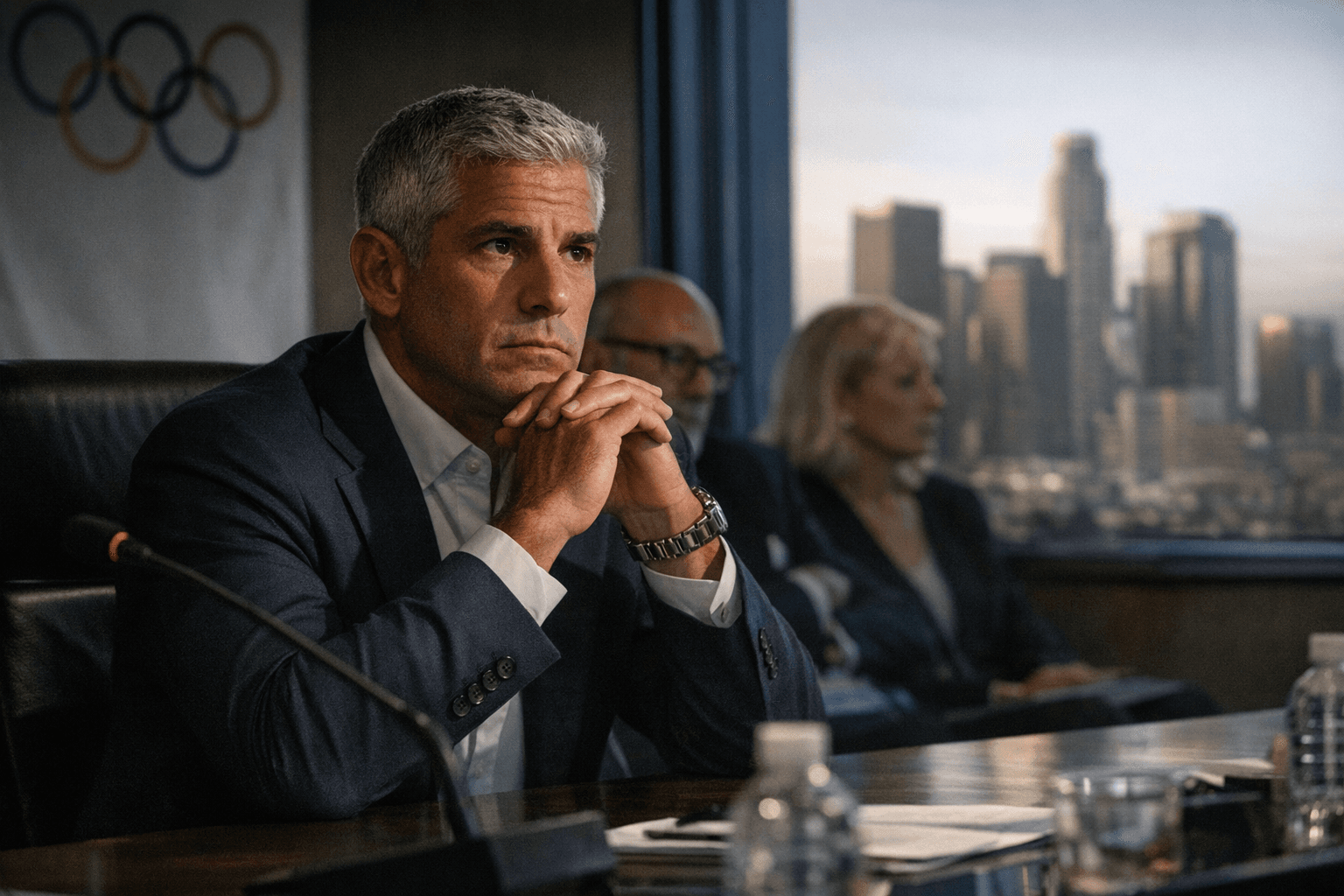
LA28’s small executive committee announced that Casey Wasserman will remain chairman of the Los Angeles 2028 Olympic Organizing Committee after an internal review of his past interactions with Jeffrey Epstein and Ghislaine Maxwell. The committee said it hired outside counsel at O’Melveny & Myers LLP to assist the review, that Wasserman fully cooperated, and that the investigation found his contacts “did not go beyond what has already been publicly documented.”
The committee, described internally as a small subset of the broader 35-member board, laid out a narrow factual account to justify keeping Wasserman in place. It said that “twenty-three years ago, before Mr. Wasserman or the public knew of Epstein and Maxwell’s deplorable crimes, Mr. Wasserman and his then-wife flew on a humanitarian mission to Africa on Epstein’s plane at the invitation of the Clinton Foundation. This was his single interaction with Epstein. Shortly after, he traded the publicly-known emails with Maxwell.” The panel concluded that “based on these facts, as well as the strong leadership he has exhibited over the past ten years, Mr. Wasserman should continue to lead LA28 and deliver a safe and successful Games,” and it said it had “took ‘allegations of misconduct seriously.’”
The announcement arrived as Los Angeles political figures pushed for greater scrutiny. Councilmembers Monica Rodriguez and Imelda Padilla submitted a resolution calling for “accountability” for LA28 leadership. Rodriguez criticized the private handling of the matter, saying: “Recent reporting detailing Casey Wasserman’s documented communications with Ghislaine Maxwell, along with accounts that he has privately minimized the seriousness of these revelations and shifted blame for the fallout, raises serious concerns about accountability at the highest levels of LA28.”
The decision to retain Wasserman keeps intact the leadership continuity of the organizing committee at a delicate moment. Commercially, the episode has already produced tangible consequences: a local outlet reported that Wasserman’s sports marketing and talent-management company “continues to lose clients over his emails to Ghislaine Maxwell.” Those departures, even if not detailed publicly, signal heightened reputational risk for a firm whose business depends on trust with brands, talent and sponsors.
Beyond the immediate personnel decision, the case highlights larger industry and civic dynamics. Mega-sport events depend on layered relationships with corporate partners, municipal authorities and the public. When allegations touch the personal networks of top executives, sponsors reassess exposure and city officials escalate demands for transparency. For Los Angeles, the stakes extend to economic projections for the Games, investor confidence, and the global reputation of the city as a host.
Culturally, the resurfacing of Epstein-era documents continues to reshape expectations about accountability in elite institutions. For many observers, the committee’s finding that interactions were limited to already public exchanges will not fully satisfy those asking for a fuller accounting of decision-making and influence. The council resolution and reported sponsor departures suggest pressure will persist until more documentation or independent findings are released.
The immediate next steps are clear: the city council’s resolution will force a public airing of concerns, and stakeholders will press for the outside counsel’s findings or a fuller accounting from LA28. Retaining Wasserman preserves operational continuity, but it does not end the reputational and political reverberations that will shape the lead-up to the 2028 Games.
This article was produced by Prism’s automated news system from verified source data, official records, and press releases, then run through automated quality and moderation checks before publishing. The system is built and supervised by the people who set the standards it runs under. Read our full AI policy.
Did this article answer your question?
.jpg&w=1920&q=75)