LaGuardia Pilots Warned of Dangerous Close Calls for Years Before Fatal Crash
A controller said "I messed up" after two pilots died when a fire truck crossed an active LaGuardia runway — but pilots had been filing urgent safety warnings for years.
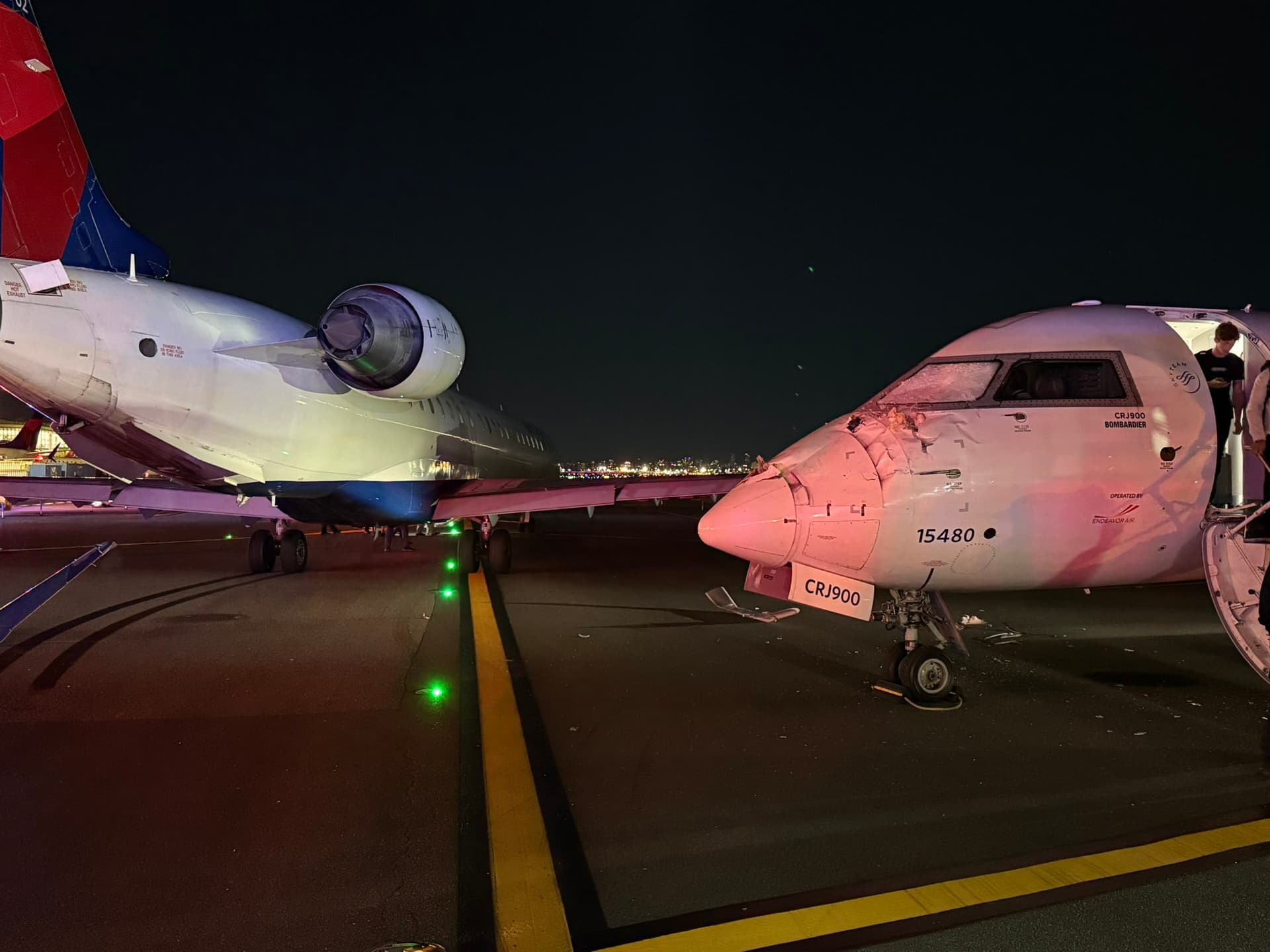
An Air Canada regional jet landing at one of the country's busiest airports slammed into a fire truck at more than 100 miles per hour on Sunday night, killing both pilots and setting off a federal investigation that has placed years of unheeded safety warnings into sharp relief.
The two pilots killed were identified as Antoine Forest and Mackenzie Gunther. Two pilots were killed and 41 passengers injured in the collision. The Air Canada Express CRJ-900, operated by Jazz Aviation as Flight 4686, collided with a fire truck while landing. The fire truck was being deployed to a United Airlines plane that had an aborted takeoff, and it crossed runway 4 just as the Air Canada jet touched down. Eighteen minutes after the collision, one controller appeared to blame himself in a conversation with a pilot who witnessed it. "That wasn't good to watch," the pilot said. "Yeah, I know. I tried to reach out to them," the distraught controller said. "We were dealing with an emergency earlier. I messed up."
The crash marked the first fatal accident at LaGuardia Airport in more than three decades, but the warning signs had been accumulating long before Sunday night. Pilots filing reports with NASA's Aviation Safety Reporting System had spent years documenting near-misses at the Queens airport with increasing alarm. Last summer, one pilot submitted a report about a close call when air traffic controllers failed to provide appropriate guidance about multiple nearby aircraft, writing two words that now carry devastating weight: "The pace of operations is building in LGA (LaGuardia). The controllers are pushing the line," the pilot wrote. "On thunderstorm days, LGA is starting to feel like DCA did before the accident there," a reference to the January 2025 mid-air collision over the Potomac River that left 67 dead and brought scrutiny to the industry.
In December 2024, a report to the NASA database described how a plane came dangerously close to another aircraft on the ground because of inaccurate instructions from air traffic controllers. Five months before that, a pilot had reported a near-collision after being cleared to cross a runway while another plane was landing at the same time. In total, at least a dozen such reports were filed in the past two years alone, while a separate review of records dating back three decades uncovered dozens more chronicling the same recurring hazards at the same airport.
The incidents were not confined to close calls on paper. In October, a person was hospitalized after two Delta Airlines planes collided while taxiing at LaGuardia. Weeks before the fatal Sunday crash, during the investigation into the 2025 midair collision between an Army Black Hawk helicopter and an American Airlines regional jet over the Potomac River, the NTSB found the soldiers in the helicopter didn't hear all the directions given by air traffic control due to a problem with the frequency, a finding that underscored how communication failures had already proven lethal. A Boeing 737 nearly collided with a Boeing 777 at Newark Liberty International Airport in the days before the LaGuardia crash, and an Air Canada flight came dangerously close to striking another Boeing 777 at John F. Kennedy International Airport on March 12.
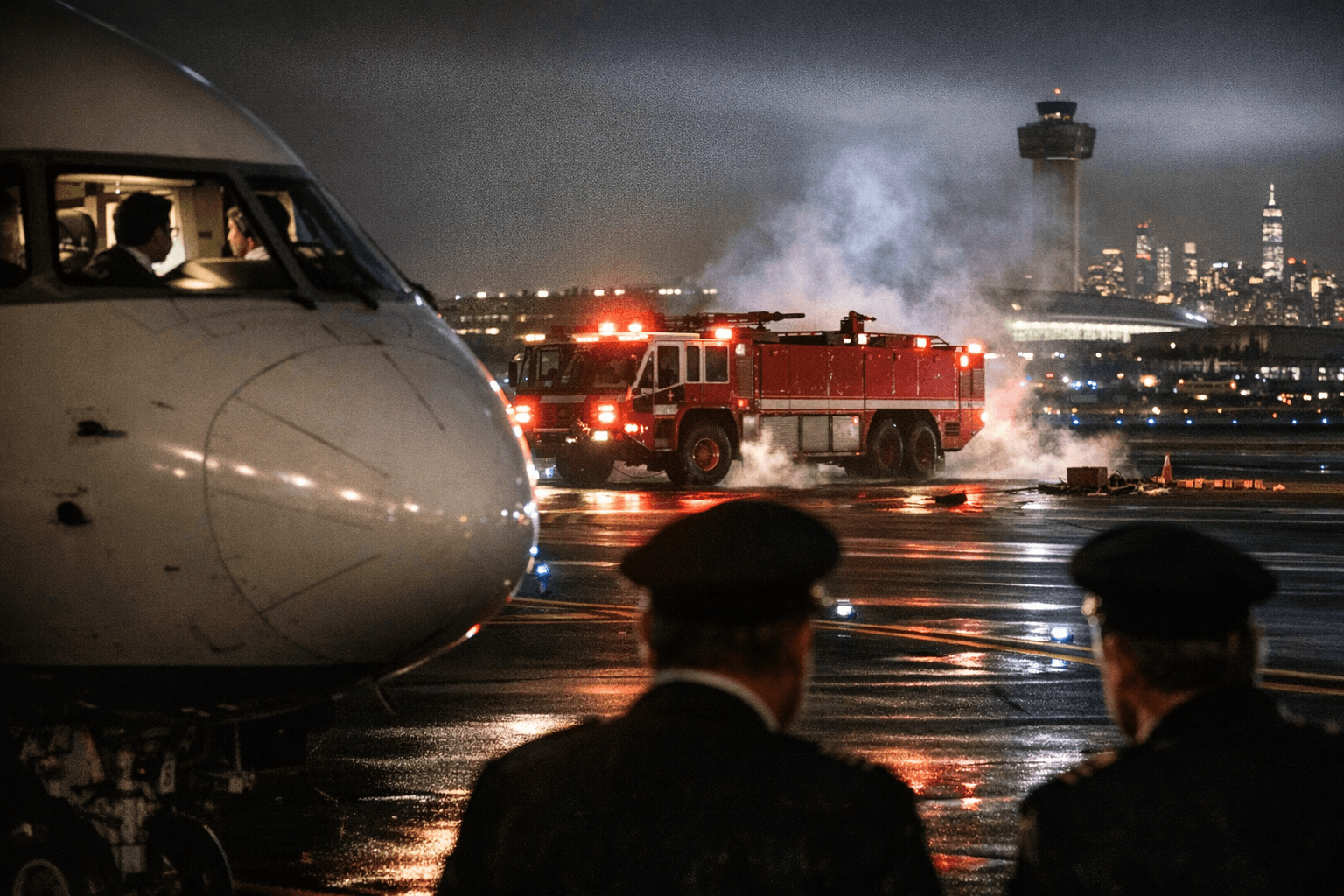
Because of heavy traffic and limited runway space, LaGuardia is known for being a congested airport, where takeoffs and landings are tightly scheduled and closely coordinated by air traffic control. The airport's two 7,000-foot runways cross each other in a compact footprint, creating a configuration that leaves little margin for error. LaGuardia has a surface detection system, the ASDE-X, that allows air traffic controllers to track aircraft and vehicles on the surface, but the NTSB confirmed it did not generate an alert before the crash. The fire truck did not have a transponder, meaning controllers were relying on less precise radar "blips."
NTSB Chair Jennifer Homendy said the agency will investigate whether the number of people on duty for that midnight shift was a factor in the crash. There were two people in the tower cab at the time of the collision: the local controller and the ground controller. Homendy said the incident likely involved multiple failures, not just one mistake.
Transportation Secretary Sean Duffy described the collision as "incredibly sad and troubling" and said the NTSB is investigating, declining to elaborate on what went wrong. He urged Congress to approve more funding to upgrade air traffic control equipment. LaGuardia has a staffing goal of 37 controllers; it currently has 33, with seven more in training, Duffy said. The NTSB said it has concerns about air traffic controllers who work the midnight shift taking on extra work in an airspace as busy as LaGuardia's.
The NTSB is combing through wreckage and collecting data in the first days of an investigation that will take a year or longer. The pilots who filed those ASRS reports had a simpler timeline in mind. One of them wrote "Please do something." Nobody did.
This article was produced by Prism’s automated news system from verified source data, official records, and press releases, then run through automated quality and moderation checks before publishing. The system is built and supervised by the people who set the standards it runs under. Read our full AI policy.
Did this article answer your question?

