LaGuardia Runway Safety System Failed to Alert Before Plane Crash, NTSB Says
LaGuardia's runway warning system never fired before an Air Canada jet struck a fire truck Sunday night — because the truck had no transponder. Two pilots are dead.
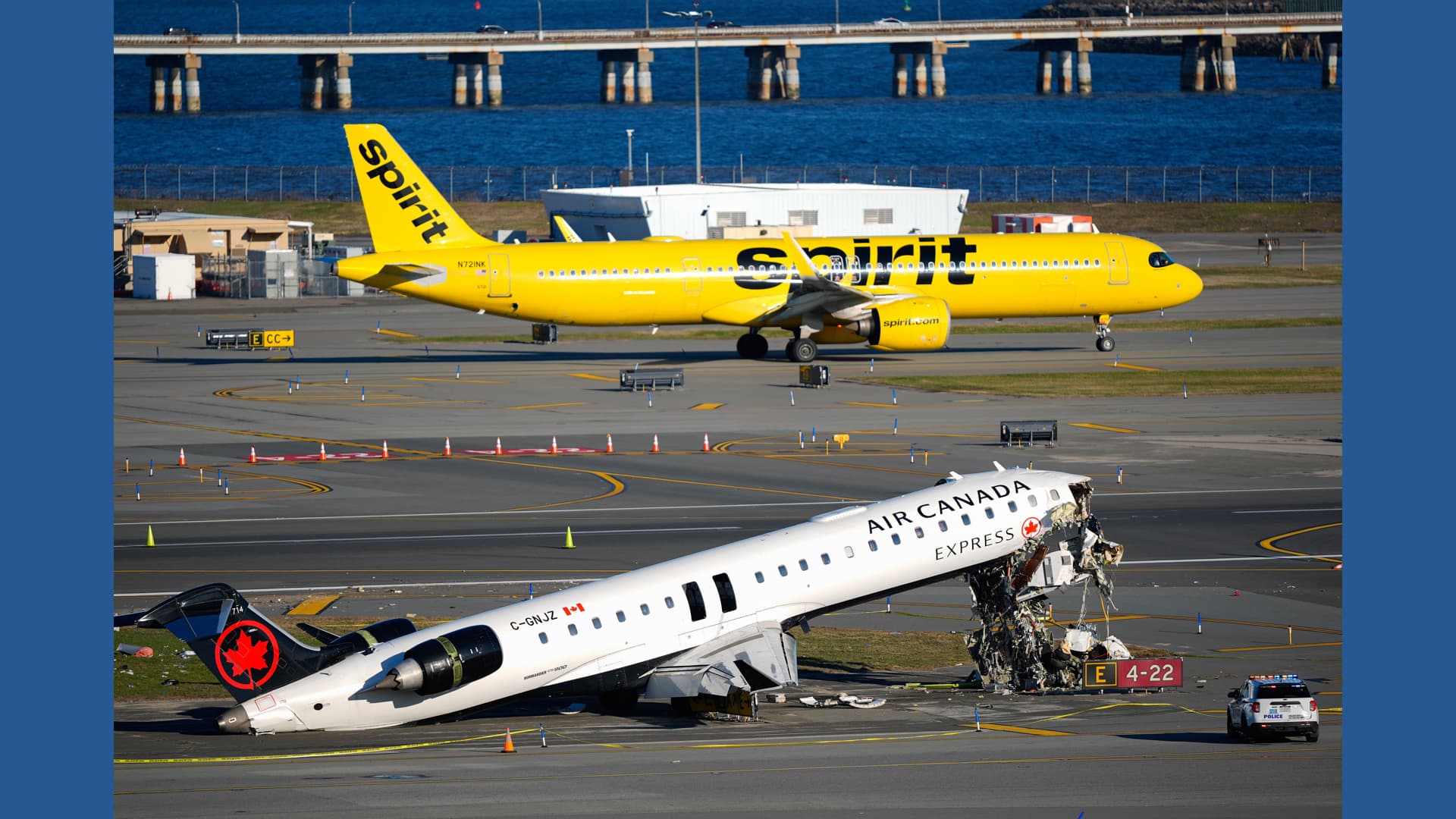
A runway warning system failed to sound an alarm moments before an Air Canada jet and a fire truck collided while the plane was landing at New York's LaGuardia Airport, and investigators revealed Tuesday that a missing piece of equipment on the truck explains why: the fire-rescue truck was not equipped with a transponder, the technology that helps air traffic controllers identify and track vehicles on the airfield.
LaGuardia's surface detection equipment, known as ASDE-X, didn't generate an alert ahead of the collision "due to the close proximity of vehicles merging and unmerging near the runway," which resulted "in the inability to create a track of high confidence," NTSB Chairwoman Jennifer Homendy said. The truck is not required to have a transponder, but Homendy noted that trucks do at some other airports.
The pilots killed were Captain Antoine Forest and First Officer Mackenzie Gunther. The collision happened shortly after the Air Canada flight, which was carrying four crew members and 72 passengers, touched down from Montreal around 11:45 p.m., according to Port Authority Executive Director Kathryn Garcia. The pilot and copilot, who died in the first fatal crash at LaGuardia in 34 years, were both based out of Canada. Seneca Polytechnic in Toronto confirmed that Gunther, who was the flight's first officer, died in the crash; the college said he graduated with a degree in aviation technology in 2023 and joined Jazz after graduation.
One controller cleared the truck to cross the runway just 20 seconds before the collision, when the plane was a little more than 100 feet in the air. The fire truck was crossing the tarmac just before midnight after being given permission to check on another plane reporting an odor onboard. Before the collision, an air traffic controller can be heard on airport communications frantically telling the fire truck to stop. Audio captured a controller shouting "Stop, stop, stop, truck 1 stop, truck 1, stop," and later a distraught voice saying, "We were dealing with an emergency earlier, and I messed up."
NTSB Chair Homendy said there were two people in the air traffic control tower cab at the time of collision: the local controller and the controller in charge. Two controllers is "the standard operating procedure for LaGuardia for the midnight shift," she said at a Tuesday news conference. She said the NTSB has been concerned about fatigue from the midnight shift in past investigations, but stressed that there is no evidence of fatigue so far in this case.
The plane, which was operated by Jazz Aviation, struck a rescue-and-firefighting vehicle responding to another aircraft. The collision killed the plane's pilot and copilot and injured dozens of people, including a flight attendant who was thrown from the plane while still strapped to her seat. Of the 76 passengers and crew on the Air Canada flight, 39 were immediately sent to hospitals in the area with varying degrees of injuries. Air Canada said Tuesday afternoon that 35 passengers did not require immediate medical attention and were able to depart for their final destination, while six people remain in the hospital.
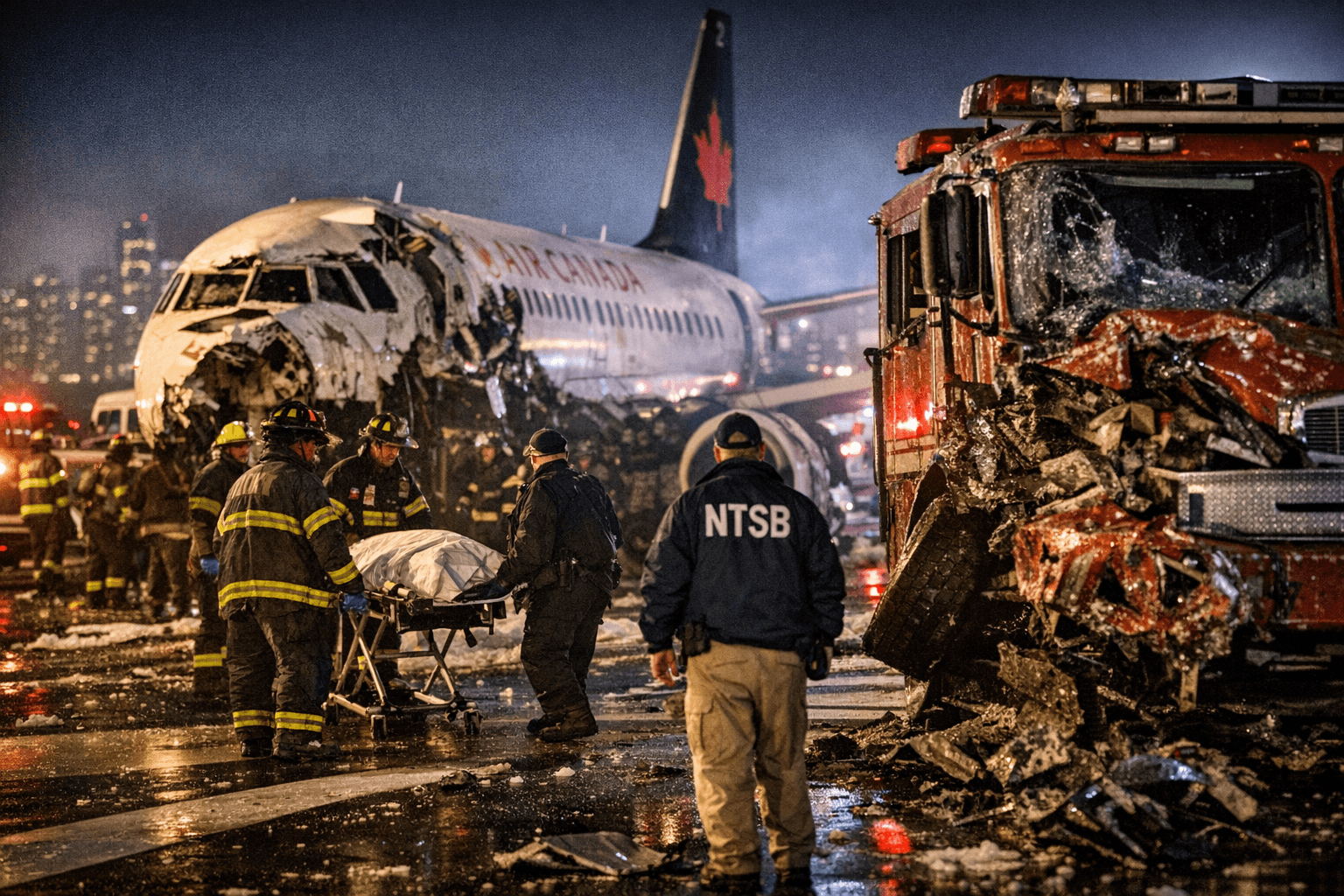
Authorities recovered the plane's cockpit and flight data recorders by cutting a hole in the aircraft's roof. There is no indication yet whether the pilots saw the fire truck on the runway, Homendy said, noting that the NTSB is still analyzing the cockpit voice recorder.
Homendy stressed that the NTSB "rarely, if ever, investigates a major accident where it was one failure" — usually "many, many things" went wrong. "Our aviation system is incredibly safe because there are multiple, multiple layers of defense built in to prevent an accident," she said.
While flights resumed Monday at LaGuardia, the runway where the collision happened was still closed. About one quarter of the airport's flights were canceled Tuesday, with significant delays averaging more than four hours. The FAA has set a runway reopening target of 7 a.m. Friday, according to federal officials.
Homendy said the investigation will look at whether the fire truck should have had a transponder, which it would have needed to trigger an alarm as part of the runway warning system. She said, in her opinion, it should have had one. "Even though we don't have a recommendation, air traffic controllers should know what's before them — whether it's airport surface or in the airspace," she said. "They should have that information to ensure safety." Homendy made clear that's not an official NTSB recommendation — "but it could be.
Know something we missed? Have a correction or additional information?
Submit a Tip