Lakeima Thomas sues Dollar General over hazardous liquid slip in South Carolina
Lakeima Thomas filed a personal-injury suit on March 3, 2026 in Orangeburg County, alleging a hazardous liquid at Dollar General #679 remained on the floor and caused her to slip.
A complaint filed March 3, 2026 in Orangeburg County, South Carolina names Lakeima Thomas as plaintiff and Dollar General Corporation and Dollar General #679 as defendants, alleging a hazardous liquid remained on the store floor and led to a slip-and-fall incident. The filing, listed as a new personal-injury suit in county court records, does not include a case number or the store address in the available summary.
The complaint’s publicly reported summary states only that a hazardous liquid remained on the floor and caused the fall; it does not describe Thomas’s injuries, the date and time of the incident, the damages sought, or whether surveillance video or incident reports exist. Those omissions leave core factual questions unresolved, including whether Dollar General had actual notice of the spill or how long the hazard was present before the alleged fall.
Legal commentary on South Carolina premises-liability law highlights why those gaps matter. Jordanlawcenter notes that proving duration is critical, writing, "For decades, South Carolina courts have made it clear that a jury is not allowed to speculate or guess as to how long a hazard might have been present." The same analysis explains the duty owed to an invitee: "Concerning an invitee, South Carolina requires the property owner to exercise the duty of 'reasonable or ordinary care' for the invitee's safety." Jordanlawcenter cited a recent Graham v. Wal-Mart Stores East, LP example in which surveillance footage showed "nearly two dozen individuals" walking through the same area "in the 20 minutes before the plaintiff's fall," no other person slipped, video "did not show any liquid substance in the aisle," and three Wal-Mart employees testified they did not see a spill, prompting a judge to dismiss the claim when the plaintiff could not establish what the liquid was or how long it had been present.
Evidence commonly relied on in these suits can be fragile. Proffittcox emphasizes that "proving negligence, especially in cases involving temporary hazards, can be challenging," and that plaintiffs often need "photographs, witness testimonies, incident reports, and expert opinions." Proffittcox also warns that "many commercial businesses now have cameras recording activity on their premises, but often these videos are only kept for a short period of time before being recorded over," making prompt preservation of footage essential.
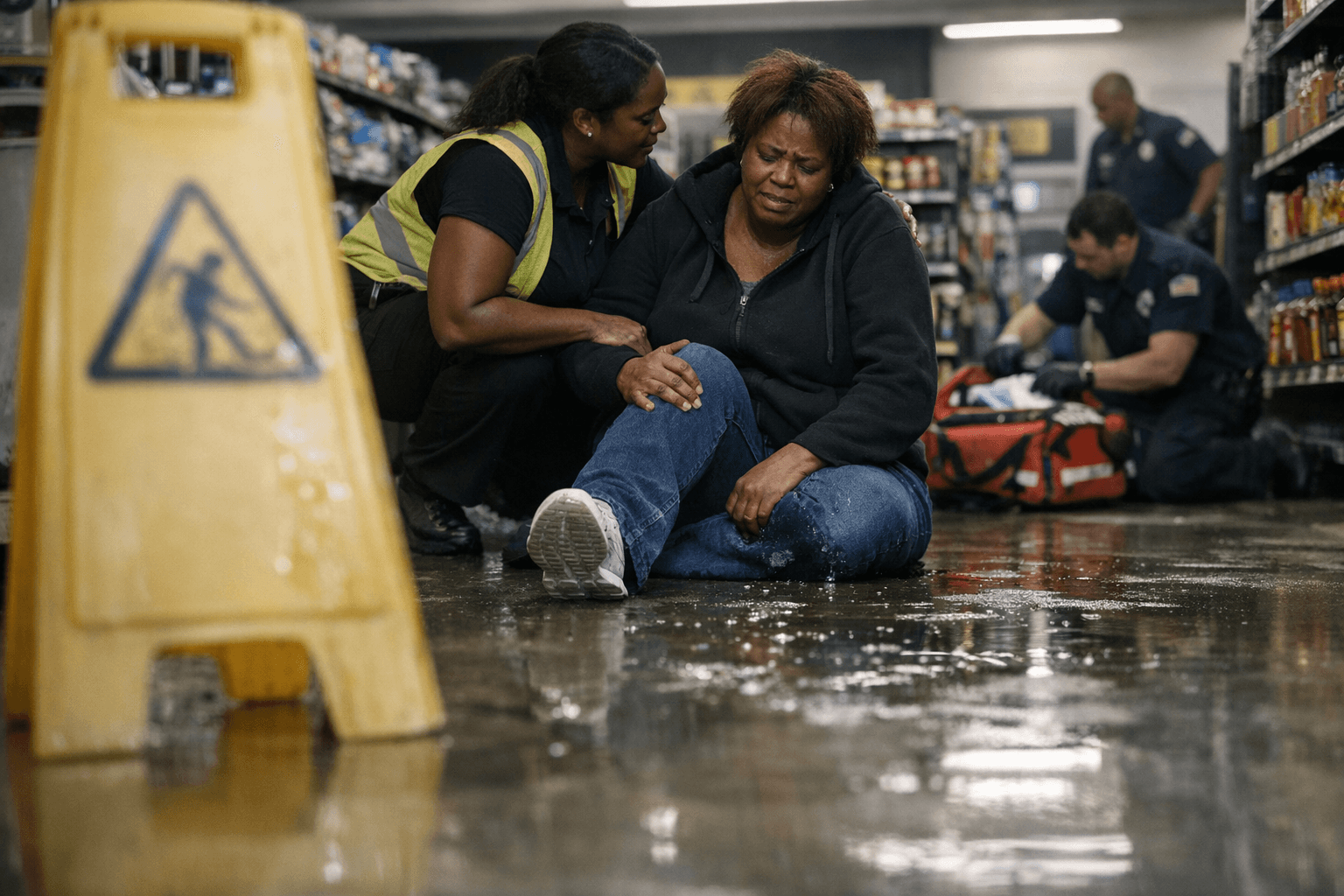
A separate, analogous lawsuit underscores the range of premises-liability claims. In Donna Lage v. NCL (Bahamas) Ltd., Case No. 1:26-cv-20149-KMW in the U.S. District Court for the Southern District of Florida, a plaintiff alleges she slipped on a hazardous substance on the Norwegian Prima on January 13, 2025, struck her head, and suffered "severe and permanent injuries." That complaint alleges the cruise line had actual or constructive knowledge and "failed to provide adequate verbal or written warnings," and "failed to place caution signs, block off the hazardous area, or ensure that the deck chairs were properly secured or arranged."
How Thomas’s case unfolds will likely turn on the same evidentiary issues flagged by the legal analyses: whether Thomas can show how long the hazard was present and whether Dollar General had actual or constructive knowledge. With the county filing limited to the basic allegation that a hazardous liquid remained on the floor, the docket and the full complaint will be needed to flesh out timing, injuries, and the evidence either side will rely on.
Know something we missed? Have a correction or additional information?
Submit a Tip