Lane County Loses 200 Jobs as Labor Force Grows, Unemployment Climbs
Lane County lost 200 jobs while adding 885 people to the labor force, lifting the unemployment rate from 4.3% to 5.2% and tightening the local job market.
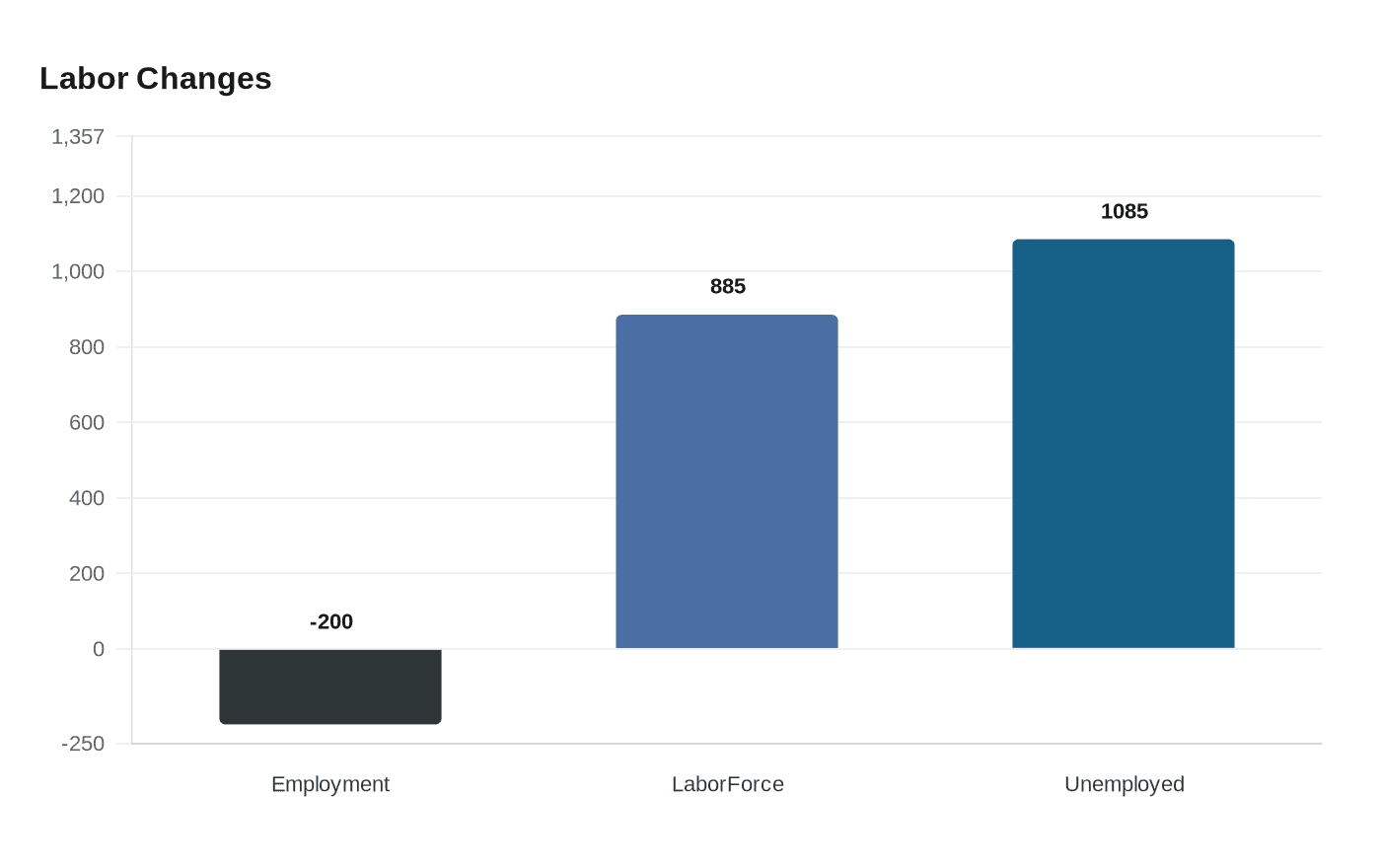
Lane County ended 2025 with a modest but meaningful shift in its labor market: employment fell by 200 jobs even as 885 more people entered the labor force, pushing the unemployment rate up from 4.3% to 5.2%. The combination of shrinking payrolls and a larger pool of job seekers has increased local competition for work and signaled softer demand from employers.
State employment data show losses concentrated in government jobs, particularly education, and in construction. Healthcare and social assistance were among the sectors that added jobs, partially offsetting the declines. Local officials and analysts point to University of Oregon layoffs as a likely contributor to the drop in government-sector employment, removing a significant source of education-related positions in Lane County.
An Oregon Employment Department regional labor economist described the local market as operating in a “no-hire, no-fire” pattern: small employment losses and small unemployment increases. That characterization captures the slow-moving, churn-oriented nature of the change. Because the county added 885 people to its labor force while employment fell by 200, the number of residents without work rose by roughly 1,085, a shift that corresponds with the 0.9 percentage point rise in the unemployment rate.
For residents, the effects are practical and immediate. Job seekers face more competition for openings, and those displaced from education or construction roles may need to look toward expanding fields such as healthcare and social services. Employers that had planned to hire may delay expansions, while public agencies coping with reduced staffing could see pressure on classroom sizes, program delivery, and project timelines.
The data also matter for local policy. A rising unemployment rate combined with labor-force growth can increase demand for job training, reemployment services, and unemployment insurance claims. Workforce development programs in Eugene, Springfield, and surrounding communities may need to adjust outreach and retraining priorities to align displaced education and construction workers with hiring sectors.
Looking ahead, the trajectory will depend on whether employers begin to hire again or sustain the slowdown. The near-term outlook will be clearer with subsequent Oregon Employment Department updates and any additional staffing decisions at the University of Oregon. For now, Lane County faces a subtle but real shift from momentum to caution, with implications for households, schools, and local employers as the community adapts to a tighter jobs market.
Sources:
Know something we missed? Have a correction or additional information?
Submit a Tip