Lane Kiffin Leaves Ole Miss, Returns to LSU for Rebuild
Lane Kiffin announced he is leaving one loss Ole Miss to become head coach at LSU, a Dec. 1 move that injects uncertainty into the College Football Playoff picture. The hire reunites him with a program that has produced recent national championships and is likely to reshape SEC recruiting, booster engagement, and postseason preparations.
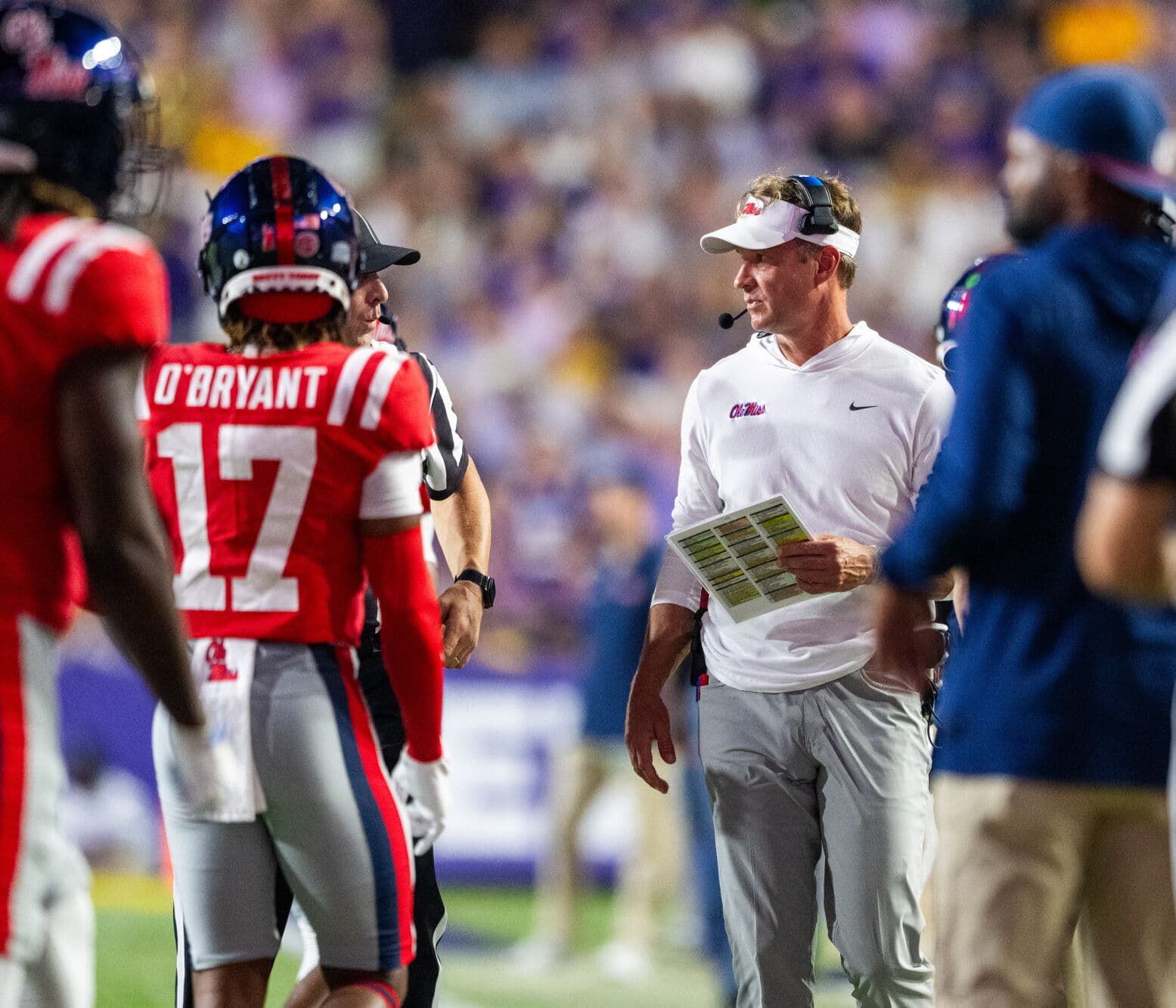
Lane Kiffin informed Ole Miss and the college football world on Dec. 1 that he would leave the one loss Rebels to take the head coaching job at LSU, a seismic late season shift that arrives as the College Football Playoff selection looms. Kiffin said he felt compelled to accept the LSU opportunity, praising LSU's tradition and the program's resources. Ole Miss athletic officials indicated the program had hoped he would remain for postseason play.
The timing guarantees disruption for Ole Miss. With playoff positioning and bowl assignments pending, the sudden departure removes the coach who guided the Rebels through the regular season and could unsettle game preparation, staff continuity, and player focus in the short term. Coaches departures this close to postseason play typically trigger flurries of staff departures and reassignment, and the transfer portal could become an immediate pressure point as recruits and current players reassess their futures.
For LSU, the hire is an aggressive gamble with upside. The program that produced recent national championships is acquiring a high profile coach whose arrival will be read by recruits, donors, and television partners as a statement of continued ambition. LSU boosters are likely to seize the moment for fundraising, and rival programs in the Southeastern Conference will reassess recruiting strategies and defensive schematics in anticipation of facing a revamped opponent.
Beyond on field consequences, the move underscores evolving business realities in college athletics. Programs with deep resources can execute marquee hires late in the season to leapfrog competitors in what amounts to an arms race for talent, both on the roster and on the sideline. The timing is also significant for media partners and the playoff committee, which must consider a team undergoing coaching transition while evaluating resumes for postseason placement.

The broader cultural context is clear. College football has become a national spectacle where program identity, donor influence, and name image and likeness activities converge. A single coaching decision can shift recruiting territories, affect local economies dependent on game day revenue, and alter the narratives fans carry into the bowl season. Kiffin's move will be analyzed not only for its tactical merits but for what it signals about where power and money are concentrated in the sport.
At the conference level the hire is certain to reverberate. SEC programs will view LSU's acquisition as a recalibration of competitive balance and may accelerate their own searches and contract decisions in the offseason. For Ole Miss the immediate task is stabilization, preserving the focus of players and staff as the postseason approaches. For LSU the challenge is integrating a new leader quickly enough to satisfy a ravenous fan base and the lofty expectations that accompany its recent championship pedigree.
In the days ahead both institutions will be watched for staffing announcements, recruiting commitments, and statements from players. The decision spotlights the modern coaching market where timing, resources, and prestige converge to redraw the map of college football almost overnight.
This article was produced by Prism’s automated news system from verified source data, official records, and press releases, then run through automated quality and moderation checks before publishing. The system is built and supervised by the people who set the standards it runs under. Read our full AI policy.
Know something we missed? Have a correction or additional information?
Submit a Tip