Laramie planning panel certifies decade-long public transit blueprint
Laramie Planning Commission certified a 10-year public transportation plan and forwarded it to City Council; commissioners and residents questioned long-term operating costs.
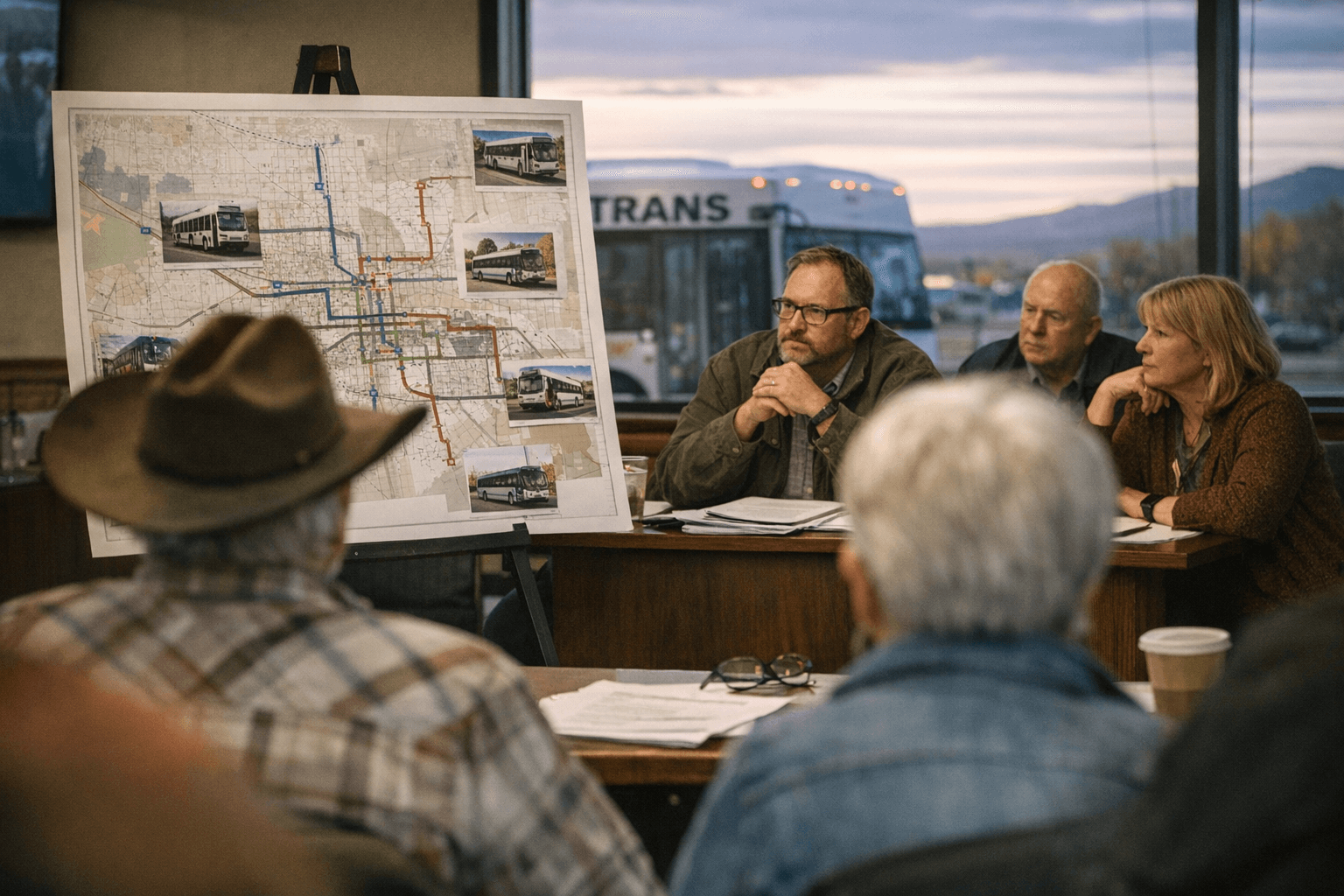
The Laramie Planning Commission voted to adopt and certify a 10-year public transportation plan and forward it to the City Council for consideration, advancing a blueprint that lays out short-term, mid-term and long-term service concepts for the city. Consultants who prepared the plan presented estimated fleet needs and projected operating costs during the commission’s regular meeting.
The consultants framed the document as a federally and state-funded planning product, noting planning work was financed through the Federal Transit Administration and Wyoming Department of Transportation. Certification by the commission does not itself authorize spending but moves the plan into the municipal review process, where City Council may consider adoption and commission follow-up studies on capital requirements, operating budget scenarios and grant opportunities.
Discussion at the meeting focused on funding sources and the feasibility of the projected operations. Several commissioners and some residents voiced concern about the plan’s operating-cost estimates and how the city would cover ongoing service expenses if new routes or expanded hours are implemented. The debate highlighted the gap between one-time planning dollars and the recurring costs of drivers, maintenance, fuel and fleet replacement that would be necessary to sustain service beyond the planning horizon.
For Albany County residents, the plan’s potential effects are practical and immediate. If adopted and funded, the concepts could change local mobility options, affecting commuters, seniors and households without cars. Certification also begins a phase of more detailed analysis that will translate high-level concepts into capital budgets and operating scenarios that City Council must weigh against competing municipal priorities. Because the planning work was supported by FTA and WYDOT, councilors will have to consider eligibility for federal and state grants alongside local revenue options to sustain services long term.
The commission’s action reflects the common intergovernmental framework that governs rural and small-city transit: planning support often comes from higher levels of government while local leaders must find ways to finance ongoing operations. That dynamic will shape how ambitious the city can be in expanding routes, purchasing vehicles or increasing service frequency.
Next steps include City Council review, technical studies on capital needs and operating-cost modeling, and the pursuit of grant opportunities. Residents who rely on public transit should watch council agendas and announcements as the city moves from planning to budgeting and implementation, since the decisions that follow will determine whether the concepts presented translate into tangible, affordable service on Laramie streets.
Sources:
Know something we missed? Have a correction or additional information?
Submit a Tip