Laramie UW Professor Leonard Co-Authors Cambridge Press Book on Homesteading
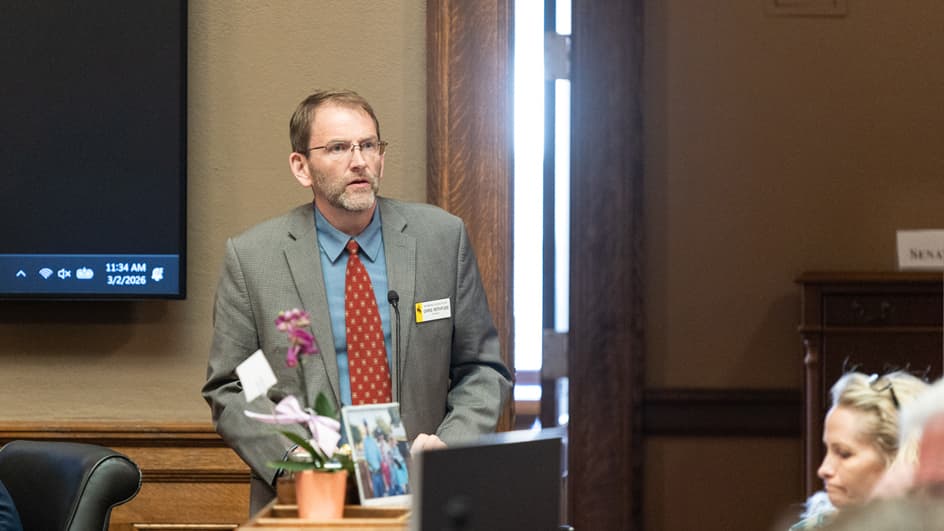
Bryan Leonard, an associate professor and SER chair in Laramie, co-authored a Cambridge University Press book arguing homesteading claimed more than 160 million acres and reshaped property rights in the West.
Bryan Leonard, an associate professor and SER chair at the University of Wyoming’s Haub School of Environment and Natural Resources and School of Energy Resources in Laramie, co-wrote a new book published by Cambridge University Press that reframes how homesteading shaped the American West. The book, Why the Rush?: An Institutional Economic Analysis of Homesteading and the Settlement of the West, was published Feb. 19 and the University of Wyoming highlighted the work in a news item on March 4, 2026.
Leonard partnered with Douglas W. Allen, the Burnaby Mountain Professor of Economics at Simon Fraser University in Canada, on a study that blends economics with data-driven historical analysis. The UW release describes the book’s approach as an institutional economic analysis that uses historical data to assess how the Homestead Act of 1862 and subsequent policies directed settlement patterns and created economic rules on the frontier.
The authors frame homesteading not simply as land distribution but as a mechanism that established meaningful economic property rights and defined who could lay claim to public land. The UW account states that the book’s analysis “shows how homesteading incentivized millions to move westward, fostered local sovereignty with minimal military force and played a central role in shaping economic institutions during a transformative period of American history,” positioning the policy as a driver of social and legal order across frontier communities.
The historical and statistical details Leonard and Allen foreground are stark: the Homestead Act of 1862 offered settlers the chance to claim up to 160 acres of public land, and subsequent Homestead Acts led to more than 160 million acres being claimed, accounting for roughly 10 percent of land in the United States. Those numbers underline the scale of land transfer that influenced settlement patterns in Wyoming counties including Albany County and the city of Laramie.
Leonard emphasized the book’s regional relevance, saying, “This book will be of particular interest to Wyoming communities and beyond, where the legacy of homesteading and westward expansion remains woven into the region’s cultural and historical fabric,” a line the UW release attributes to him. The blend of economic modeling and archival data the authors describe suggests the book will be useful to county historians, university researchers and policymakers weighing the long-run institutional effects of 19th century land policy.
The UW news item does not include publication metadata such as ISBN, page count, retail formats or price, leaving those details to Cambridge University Press or future listings; the book’s Feb. 19 publication and the authors’ institutional affiliations are the concrete details now available for readers and local researchers.
Sources:
Know something we missed? Have a correction or additional information?
Submit a Tip