Lawmakers Sideline Promised Clean Water Funding, McDowell Projects Left Uncertain
Del. David Green’s $10 million bill to start a southern coalfields water fund was killed in the House Energy Committee, leaving McDowell projects unclear amid a $287 million need.
Del. David Green, R-McDowell, filed a $10 million bill intended to start a fund for 13 southern counties, but MountainStateSpotlight reports the measure was killed in the House Energy Committee, leaving planned McDowell water projects without pledged state funding. The outcome follows a broader retreat from an earlier $250 million request organizers and some delegates had pushed to fix drinking water in the southern coalfields.
Legislative leaders began the session indicating a $250 million ask for clean drinking water in the southern coalfields; reporting shows that figure was later reduced to $20 million and then split into two $10 million bills filed by Green and Del. Adam Vance, R-Wyoming. WVDN noted the smaller $10 million proposal equals only 4% of the initial $250 million request, while the state’s Rainy Day Fund reportedly holds $1.4 billion.
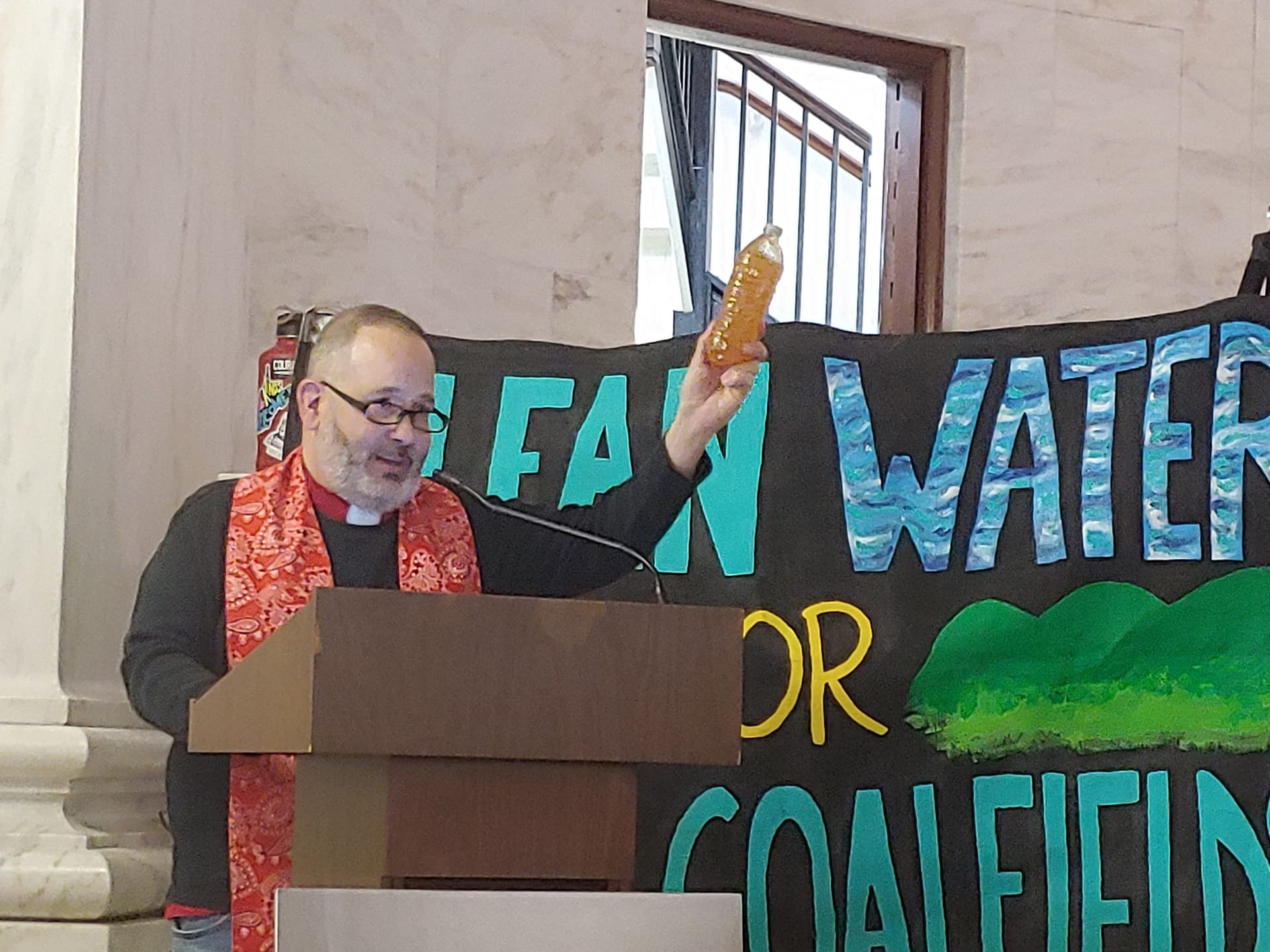
Del. Adam Vance’s companion $10 million bill followed a delegation of activists who visited the State Capitol to show dirty faucet water and press lawmakers. MountainStateSpotlight records that delegates voted 52-41 to take Vance’s bill out of committee and to the floor, but a required four-fifths vote to suspend the constitutional three-reading rule failed 46-47, which the outlet says made the bill “officially dead.” Committee members told Vance the $10 million price tag “wouldn’t come close to addressing the problem” and said “they would adjust the bill to make it more effective,” according to the reporting.
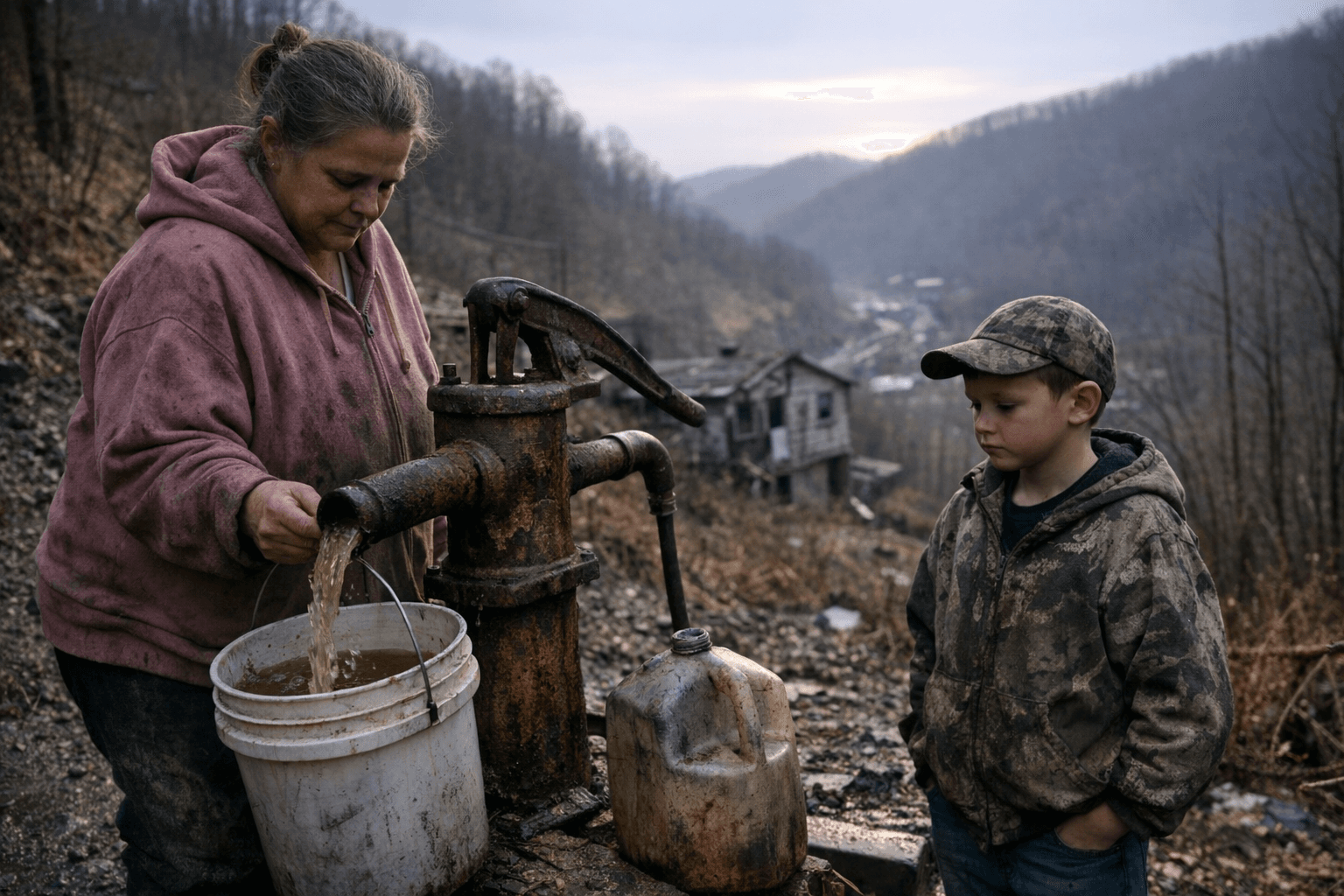
Advocates organized by From Below, the coalfield justice initiative codirected by Ware, staged a small rally outside the House of Delegates chamber and presented personal evidence of poor tap water. Ware described the daily realities for residents in Lincoln, Wyoming, McDowell and Mingo counties: “It has meant going to a waterfall when recovering from surgery to get cleaner-looking but potentially bacteriologically compromised water to bring back and boil for bathing because the water at home burns human skin.” Ware added that some households “spend[] $150 every month on bottled water,” and urged a $250 million drawdown from the Rainy Day Fund for shovel-ready projects.
Lawmakers and aides pointed to structural utility problems as part of the reluctance to commit large state dollars. Dalseide wrote, “We need to fix the water problems facing our state and continue to grow economically. When a water or sewer utility has not secured available federal or state funding, that is often a sign of deeper structural issues. If the funding is already out there. and a utility has not received it, the question is why.” Del. Green told WVDN he “could not get support to tap the $1.4 billion Rainy Day Fund and that doing so would affect the state’s bond ratings.”
Financial context deepens the dilemma: reporting shows outstanding water projects in four southern counties would cost $287 million, and a Gazette-Mail review cited by the Pulitzer Center found that of 161 ARPA Economic Enhancement Grant Fund awards as of December 2024, just four — 2.5% — were for water or sewer projects in Boone, Logan, McDowell, Mingo and Wyoming counties. With Vance’s and Green’s $10 million measures dead or stalled and the larger $250 million proposal pared back, McDowell County’s timeline for repairs now depends on whether lawmakers will return to the Rainy Day Fund, rework targeted appropriations, or pursue other state or federal financing.
Know something we missed? Have a correction or additional information?
Submit a Tip

