Layer Diamond Necklaces and Mix Metals Starting with a 14-16-Inch Choker
Kenwalkerjewelers and retailers say layering diamond necklaces drives high engagement—begin with a 14–16‑inch choker, then add medium and long pieces to build proportion, texture, and mixed‑metal interest.
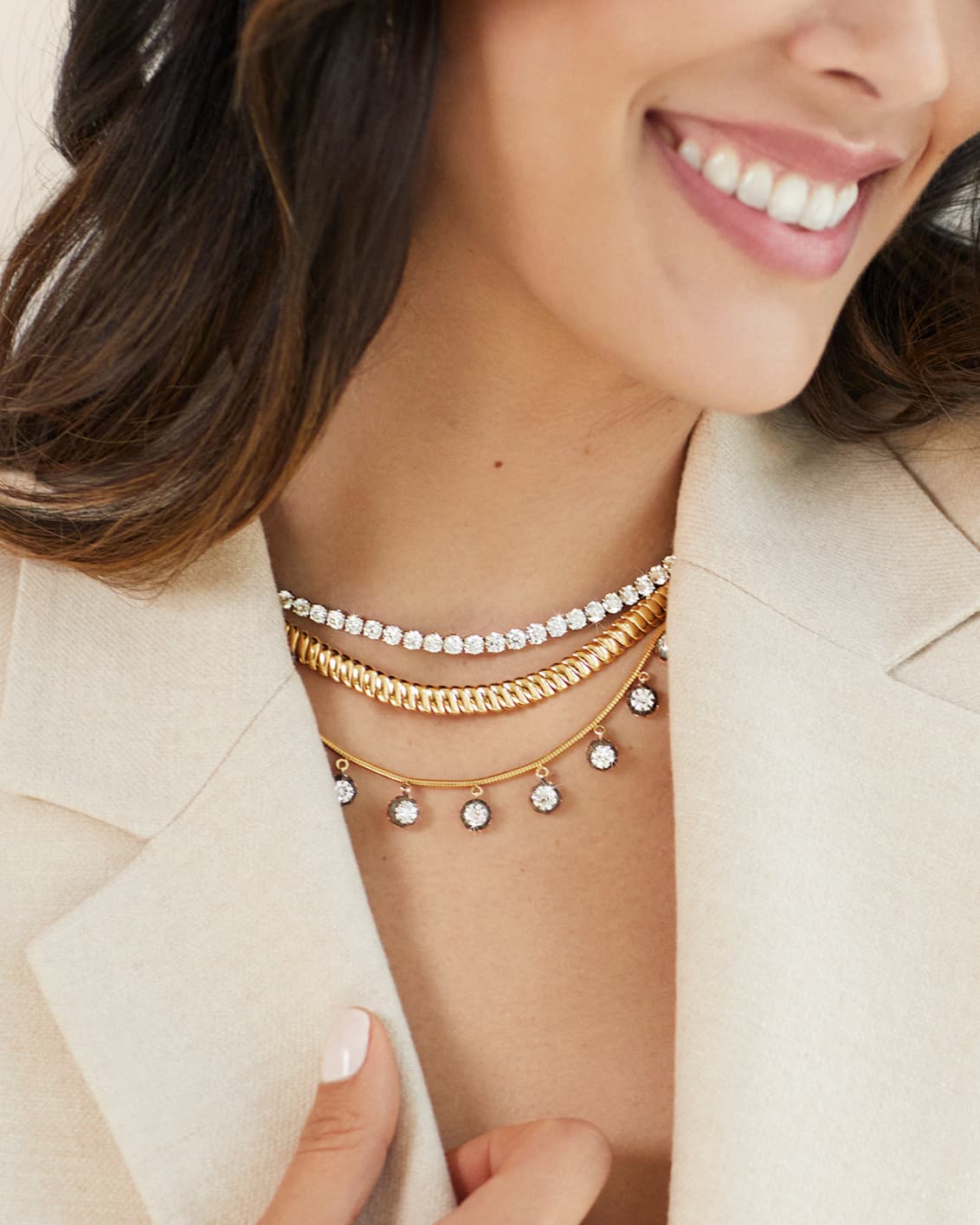
Kenwalkerjewelers and retail teams have flagged layering diamond necklaces as one of the highest‑engagement styling topics for shoppers; the simplest way to translate that attention into measured, image‑ready looks is by starting with proportion. “Start with proportion: begin with a collar or choker (14–16")…” is the singular, specific piece of advice every layered edit should obey before anything else.
Why begin with a 14–16‑inch choker A choker at 14–16 inches sits at the collarbone and functions as the visual anchor for everything that follows. Diamondsonwabash’s stepwise approach echoes the same idea: “Start with a choker or short chain sitting at your collarbone, then add a medium‑length piece that falls just below your neckline. Complete the look with a longer pendant or chain that extends toward your chest.” By photographing that separation—14–16" choker, mid‑length just below the neckline, long pendant to the chest—you show how spacing prevents tangles and creates distinct focal points.
The three‑tier recipe: how to layer without the fuss Build a three‑tier grouping deliberately, not haphazardly. Start with the choker, add a mid‑length chain or a delicate rivière, then finish with a longer pendant or statement chain. Kenwalkerjewelers recommends selecting “pieces of varying lengths. For example, one may choose a choker, a mid‑length chain, and a longer pendant. This layering creates visual interest.” To avoid knots, use different pendant lengths and a “ripple effect” or slight adjustment of clasps so pendants hang staggered rather than stacked.
Mix metals with an anchor and a rhythm Mixing metals adds modern versatility, but the guidance is specific: choose one primary metal to serve as an anchor and let accents play second fiddle. Diamonds On Wabash prescribes that “this anchor metal should represent approximately 60‑70% of your jewelry ensemble,” a numeric rule worth adopting for commercial imagery and shoppable looks. Bakerbrothersdiamonds champions variety—“Mixing metals in jewellery adds variety to your look. Combining gold, silver, and rose gold creates unique designs.”—but pairs that encouragement with balance: “Balance is key when mixing metals. … If you're wearing a gold chain, balance it with silver or platinum accents for a well‑rounded look.”
Temperature, texture and abrasion: practical constraints Think in undertones. Nektanewyork explains that “cool metals like platinum and white gold naturally complement each other,” while warm metals—yellow gold, rose gold, copper—play nicely together. Crossing temperature families is effective if you introduce warm or cool accents sparingly. Bakerbrothers offers a care caveat with real implications for everyday wear: “Harder metals such as platinum can rub against softer metals like yellow gold, so layer thoughtfully.” Texture is a crucial third axis—“Don't just mix metals, mix textures too! Pair a high‑shine platinum ring with a matte gold band, or stack a hammered silver bangle with a smooth rose gold cuff for added contrast.”—and it is exactly this contrast that reads well in both editorial and product photography.
Themes, focal points and the stylist’s edit Start with a focal point and curate a theme. Jill Newman’s how‑to—“How to Expertly Wear Layered Necklaces With Tips from the Pros” (By Jill Newman, Updated: December 3, 2025)—and Rachel Garrahan’s direction crystallize the approach: “Choose a unifying theme … such as all diamond pieces, and you can mix both necklace styles and lengths, and vintage and contemporary pieces.” Whether your theme is horse‑inspired, coquette, or “loud luxury,” a unifying motif keeps a mixed‑metal, multi‑length ensemble feeling intentional rather than chaotic.
Street style to red carpet: image‑ready examples Use concrete styling beats for shoots and editorial imagery. For a relaxed, modern street edit, Newman recommends you “layer a fringe diamond necklace with diamond beads and a big heart pendant necklace over a T‑shirt and jeans.” For eveningwear, she prescribes glamour: “A diamond line choker paired with pavé diamond chains of varying lengths makes a statement.” Kenwalkerjewelers and Diamondsonwabash also favor contrasts—delicate diamonds next to chunkier chains—to create editorial tension in single frames.

Practical ring and bracelet stacking rules Apply the same layering logic off the neck. Nektanewyork supplies a jeweler’s sequence for rings and bracelets that translates directly to product pages and close‑ups: 1. Start with a statement piece like a diamond solitaire in white gold. 2. Add thin bands in contrasting metals above and below. 3. Mix textured rings with smooth ones for visual interest. For bracelets: begin with a solid gold bangle as your foundation, then layer silver or platinum tennis bracelets and add charm bracelets in mixed metals, varying widths and textures as you go.
Anti‑tangle and fit tips for retail and shoppers Tangles kill conversions. Use staggered lengths, clasp adjustments, and the ripple concept that Kenwalkerjewelers recommends—“Using a ripple effect or adjusting the pendants can also prevent tangling.”—and photograph these solutions. In product descriptions, list the exact lengths of each layer and show where the choker sits at 14–16" so buyers can visualize how the set will sit on their own neck.
Retail and production notes for content teams Make imagery and commerce frictionless. Use the three‑tier shot (close crop on collarbone, medium shot of mid chain, full torso for long pendant) and include thematic still lifes that show texture and mixed metals. Photo credit exists for some imagery—use “(Courtesy of Sara Weinstock)” when applicable. If you link to Bakerbrothersdiamonds for product examples, remember their commerce features: “FREE DELIVERY (Excl. Sale Items)”, “DIAMOND SPECIALISTS”, “0% APR FINANCE (T&Cs apply)”, and the appointment booking language: “We are pleased to offer in store appointments to allow you to view and purchase from us in a safely managed way. Please complete the form below to request your appointment.” Also note the retail UX alert: “The store will not work correctly when cookies are disabled.”
A jeweler’s voice to close Bring a practitioner’s calm to the edit. As one Nektanewyork jeweler puts it: “I always tell my clients to trust their instincts. If certain metal combinations feel right together, they probably are. The key is maintaining intentional placement and balanced proportions.” Pair that instinct with the specific rules here—the 14–16" starting point, the three‑tier spacing, the 60–70% anchor metal—and layered diamond necklaces become a deliberate language rather than a haphazard trend.
Layering diamond necklaces can transform any outfit into a stylish statement. With the right techniques—precise lengths, an anchor metal, alternating textures and careful anti‑tangle spacing—you build looks that are as serviceable for shoppable product pages as they are for editorial spreads, from a T‑shirt streetmess to an evening‑wear diamond cascade.
Know something we missed? Have a correction or additional information?
Submit a Tip