Lebanese displaced begin returning home as US-brokered ceasefire takes hold
Traffic backed up for kilometers to a damaged Litani River bridge as displaced Lebanese weighed going home against fresh warnings and new ceasefire violations.
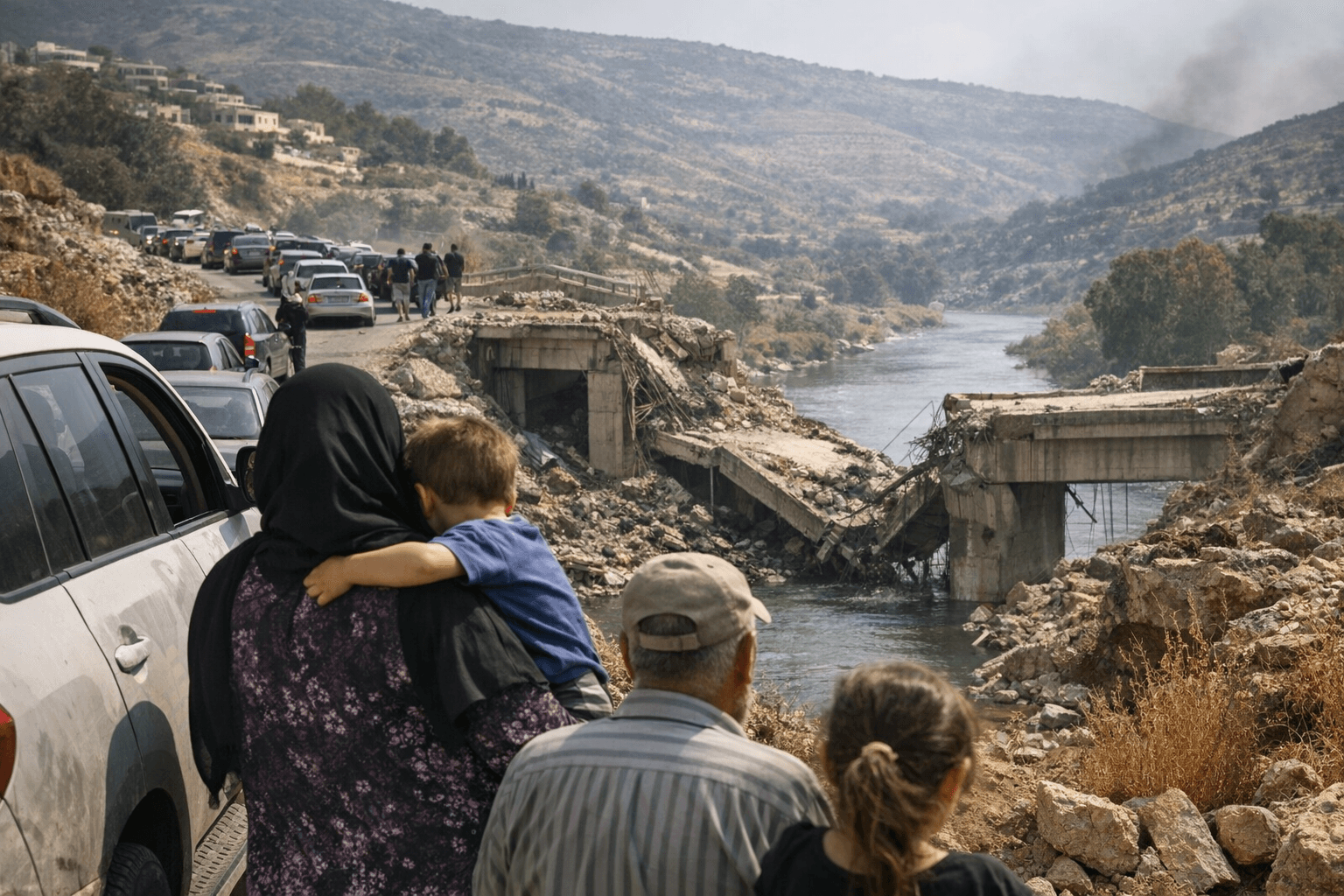
Cars and vans loaded with mattresses, suitcases and salvaged household goods clogged the road toward the damaged Qasmiyeh bridge over the Litani River as families tried to reach southern Lebanon again. The rush began as a 10-day ceasefire brokered by the United States took effect, but the return was shadowed by official warnings not to go back too quickly and by Israeli warnings that still covered parts of the south.
The fragile calm exposed how little certainty remained for people who had already lived through six weeks of war. The latest Israel-Hezbollah conflict displaced more than one million people and left at least 2,196 dead in Lebanon. By morning, traffic had already backed up for kilometers near Qasmiyeh, where a bridge hit in an Israeli airstrike the day before had been hastily repaired with a single reopened lane. Other damaged roads and a makeshift passage had also been reopened to absorb the surge south.
For many returnees, the journey home was less a reunion than a reckoning with the scale of destruction. In Jibsheet, residents described flattened apartment blocks, rubble-strewn streets and destroyed shops and homes. Some said they were relieved to be back. Others said they did not believe the ordeal was really over, a fear sharpened by the morning’s reports of several ceasefire violations by Israeli forces and Hezbollah’s warning that it had its “finger on the trigger” if the agreement was breached.
The truce revived memories of an earlier ceasefire reached on November 27, 2024, under U.N. Security Council Resolution 1701, with UNIFIL and an international monitoring committee involved. That arrangement was supposed to quiet the border, yet strikes and fighting continued afterward. This time, Benjamin Netanyahu said Israeli forces would remain in an extensive security zone in Lebanon rather than withdraw fully, while Hezbollah, which was not formally part of the deal, called the next phase “thorny and fraught with pitfalls and challenges.”
The human cost stretches far beyond the roads back south. UN agencies said the 2024 fighting uprooted more than 886,000 people, and UNICEF said more than two million children were out of school because of the war, damage to homes, hospitals and other services. As residents pushed toward Qasmiyeh and villages like Jibsheet, the ceasefire’s real test was not the announcement itself, but whether ordinary families believed they could rebuild a life without being forced to flee again.
This article was produced by Prism’s automated news system from verified source data, official records, and press releases, then run through automated quality and moderation checks before publishing. The system is built and supervised by the people who set the standards it runs under. Read our full AI policy.
Did this article answer your question?