Lebanon deal sparks Hezbollah protests over Israel withdrawal terms
Hundreds of Hezbollah supporters flooded Beirut as a U.S.-brokered deal tied Israeli withdrawal to disarmament, reigniting the fight over Lebanon’s sovereignty.

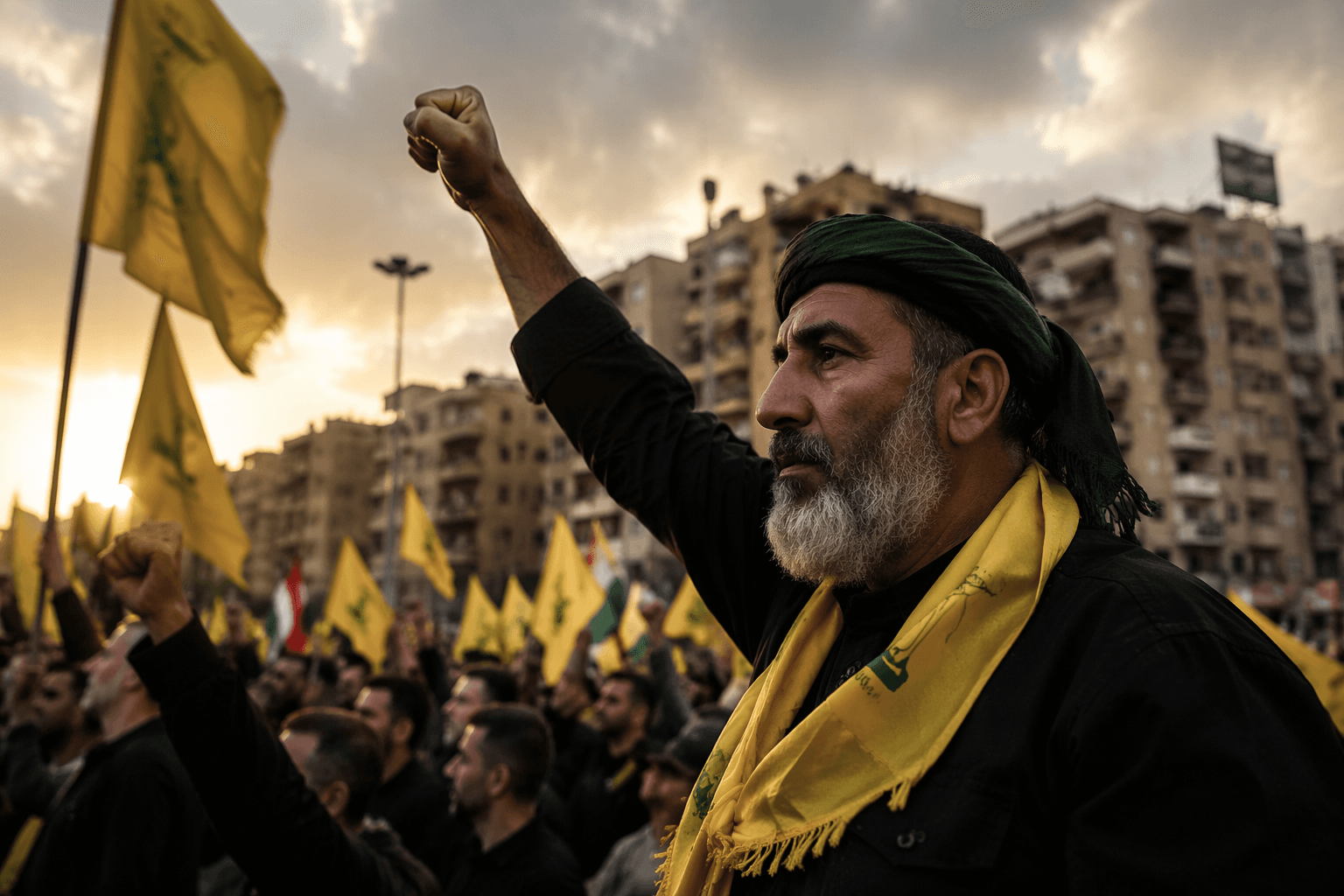
Hundreds of Hezbollah supporters flooded Beirut late Friday into Saturday after a framework deal signed in Washington sharpened Lebanon’s divide over who gets to define sovereignty after years of Hezbollah dominance and economic collapse. Motorbikes and mopeds moved through central Beirut, near parliament, along the airport road and into Dahieh, Hezbollah’s southern Beirut stronghold. The street mobilization turned the agreement into a public test of whether Lebanon is breaking from Iran-backed influence or accepting what opponents called surrender.
Protesters blocked roads and burned tires, forcing the Lebanese army to set up temporary checkpoints and reopen at least one blocked road. The scene showed how quickly the accord’s terms landed in the streets of the capital, where security forces had to manage demonstrations that spread beyond the downtown core into neighborhoods tied closely to Hezbollah’s support base.
The agreement came after five rounds of direct talks between Lebanon and Israel and includes a pilot effort for Lebanese soldiers to take control of two areas occupied by Israel. It also lays out a process aimed at disarming Hezbollah. But the text does not say when or under what conditions Israel would pull out of the larger areas it occupies in Lebanon, tying any withdrawal to security developments and the removal of threats to Israel, which effectively makes it contingent on Hezbollah disarmament.
Hezbollah has said it will not disarm while Israel continues to occupy Lebanese territory and pose a threat. Hassan Fadlallah, a Hezbollah lawmaker, warned that enforcing the deal could spark civil war and said Lebanese authorities would be unable to impose it without U.S. support. That warning carries weight in a country still marked by the memory of the 1975 to 1990 civil war and by the latest conflict, which displaced about 1.2 million people, more than the roughly one million uprooted during the civil war itself.
The dispute has also become part of a wider regional test. In June 2026, mediators were discussing a 60-day roadmap in U.S.-Iran talks, with Lebanon emerging as an immediate measure of whether diplomacy can curb Hezbollah’s influence and reduce Iran’s role in Lebanese affairs. For a state still trying to recover from war and collapse, the argument over withdrawal terms has become an argument over who speaks for Lebanon now.
This article was produced by Prism’s automated news system from verified source data, official records, and press releases, then run through automated quality and moderation checks before publishing. The system is built and supervised by the people who set the standards it runs under. Read our full AI policy.
Did this article answer your question?