Libya’s Zawiya Refinery Restarts, Force Majeure Lifted After Fires
Libya’s National Oil Corporation lifted a force majeure and ordered the Zawiya refinery back into service today after a technical clearance following tank fires linked to local fighting. The restart restores a key outlet for domestic fuel supply and crude loading, but officials say operations will resume gradually while damage assessments continue.

Libya’s Zawiya refinery resumed operations on December 23 after the state owned National Oil Corporation lifted a force majeure that it had declared on December 15 following fires tied to clashes near the facility. The corporation said the decision followed a technical assessment by the Azzawiya Oil Refining Company that cleared the plant to restart, and engineers at the site confirmed that core units are operating again.
The Zawiya complex, about 40 kilometers west of Tripoli, was built in 1974 and handles refining and port terminal functions for imports and exports. Its refining capacity exceeds 120,000 barrels per day, making it among the country’s largest operating refineries and a material element in Libya’s domestic fuel supply chain and Mediterranean crude loading infrastructure.
NOC had invoked a state of emergency level three when multiple fires broke out on December 15 after fighting in the area struck several tanks. Company statements and local reporting said 13 oil material tanks and an electricity generator were damaged in the clashes. A separate incident occurred when an explosion involving a steam boiler injured four engineers lightly while they were attempting to ignite a stove during repairs. A fire on a fuel transport pipeline between Tripoli and Zawiya was also reported, and company sources said that blaze was contained.
NOC spokesperson Khaled Ghulam told Libya al Ahrar TV that “all the fires that broke out in the refinery’s tanks, which were hit by gunfire, have been brought under control.” NOC and Brega Oil said fuel supplies to distribution tanks remained secure and gasoline delivery to stations continued during the disruption, limiting immediate consumer impact.
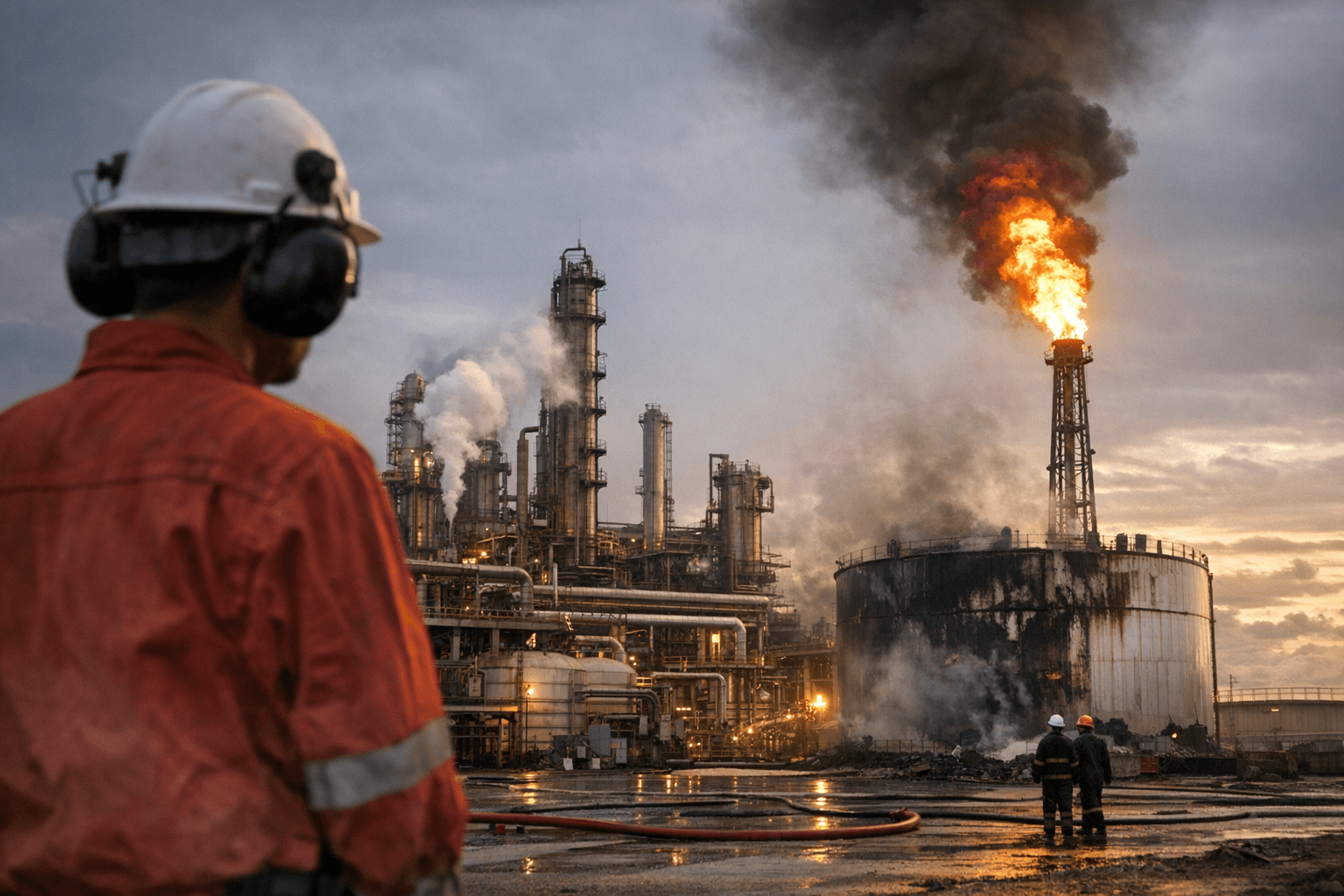
Operations were restarted in phases, with utility units and the asphalt plant reported as among the first to come back online. A port source at the Zawiya oil port said crude loading resumed after an agreement was reached with protesting workers, enabling export and shipment activity to recommence even as a fuller restart progresses.
The force majeure declaration protected the NOC from contractual delivery liabilities while the facility was unsafe or nonoperational. Lifting it signals that the corporation assesses operational and safety conditions as sufficiently restored to meet contractual and commercial obligations, at least in the short term. The corporation ordered resumption after receiving the refinery operator’s technical clearance, but officials and engineers cautioned that a comprehensive inspection timeline and a detailed inventory of long term damage have not yet been published.
Market implications are pragmatic rather than dramatic. Restoration of Zawiya eases pressure on domestic fuel distribution and allows crude loadings that support shipments from Libya’s Mediterranean outlets. However, the scale of the damage and the gradual nature of the restart leave open questions about output stability in the coming weeks, and the NOC faces the task of ensuring repairs, safety and worker confidence to prevent future disruptions.
This article was produced by Prism’s automated news system from verified source data, official records, and press releases, then run through automated quality and moderation checks before publishing. The system is built and supervised by the people who set the standards it runs under. Read our full AI policy.
Did this article answer your question?

