Lindsey Vonn vows to try Olympic downhill despite ruptured ACL
Lindsey Vonn says she will attempt to race in Milan-Cortina despite a ruptured left ACL, bone bruising and meniscal damage; her participation will hinge on training runs and medical checks.

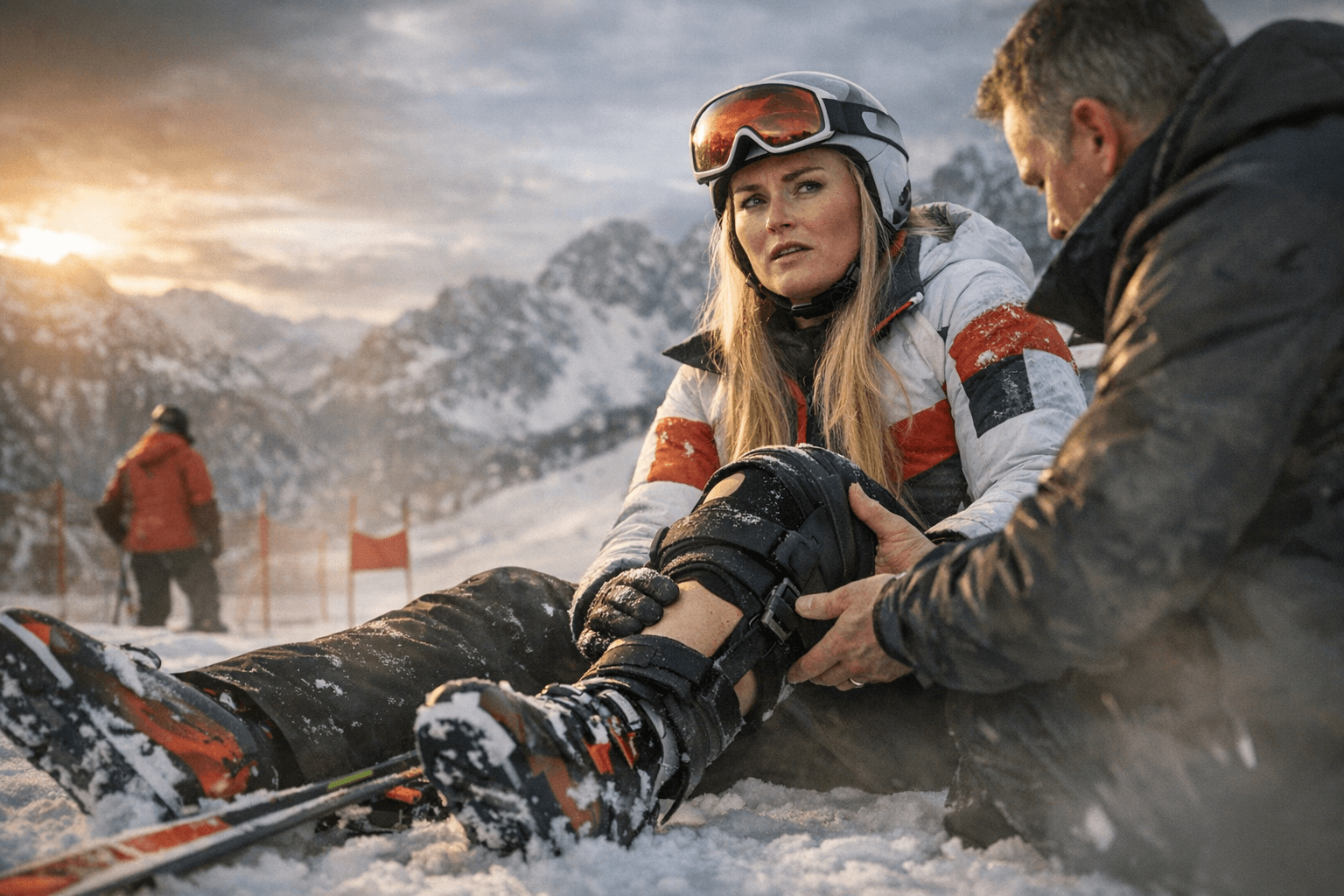
Lindsey Vonn, the 41-year-old American alpine icon, told reporters in Cortina d'Ampezzo that she plans to attempt the women’s Olympic downhill on Feb. 8 despite suffering a rupture of the anterior cruciate ligament in her left knee during a World Cup crash in Crans-Montana. The injury, sustained in what Sports Illustrated documents as a Jan. 30 downhill run in difficult conditions, also includes bone bruising and what team doctors describe as some meniscal damage, the origin of which remains unclear.
Vonn addressed the press at the Cortina Curling Stadium on Feb. 3 and skied earlier that day as part of an intensive therapy and preparation program. NBCOlympics quoted her acknowledging the additional injuries: “I also have bone bruising, which is a common injury when you tear your ACL, plus some meniscal damage. We're not sure if that was pre‑existing or from the crash.” She emphasized the current state of her knee and the role of a brace in stabilizing it: “Considering how my knee feels, I feel stable, I feel strong. My knee is not swollen, and with the help of a knee brace, I am confident that I can compete on Sunday.” On the larger gamble she added, “I know what my chances were before the crash, and I know my chances aren't the same as it stands today, but I know there's still a chance and as long as there's a chance, I will try.”
Vonn’s decision to pursue competition under those conditions crystallizes pressures and tradeoffs at the intersection of elite sport, athlete agency and commercial interest. A two-time World Cup overall champion and three-time Olympic medalist, Vonn returned from retirement in November 2024 and has been one of the season’s most compelling comeback stories, recording a victory in St. Moritz and seven World Cup podiums this winter, according to NBC and NPR accounts. Sports Illustrated framed her effort as an attempt to craft a storybook Olympic ending in what would be her fifth Games.
Participation is not guaranteed. NBC reports that athletes must take at least one of three scheduled downhill training runs in the days before the race to be cleared to start, and the U.S. Ski Team’s medical protocols and the race jury retain authority over final decisions. Sports Illustrated and other outlets say Vonn’s entries in super-G and the new team combined event will depend on how the downhill unfolds.
The story has immediate commercial stakes. Vonn remains a major draw for broadcasters and sponsors; NBC and Peacock will stream the women’s downhill live at 5:30 a.m. ET, and her presence or absence will shape ratings and advertising value for a marquee event. More broadly, her choice to compete while injured spotlights evolving norms in sports medicine and athlete risk tolerance. Advances in bracing, rehabilitation and individualized treatment make short-term competition with significant injuries more conceivable than in past eras, yet medical uncertainty about meniscal damage and the long-term consequences of competing with a ruptured ACL fuel ethical questions about spectacle versus safety.
Culturally, Vonn’s bid taps into a potent American narrative of comeback and resilience, amplified by her standing as one of the most decorated skiers in history. Her appearance in Milan-Cortina would not only affect the podium calculus but will also animate debates about age, legacy and the responsibility of teams, federations and broadcasters when elite athletes push through significant injury in pursuit of an Olympic final chapter.
This article was produced by Prism’s automated news system from verified source data, official records, and press releases, then run through automated quality and moderation checks before publishing. The system is built and supervised by the people who set the standards it runs under. Read our full AI policy.
Did this article answer your question?

.jpg&w=1920&q=75)
