Liu Jiayu stretchered after violent crash in Olympic halfpipe qualifying
Liu Jiayu was carried off on a stretcher after a severe crash in halfpipe qualifying at Livigno, halting competition and raising fresh safety questions.
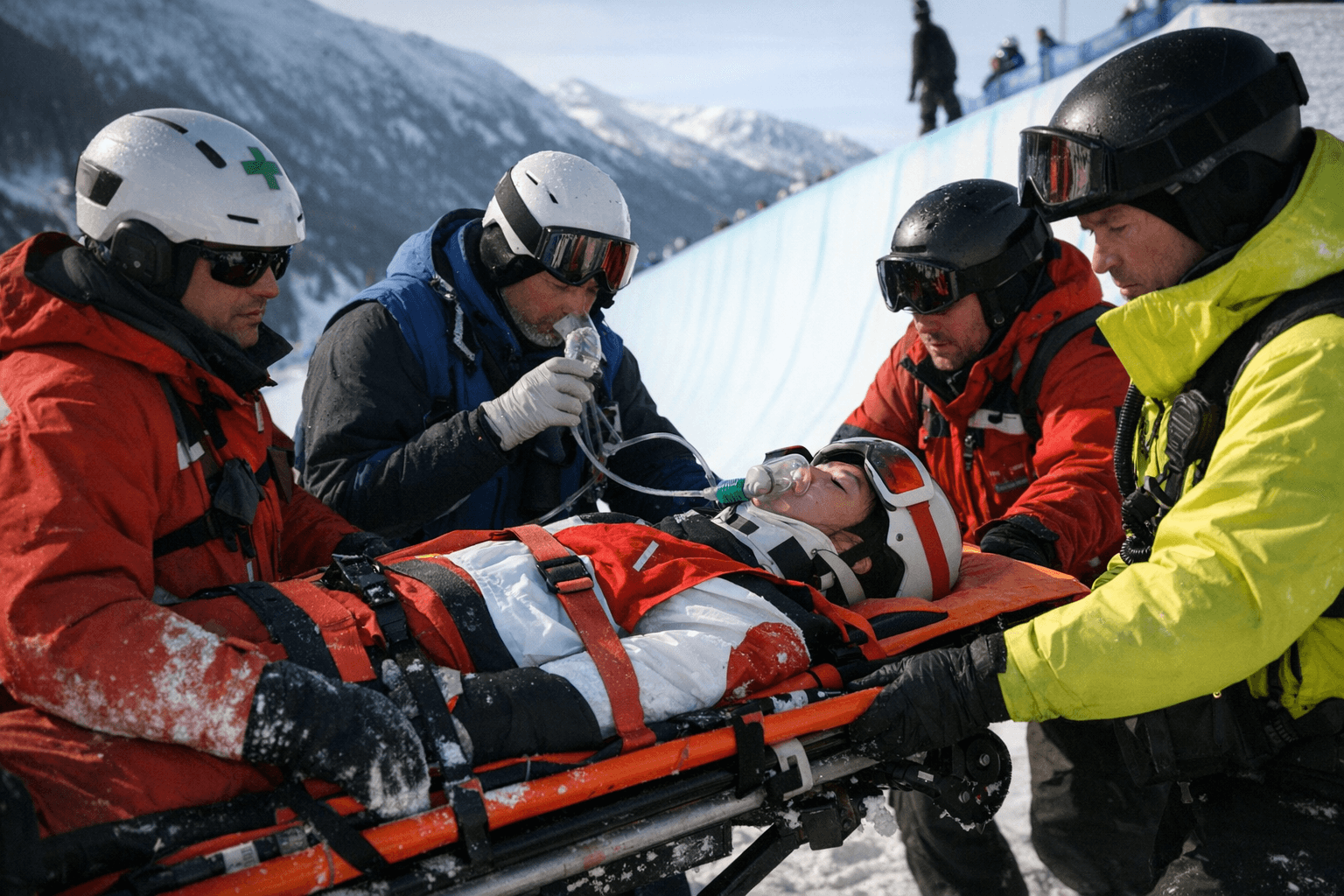
Liu Jiayu, the 33-year-old Chinese snowboarder, was stretchered off the halfpipe after a dramatic crash during women's qualifying at the Milan-Cortina Winter Olympics held at Livigno Snow Park. The fall stopped action for about 10 minutes as medical personnel tended to her on the snow, and left the Olympic field and viewers waiting for official word on her condition.
The Associated Press reported that the fall came after Liu "caught an edge while landing her final jump," and that she "came down hard on her left arms and shoulder, then bent backward and somersaulted through the bottom of the pipe." An original onsite account adds that the incident occurred on the final hit of her second run; that specific timing has not been corroborated by other wire reports. Photographs from the scene were credited to Jeff PACHOUD of AFP via Getty Images, showing Liu receiving medical assistance as event staff cleared the pipe.
Organizers halted the halfpipe session while medics worked on Liu, then removed her on a stretcher and carried her off the course. "There was no immediate word from the Chinese team on Liu's status," AP reported, and Olympic officials had not issued further details at the time coverage circulated. The interruption did not alter who advanced from qualifying: America's Chloe Kim finished first and will move on to Thursday night's final.
Beyond the immediate concern for Liu's health, the incident underlines the volatile mix of athletic ambition and risk that defines modern halfpipe competition. Athletes push for larger amplitude and more complex rotations to meet judging criteria and capture finite Olympic moments, but that escalation can magnify the consequences of even small errors such as catching an edge on landing. For a 33-year-old competitor, the crash is also a reminder that experience does not eliminate exposure to danger in a sport where margins are measured in inches and milliseconds.
The business of winter sports is intertwined with these safety dynamics. High-profile crashes attract intense broadcast attention, drive social media traffic and can prompt public debate that influences event protocols, insurance costs and the calculus of sponsors who weigh athlete risk against visibility. Organizers and national federations may face renewed pressure to review landing-zone design, medical response times and protective measures for athletes, especially as halfpipe runs continue to evolve technically.
Culturally, Liu's fall resonates beyond the competition. Chinese winter sports have been a focus of national investment in recent years, and the image of a top athlete being taken from the field of play evokes public concern at home and sympathy internationally. The episode will likely prompt close scrutiny of official updates and could catalyze conversations about athlete welfare, transparency from teams and the responsibilities of global sporting bodies.
For now the central fact remains: a leading snowboarder was carried off at the Olympics after a severe crash, and the sport waits for medical confirmation and any statement from China’s delegation. Reports from Livigno indicate that competition resumed after the brief stoppage, but follow-up verification of Liu’s condition and any implications for future events will be essential in the hours ahead.
This article was produced by Prism’s automated news system from verified source data, official records, and press releases, then run through automated quality and moderation checks before publishing. The system is built and supervised by the people who set the standards it runs under. Read our full AI policy.
Did this article answer your question?

.jpg&w=1920&q=75)
