Local geological society meeting spotlights geothermal policy, local implications
Los Alamos Geological Society hosted Dr. Shari Kelley to update residents on geothermal development and House Bill 91, which affects local energy and land-use planning.
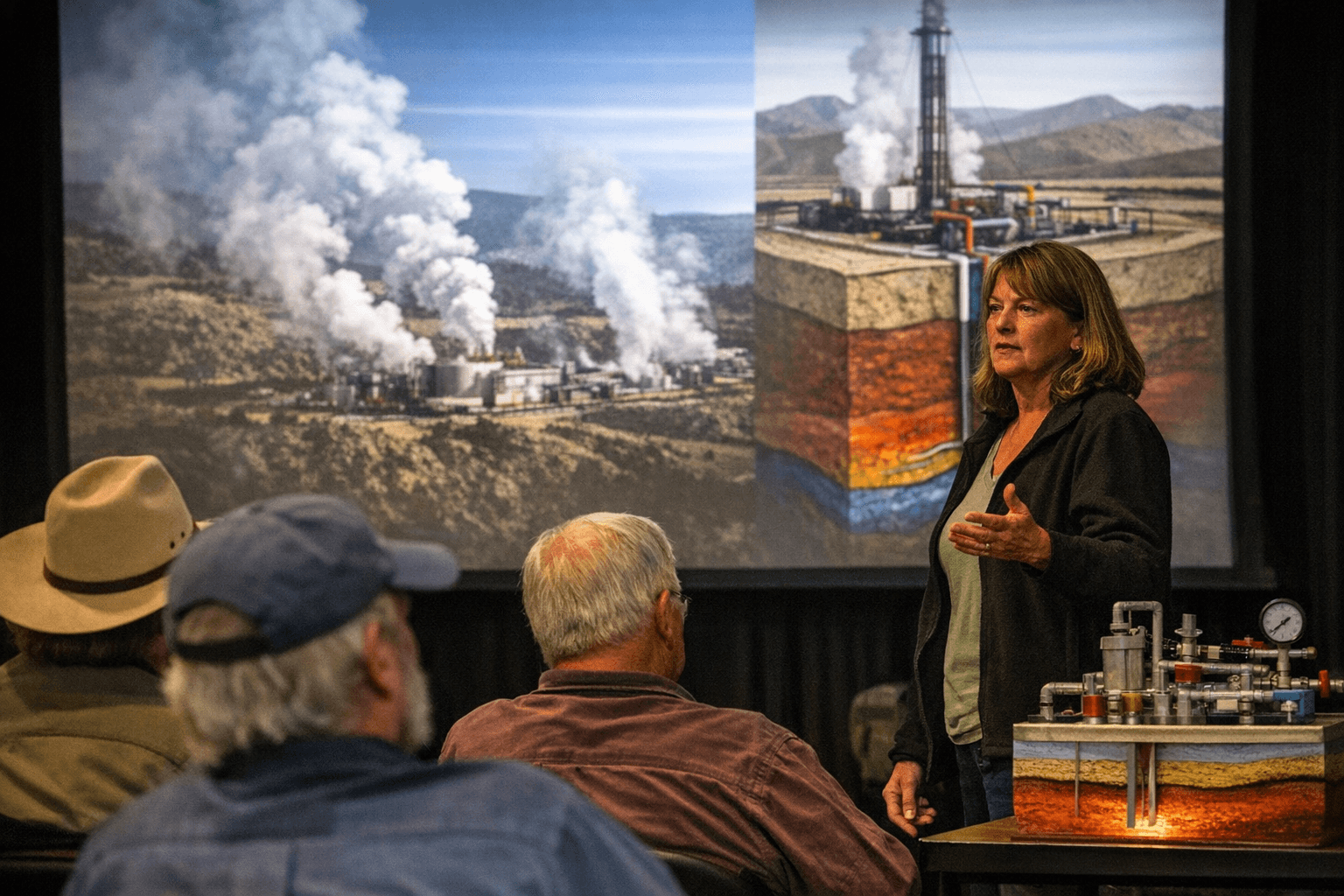
The Los Alamos Geological Society held its monthly meeting Saturday, Jan. 17, at the Los Alamos Christian Church, 92 East Road, where Dr. Shari Kelley presented an update on geothermal development in New Mexico and the policy changes shaping the industry. The presentation drew members of the scientific community and residents seeking clarity on how state-level incentives may translate into local projects.
Kelley, a senior research scientist at the New Mexico Bureau of Geology and Mineral Resources, a research division of New Mexico Tech, outlined recent legislative steps that create financial incentives for geothermal development. She served as an expert witness at committee meetings during the 2023 and 2024 New Mexico legislative sessions that led to the passage of House Bill 91, which established funding for grants and tax incentives to promote geothermal development across the state.
The meeting served dual purposes: providing technical context about geothermal resource potential and explaining the policy pathway that could unlock project funding. For Los Alamos County residents, the session highlighted practical considerations that accompany any uptick in development interest—land use and permitting, environmental review, water resource management, and grid interconnection. Those issues fall under county jurisdiction and will shape whether and how geothermal projects move from state-supported proposals to on-the-ground work in northern New Mexico.
Los Alamos Geological Society meetings function as a local forum where technical experts translate statewide policy into community-level implications. Light refreshments were offered, and the society invited all members of the community to attend. The informal setting is designed to give residents access to scientific expertise and to provide a space where local concerns about geology, hazards, and land stewardship can be raised directly with subject-matter experts.
Institutionally, the development push reflects broader state strategy to diversify energy sources through targeted incentives. House Bill 91 creates avenues for developers to seek grants and tax benefits, but it leaves significant decisions about site selection, permitting oversight, and community protections to local governments and regulatory agencies. That division of responsibilities places Los Alamos County officials and residents squarely in the position of assessing proposals for compatibility with local land-use plans and environmental safeguards.
For readers, the takeaway is that state incentives are now in place, but they do not guarantee projects will proceed without local review. Residents should follow county planning agendas and local society meetings to stay informed as proposals emerge and to ensure transparency in permitting and oversight. The conversation that began at the LAGS meeting is likely to continue in county hearings and future public forums as geothermal development moves from policy to potential projects.
Sources:
Know something we missed? Have a correction or additional information?
Submit a Tip