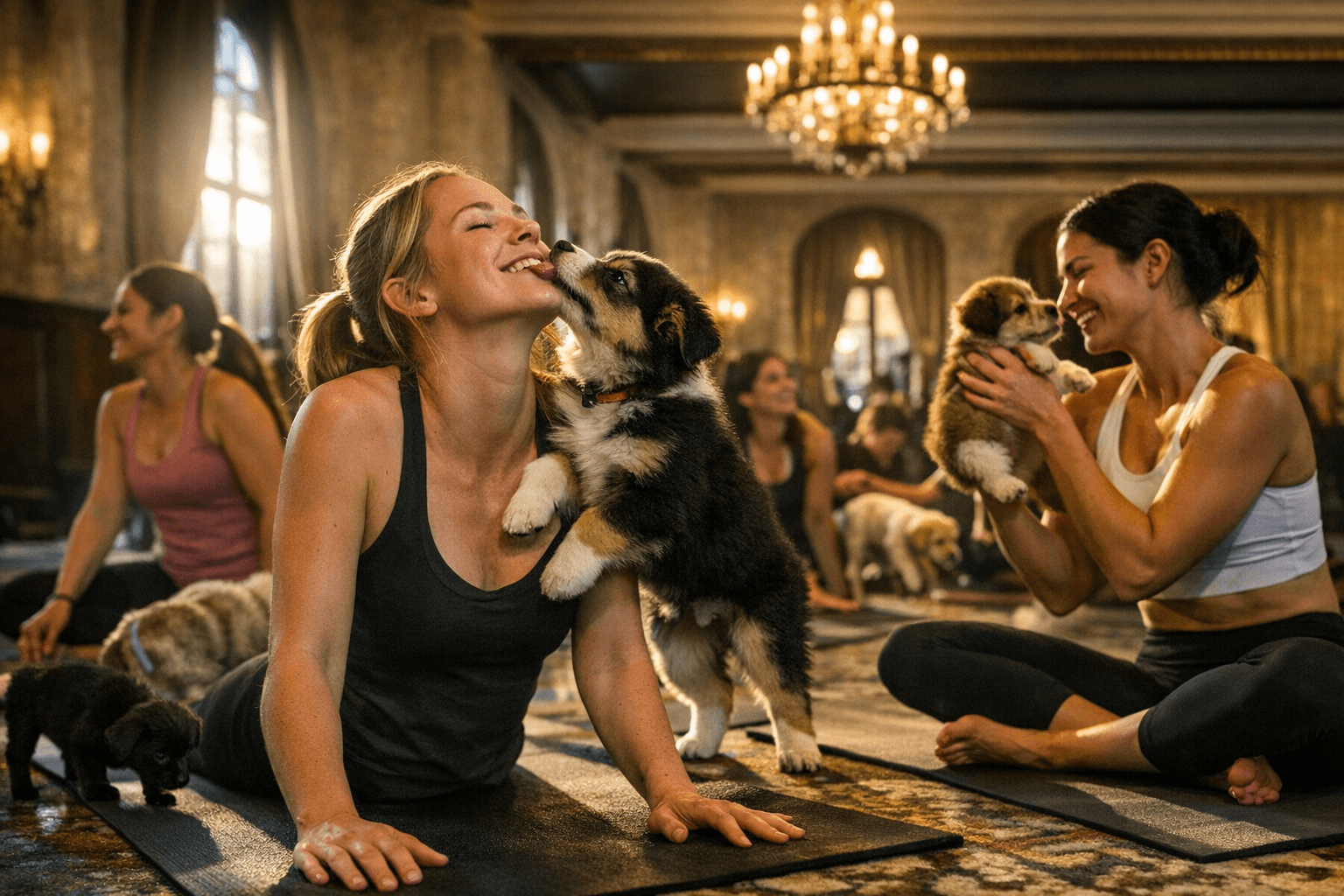
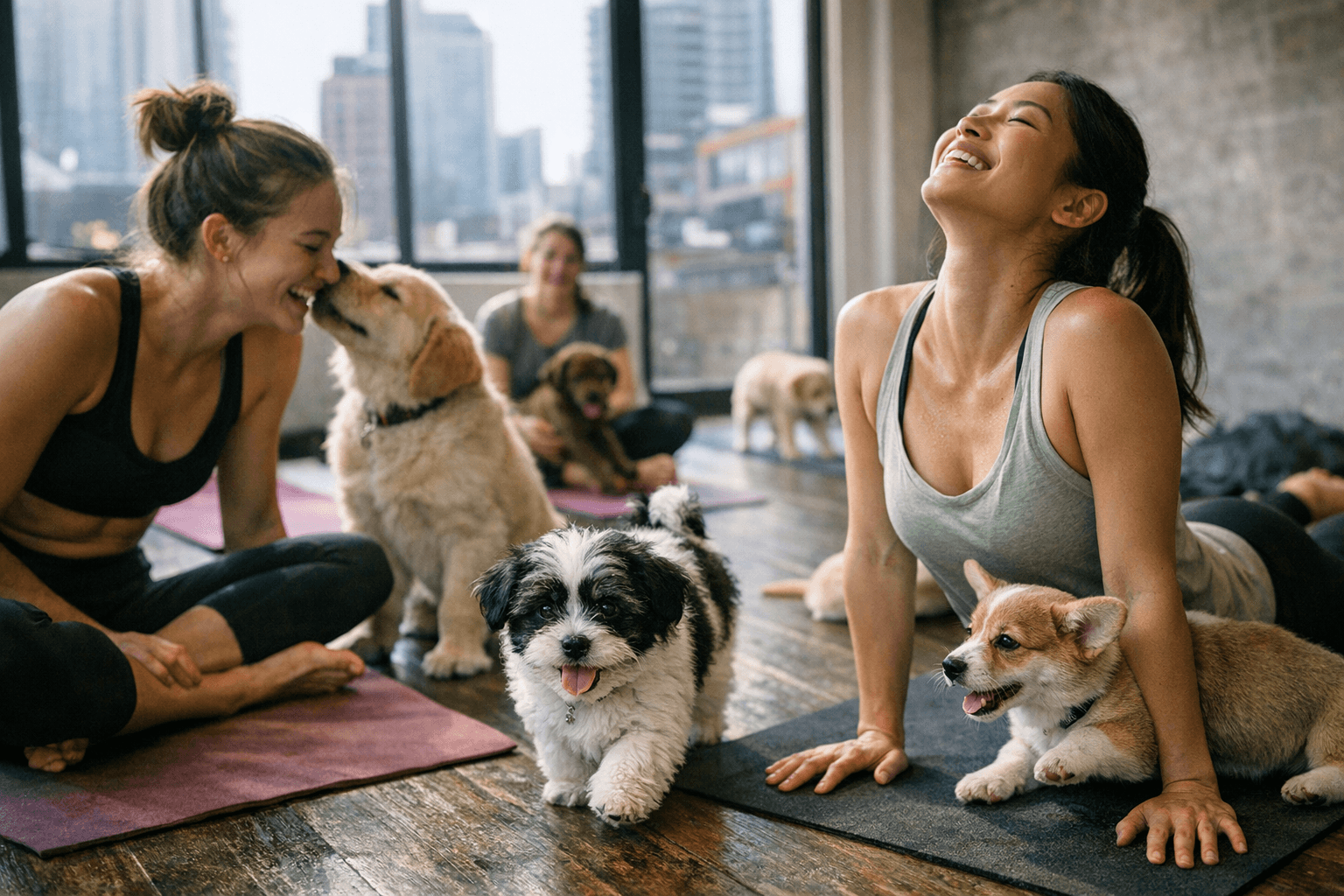
Local Puppy Yoga Thrives by Prioritizing Animal Safety and Participant Delight
Local puppy-yoga flourishes when organizers follow shelter best practices, medical checks, vaccination verification, session limits and rest windows, to keep pups safe and participants delighted.
1. Partner with local shelters and adoption programs
Working directly with a shelter or rescue is the single best move for credibility and animal welfare. Research notes emphasize following "established shelter and adoption-event best practices" so partner organizations can supply medically screened, socialized pups and manage post-session adoption workflows. A shelter partner also makes it easier to document outcomes like adoptable dogs placed or funds raised, converting a fun class into measurable community benefit.
2. Pre-event medical checks for every dog
Medical checks protect animals and attendees alike. Before any session, every puppy should be checked by shelter staff or a veterinarian for signs of illness, parasites, or recent injuries; the research highlights "medical checks" as a nonnegotiable step. Keep a checklist (temperament, visible injuries, flea/tick treatment, current weight) on file for each dog and refuse entry to any animal not cleared that day.
3. Require vaccination verification, always
Vaccination verification is explicitly called out in the guidance and must be enforced at sign-up and on arrival. Verify core vaccines and recent boosters with written proof from the shelter or owner; if a pup’s records are incomplete, they shouldn’t participate. Display a clear policy on the event page and at check-in so participants know why proof is asked for and how it protects pups and people.
4. Set session limits: numbers and duration
The notes list "session limits" as a key control, use them to keep stress low. Limit both the number of puppies per session and the number of participants in the room so each pup can retreat if stressed and handlers can monitor interactions. Publish limits on tickets, enforce them strictly at check-in, and rotate pups between sessions rather than running one long, crowded class.
5. Schedule rest windows and recovery spaces
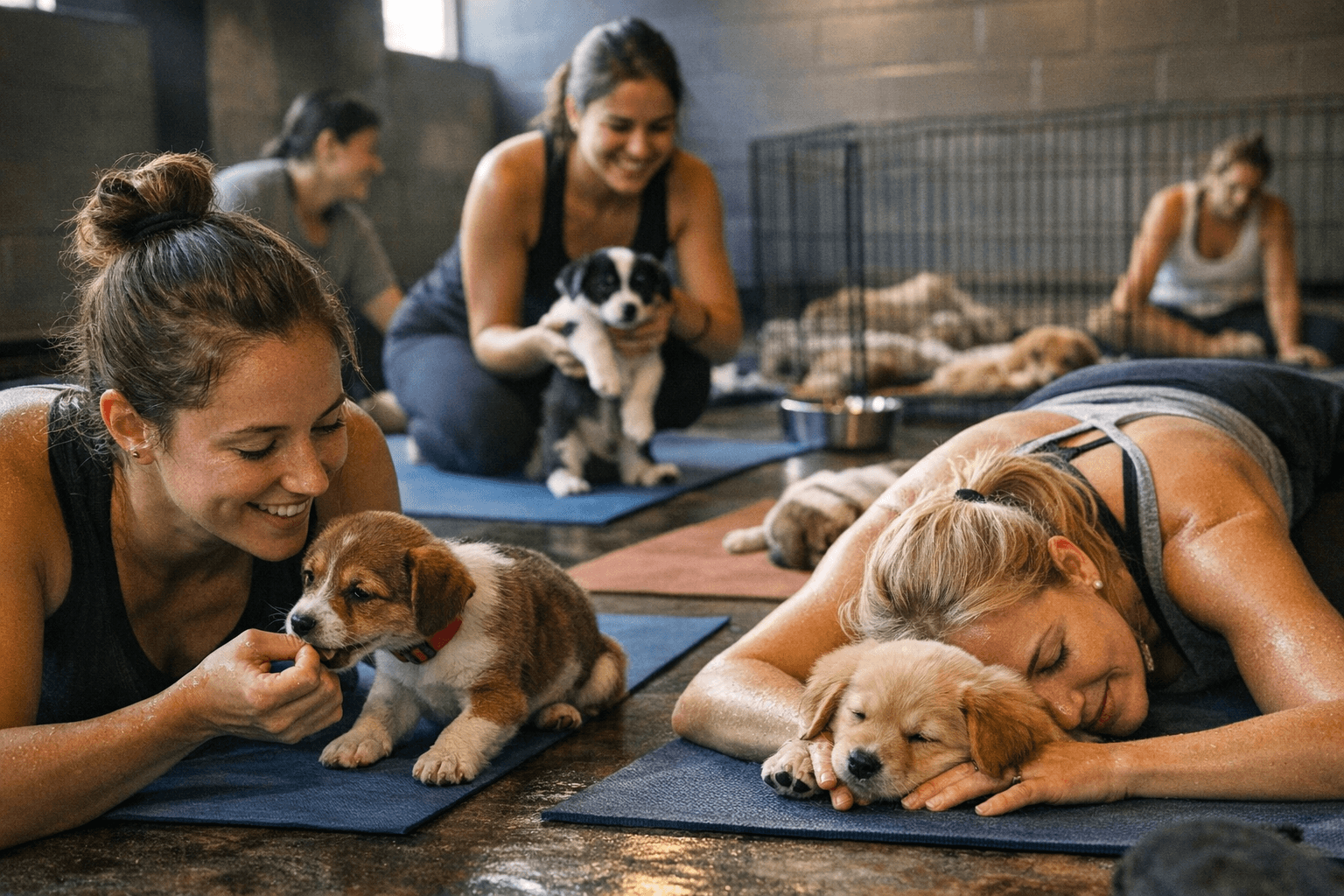
"Rest windows" are essential; puppies need quiet time between sessions to recover. Build breaks into the schedule (short downtime between classes and a longer midday break if running multiple sessions) and provide a calm recovery area with soft bedding, low light, and supervised crates that meet shelter standards. Track each pup’s time on the mat and log rest intervals so no dog exceeds a safe exposure level.
6. Train handlers and volunteers in low-stress handling
Volunteers should know how to read canine body language and intervene before stress escalates. Train everyone on signs like lip licking, whale eye, freezing, or loose-body play versus tense movements, and run role-play at volunteer orientation. Assign a volunteer-to-dog ratio that allows real-time monitoring; shelter best practices prioritize trained handlers rather than relying on well-meaning but untrained helpers.
7. Brief participants with clear etiquette and expectations
Participant delight grows when safety is visible and rules are friendly but firm. At arrival and again before the session start, brief attendees on handwashing, no feeding unless authorized, safe ways to approach and lift pups, and respecting a pup’s space. Use signage and a short printed syllabus that outlines session limits, vaccination verification, and rest procedures so guests understand the safety-first framework.
8. Design the room for canine comfort and human access
Venue layout matters: choose non-slip flooring or secure yoga mats, maintain a single monitored entrance so pups can’t bolt, and create zoned spaces for active play, yoga mats, and quiet rest. Clear sightlines let handlers intervene quickly and help participants feel confident; the research emphasis on safety implies a deliberate layout rather than a generic open-room approach.
9. Keep sanitation and biosecurity practical and visible
Combine vaccination verification with visible cleaning protocols to reassure attendees and protect dogs. Stock hand sanitizer, pet-safe disinfectant wipes, waste bags and a dedicated cleaning plan between sessions. Make sanitation part of the public narrative, list it on the event page and show cleaning staff on-site, to reinforce that your puppy-yoga class follows shelter-style infection controls.
10. Coordinate adoption and follow-up procedures
If adoptable dogs are present, coordinate an adoption workflow with the shelter ahead of time: pre-approved applications, on-site volunteers to answer adoption questions, and a clear follow-up process. The research notes link adoption-event best practices to successful outcomes, so track each dog’s post-event status (e.g., inquiries, applications, placements) and report impacts back to the shelter and community.
11. Ticketing, capacity controls, and charitable tie-ins
Tie ticketing to safety measures: require pre-registration, cap sales at the session limit, and collect vaccination documentation during ticket purchase or check-in. Consider a small donation or shelter fee included with tickets to support medical checks and rest supplies; community readers respond to clear beneficiary language, so state how proceeds support the partner shelter. One-line CTA: check with your local shelter for vetted puppy-yoga sessions that require vaccination verification and enforce session limits.
12. Prepare emergency protocols and vet access
Have a written emergency plan and a named on-call veterinarian before the first attendee arrives. Keep a first-aid kit for people and pets on-site, list emergency contacts prominently at check-in, and rehearse a simple evacuation or vet-transport procedure with staff. The research’s focus on medical checks implies planning for the rare incident, responding quickly reduces stress and demonstrates professionalism.
13. Measure and report outcomes to close the loop
Track metrics that matter: number of pups participating, rest-window adherence, any medical incidents, adoption applications stemming from the event, and funds raised for the shelter. Reporting back to the partner shelter and to participants transforms a single feel-good class into documented community impact, readers and attendees are likelier to share and support a program when they can see concrete results.
14. Small details that increase delight and retention
Delight comes from predictable comfort: offer a clear schedule, accessible parking or transit notes, and small comforts like extra water for dogs and chairs for older participants. Provide takeaway materials on safe dog interactions and shelter adoption processes so attendees leave informed and empowered. The research’s twin priorities, animal safety and participant delight, are both served by attention to these operational niceties.
Conclusion Local puppy-yoga thrives when organizers treat the event like an adoption or shelter program first and a lifestyle class second: medical checks, vaccination verification, strict session limits and built-in rest windows set the baseline for safety, while careful volunteer training, clear participant briefings, and thoughtful venue design create genuine delight. Run the logistics with shelter-grade rigor and you’ll turn a joyful hour on the mat into measurable outcomes, healthier dogs, smoother adoptions, and a dependable community event that people want to attend again.
Know something we missed? Have a correction or additional information?
Submit a Tip