London Fashion Week Adopts Copenhagen Sustainability Rules with 60% Material Requirement
London Fashion Week is running Copenhagen’s sustainability rules midseason, requiring at least 60% certified, preferred or deadstock materials and banning fur and exotic skins.
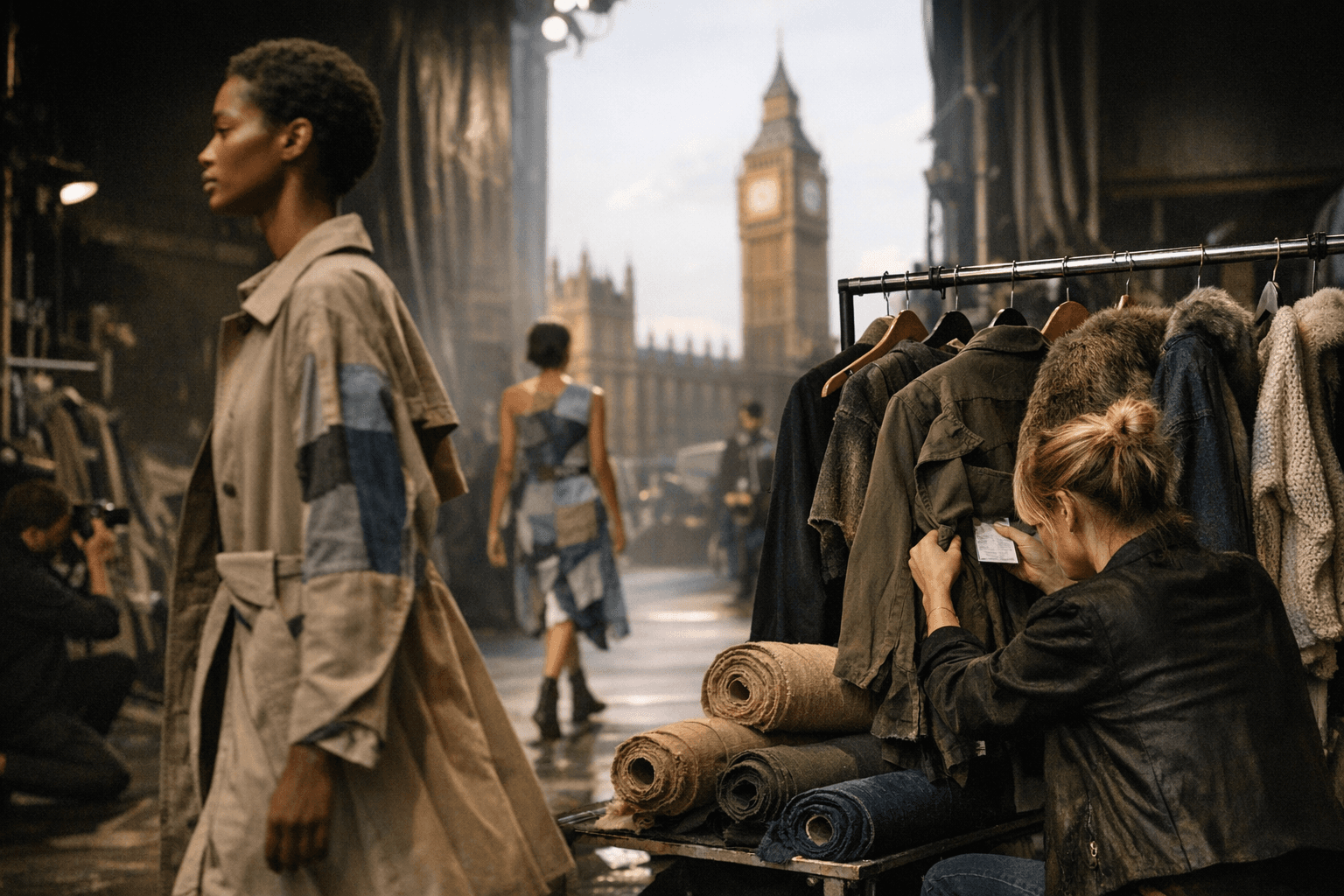
The show floor at London Fashion Week felt different on Feb 21, 2026 - catwalks lined with matte deadstock silks and structured recycled suiting instead of feathered flourishes. Abi Turner at Eco-age wrote that "From Autumn/Winter 2026, London Fashion Week will formally adopt Copenhagen Fashion Week’s Sustainability Requirements," and that the move is being rolled out starting with the season running Thursday 19 to Monday 23 February 2026. Frankly, making participation conditional is overdue; disagree if you must.
The headline requirement is numerical and non-negotiable in the copy being cited: "At least 60% of a collection is to be certified, made of preferred materials or deadstock fabric," Eco-age reports. That 60 percent threshold sits alongside explicit content bans. Hutton told Eco-age, "We (LFW) are the first Fashion Week to ban fur and exotic animal skins." LinkedIn posts and other briefings list the same prohibitions - fur, wild animal skins and feathers - and show-production rules that eliminate single-use props and plastics.
Operational obligations land heavy. A briefing titled "London Fashion Week Introduces Mandatory Sustainability Rules" lays out the requirements in practical terms: "Brands must disclose the origin of their materials, set measurable targets for reducing carbon footprints, and follow guidelines on waste management and chemical use. Participants are also required to submit an annual sustainability report to demonstrate ongoing progress and adherence to best practices." Those reporting duties sit next to promises of business support - Eco-age notes the British Fashion Council will back brands with mentoring and training, and Indulge Global points to the BFC’s Institute of Positive Fashion, established in 2020, as part of the policy ecosystem.
Rollout timelines remain contested in the reporting. Indulge Global states, "Starting in 2025, the British Fashion Council will pilot its minimum sustainability standards with NEWGEN brands ... By January 2026, these requirements will be fully enforced for all NEWGEN brands participating in the event." Eco-age frames the formal adoption as beginning from Autumn/Winter 2026 while naming the February 19-23 season as the initial implementation window. Both claims appear in circulation today, which complicates how quickly buyers and press can expect uniform compliance across the whole schedule.
City-level infrastructure is joining the push. Eco-age records that the London Textiles Action Plan launched in March 2025 with London Councils One World Living programme, the Greater London Authority, ReLondon and the Ellen MacArthur Foundation to boost reuse, recycling and circular textile economies around the capital. NEWGEN history is part of the justification: Eco-age reminds readers that the BFC’s NEWGEN programme has launched designers such as Jonathan Anderson and Alexander McQueen.
Conflicts remain over who moved first on exotic skins. Indulge Global claims Copenhagen implemented a ban in March 2024 and that London followed in November 2024, while Eco-age carries Hutton’s claim of first-mover status for LFW. For buyers and collectors, the immediate shopping rule is simple: favor pieces that state certified, preferred or deadstock content and avoid fur, exotic skins and feather trims. The real test over the coming seasons will be whether the BFC’s mentoring and the annual reporting translate into verifiable supply-chain change rather than polished runway performances.
Know something we missed? Have a correction or additional information?
Submit a Tip