Long-Range EVs Under $40,000 Multiply as U.S. Sales Slide
Sub-$40,000 EVs now offer 300-plus miles of range, but Q1 sales still fell as the post-credit market tests whether price cuts are enough.
The budget EV is finally looking real
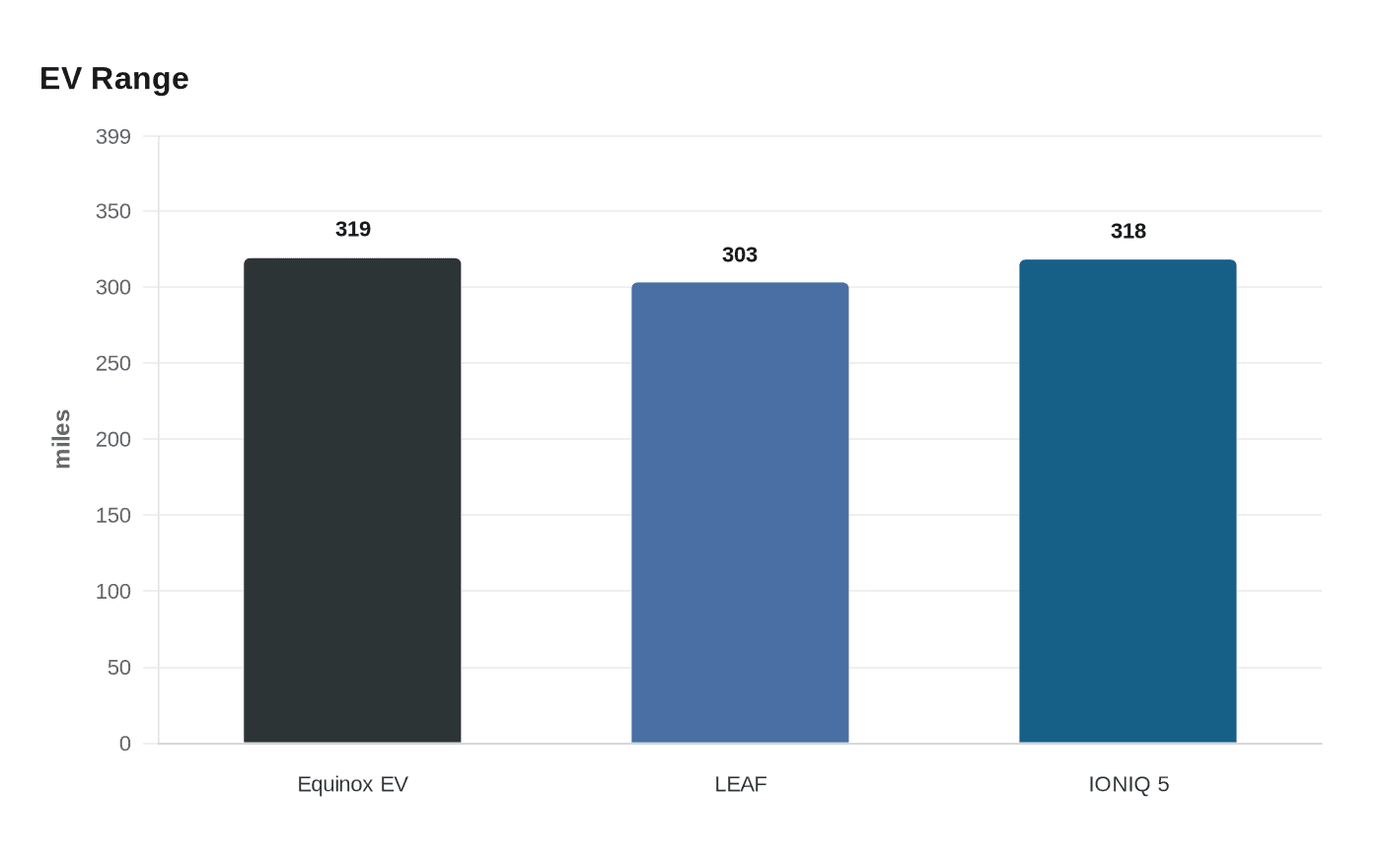
The long-promised mass-market EV is starting to take shape in a way middle-class buyers can actually use: the 2026 Chevrolet Equinox EV reaches 319 miles on front-wheel-drive models, the 2026 Nissan LEAF can go up to 303 miles, and the 2026 Hyundai IONIQ 5 stretches to an EPA-estimated 318 miles. With the federal $7,500 clean vehicle credit no longer available for vehicles acquired after September 30, 2025, sticker price has moved back to the center of the decision, and that makes sub-$40,000 models more important than ever.
That matters because these EVs are no longer priced like niche tech toys. The Sierra Club notes that the average new car now costs about $50,000, which puts a $30,000 to $39,000 EV squarely below the market norm rather than above it. The practical question is no longer whether an affordable EV exists, but whether the new crop combines enough range, charging speed and convenience to pull in buyers who have sat out the EV boom.
What the sub-$40,000 field now looks like
The range of choices has widened fast. Chevrolet’s own configurator lists the 2027 Bolt at $28,995 and the Equinox EV at $36,795, while CarGurus’ broader under-$40,000 list also includes the Nissan LEAF, Hyundai Kona Electric, Toyota bZ, Subaru Uncharted, Toyota C-HR, Tesla Model 3, Hyundai Ioniq 6 and Subaru Solterra. That breadth matters because the market is no longer dependent on one bargain model to carry the segment.
- Chevrolet Equinox EV: 319 miles of EPA-estimated range on FWD models, 307 miles on AWD models, up to 84 miles of added range in 10 minutes on public DC fast charging, and a 10% to 80% charge in about 42 minutes.
- Nissan LEAF: starting at $29,990, up to 303 miles of range, 10% to 80% DC fast charging in 35 minutes, and built-in NACS compatibility that Nissan says opens access to more than 20,000 Tesla Superchargers.
- Hyundai IONIQ 5: starting MSRP of $35,000 on Hyundai’s site, with an EPA-estimated 318-mile range on RWD versions and ultra-fast charging from 10% to 80% in 24 minutes.
Sticker price is back in the driver’s seat
The end of the federal credit has changed the psychology of EV shopping. When a buyer could mentally subtract $7,500 from the sticker, a mid-$40,000 EV felt much closer to a mainstream gas crossover. Without that subsidy, the actual sticker has become the number that decides whether a household can fit the car into its monthly budget, especially as auto loan rates and insurance costs remain elevated.
That shift is why the under-$40,000 bracket is so important now. It is not just a lower price point, it is a threshold that lands well below the average new-car transaction price and makes the EV case easier to explain in purely household-budget terms. Hyundai’s current IONIQ 5 pricing and Chevrolet’s Equinox EV pricing both sit in that zone, which gives them a real chance to compete on value rather than only on technology.
Charging speed is what turns affordable into usable
Long range only helps if charging is quick enough to make the car usable on a road trip. On that score, the new affordable class is far better than the first generation of budget EVs. The LEAF’s 35-minute DC fast charge, the Equinox EV’s 42-minute 10% to 80% window, and the IONIQ 5’s 24-minute sprint give these cars enough highway credibility to be taken seriously beyond the commute.
That is the real change in the market. Earlier affordable EVs often asked buyers to accept short range, slow charging, or both. The current group makes a different offer: lower entry prices without giving up the kind of range that makes daily driving easy and intercity travel plausible, which is exactly what mass-market adoption requires.
Why the sales picture is still weak
The product mix is improving, but demand is not yet following in lockstep. Cox Automotive reported that U.S. EV sales fell 27% year over year in the first quarter of 2026 to 216,399 vehicles, and EVs accounted for 5.8% of total new-vehicle sales, unchanged from the fourth quarter of 2025. Cox also said the quarter-over-quarter drop slowed to 7.8%, which suggests the post-incentive reset is still working its way through the market rather than being fully absorbed.
That is the central tension for the industry: the cars are getting more affordable, but the market is still digesting the loss of the subsidy that helped bridge the gap between EV pricing and mainstream budgets. The result is a segment that looks healthier on the showroom floor than it does in the sales charts.
The long-term economics are moving in the right direction
There is a cost story behind the product story. The International Energy Agency says lithium-ion battery pack prices fell 20% in 2024 alone, the largest drop since 2017, which helps explain how automakers can now offer more range at lower sticker prices. At the same time, the IEA says the combined market capitalization of pure-play EV carmakers fell nearly 20% on average in 2023 relative to 2022, a sign that investors remain skeptical even as the hardware gets cheaper to build.
That split is telling. The technology is advancing, battery economics are improving and the affordable EV menu is wider than it has ever been. But a sustained demand rebound will depend on whether buyers believe these vehicles are not just cheaper than yesterday’s EVs, but good enough to replace the gas car in the driveway without financial strain or charging anxiety.
The verdict for now is clear: long-range EVs under $40,000 are no longer a promise, they are a growing category. The harder test is whether enough households see 300 miles, quick charging and a sub-$40,000 sticker as the new normal, because that is what it will take to turn a cooling market into a real mass market.
This article was produced by Prism’s automated news system from verified source data, official records, and press releases, then run through automated quality and moderation checks before publishing. The system is built and supervised by the people who set the standards it runs under. Read our full AI policy.
Did this article answer your question?