Loro Piana Unveils Nomadic Reverie Fall/Winter 2026 Train-Inspired Paisley Revival
Paisley-clad walls and five screen-printed shawls turned Loro Piana’s Milan courtyard into a train-window daydream for the Fall/Winter 2026 “Nomadic Reverie” collection.
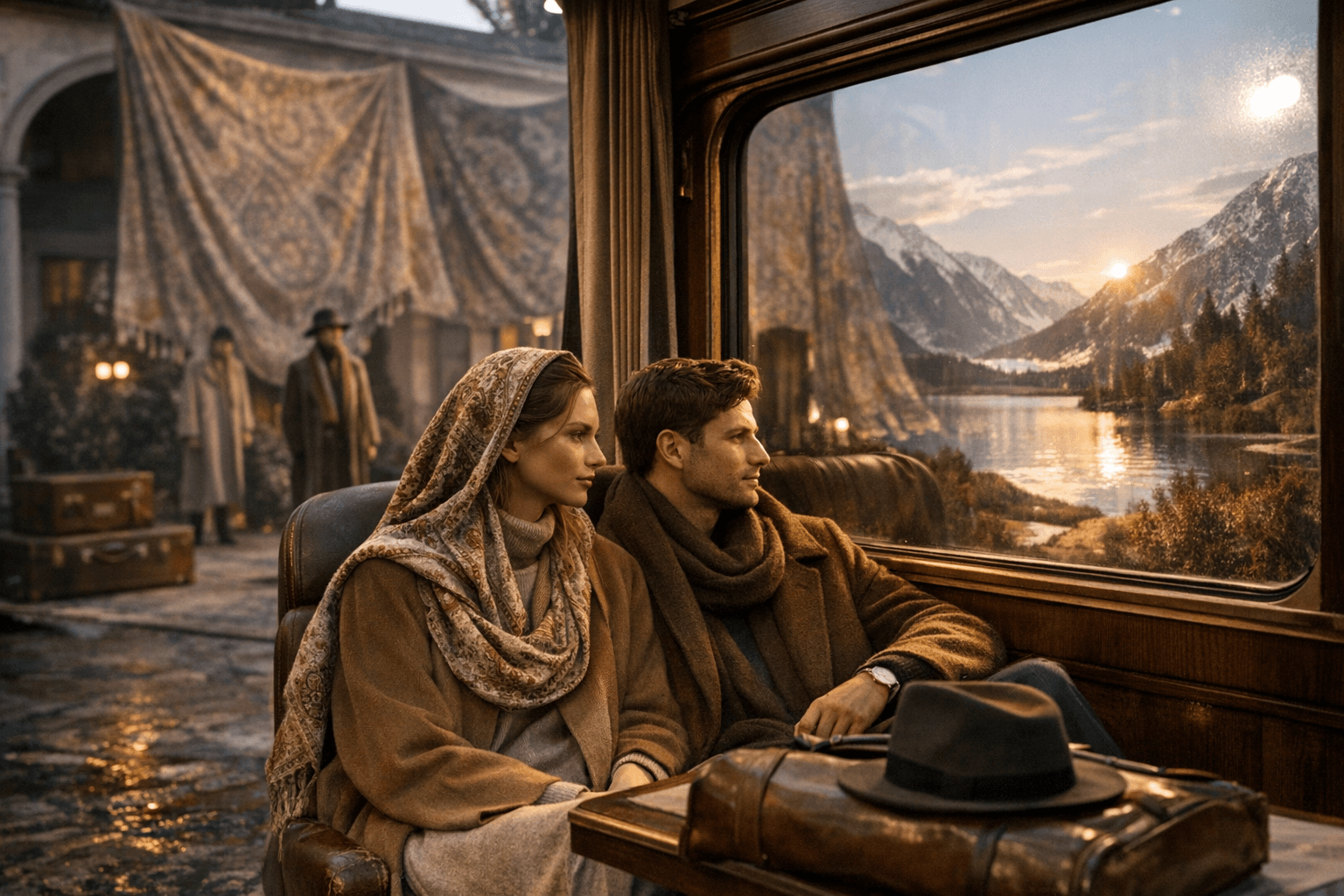
The moment you stepped into the Cortile della Seta at Loro Piana’s Milan headquarters, paisley swallowed the room. Walls covered in the Maison’s teardrop motif read like a tapestry of textures, and five shawls, screen-printed with advanced paisley patterns, hung as handcrafted punctuation marks in the space. The presentation articulated a clear conceit: travel remembered through fabric and light, presented as a moving train of scenes rather than a traditional runway.
Loro Piana unveiled Nomadic Reverie on February 27, 2026, and the message was literal and poetic. LVMH framed the collection as a journey, writing that “Silhouettes seem effortlessly put together en route, like notes jotted in a journal at each stop.” That image played out across the set: a train carriage installation with blurred landscape windows, mannequins arrayed like fellow passengers, and a soundtrack of spoken text. Crash Magazine made the staging explicit, noting that “as a narrative voice recites these eight poems, listeners are invited to embark on a dynamic and delicate journey, rich in sound and refinement.”
Craftsmanship was the through line. Modules covered in Sopravisso wool carried the new bags while waxed wood cabins showcased Grande Unita cashmere scarves, giving the courtyard a cabin-car practicality elevated by fine textiles. Crash Magazine singled out the printing work on the wall shawls as evidence of Loro Piana’s “unique expertise in printing techniques,” and the five shawls on display read like small exhibitions of technique rather than mere accessories.
The clothes stayed faithful to the Maison’s language but nudged it toward a nomadic pragmatism. LVMH outlined single- and double-breasted blazers and coats alongside a tailored two-piece, while icons were revisited: Spagna, Horsey, Roadster, and Winter Voyager returned in updated forms. The Rovasenda jacket re-emerged and the Maremma jacket surfaced in a bomber iteration for a more modern, pragmatic silhouette. Eveningwear leaned into tuxedos and satin-trimmed coats with rollnecks replacing shirts, a deliberate swap Loro Piana used to fold casual warmth into formal dressing.
Color moved like scenery. Lucrezia Sgualdino at Musemagazine It mapped the progression: “Warmth is initially conveyed through ochre and terracotta, then moves toward details that evoke sunlight in shades of gold, pink, and brown. Continuity is maintained with elegant beige, grey, and deep brown, gradually descending into richer tones of green, anthracite, and midnight blue.” Those shifts made paisley feel mutable rather than fixed, pairing the motif with jacquard, herringbone, animalier, and tweed for texture-driven contrast.
Heritage was visible without being museum-like. Crash Magazine traced the paisley teardrop back to “the Maison’s historical textile archives in the late ’60s and early ’70s,” and the show used that archive line to justify both reverence and reinvention. Bags, shoes, and accessories were staged as tools for movement, completing the nomadic vision that Loro Piana presented.
Nomadic Reverie sealed a simple playbook for Loro Piana: marry archive motifs with demonstrable textile skill and let the set design do the storytelling. The result was less spectacle and more lived-in reverie - paisley as passport, cashmere as travel blanket, tailoring as weather-ready armor for private journeys.
Know something we missed? Have a correction or additional information?
Submit a Tip