Louis Gerstner, the CEO Who Revitalized IBM, Dies
Louis V. Gerstner Jr., the executive credited with rescuing IBM in the 1990s, died on December 28, 2025 at the age of 83, the company said. His strategic decision to keep the company intact and pivot toward integrated services reshaped corporate technology and remains a central study in business turnarounds.

Louis V. Gerstner Jr., the chief executive who led the turnaround of International Business Machines Corporation in the 1990s, died on December 28, 2025, at age 83, IBM said. The company’s chairman and chief executive Arvind Krishna notified employees in an internal message but did not disclose a cause or location of death.
In his internal message Mr. Krishna wrote, "Lou arrived at IBM at a moment when the company's future was genuinely uncertain. His leadership during that period reshaped the company. Not by looking backward, but by focusing relentlessly on what our clients would need next." The tribute echoed the widely held view that Gerstner’s stewardship redirected one of America’s most storied technology firms away from crisis and toward renewed relevance.
Gerstner was appointed chairman and chief executive in 1993. He outlined his plans at a New York press conference on March 26, 1993 and formally assumed the chairman and chief executive roles starting April 1, 1993. He remained at the helm for nine years, a period running through 2002 that business schools and corporate boards often cite as a defining example of enterprise restructuring and strategic pivoting.
When he arrived, IBM faced severe financial strain and a bitter debate among investors and advisers over whether the company should be broken into parts. Gerstner rejected that course and instead implemented a broad reorganization. He shifted IBM away from a structure built on separate product divisions and toward integrated solutions and services aimed at large enterprise customers. He also remade the company’s internal culture, reorienting management and operations to respond to client needs and improve execution.
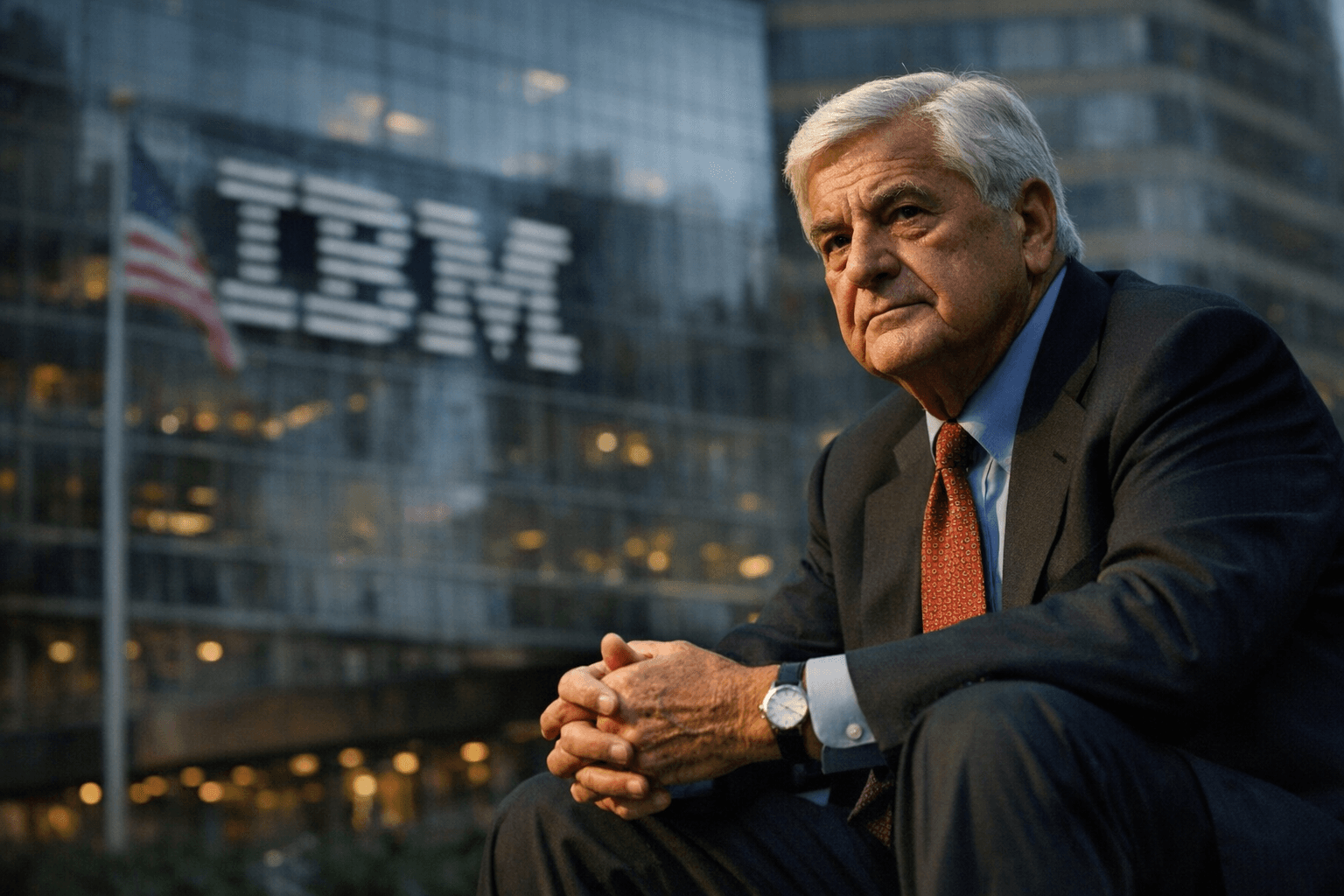
Those moves helped turn IBM from a technology vendor focused on hardware into a services led enterprise offering complex systems integration, consulting and long term contracts that tied revenues more closely to customer outcomes. By the early 2000s the company had regained strategic footing, and many analysts credit Gerstner with restoring IBM’s competitiveness in an industry rapidly reshaped by software, networking and outsourcing.
Gerstner’s tenure also left an imprint on industry leadership. Numerous executives who later assumed prominent roles in technology and consulting passed through IBM under his leadership, carrying elements of his management approach into other firms and sectors. The strategic model he favored contributed to a wider shift across corporate IT toward outsourcing, managed services and integrated enterprise platforms.
IBM has not released additional personal details about Gerstner’s death, and the company provided no immediate information about survivors or funeral arrangements. For corporate leaders and policy makers, his career remains a touchstone for decisions about whether large industrial era firms can be retooled to compete in fast changing technology markets. His legacy will be measured in both the revived finances of a once floundering company and the long term industry trends his choices helped to accelerate.
This article was produced by Prism’s automated news system from verified source data, official records, and press releases, then run through automated quality and moderation checks before publishing. The system is built and supervised by the people who set the standards it runs under. Read our full AI policy.
Did this article answer your question?

