LPG carrier attacked off Romania coast, 17 crew rescued
An LPG carrier carrying more than 3,790 metric tons caught fire 20 nautical miles off Romania, and rescuers pulled all 17 crew to safety.
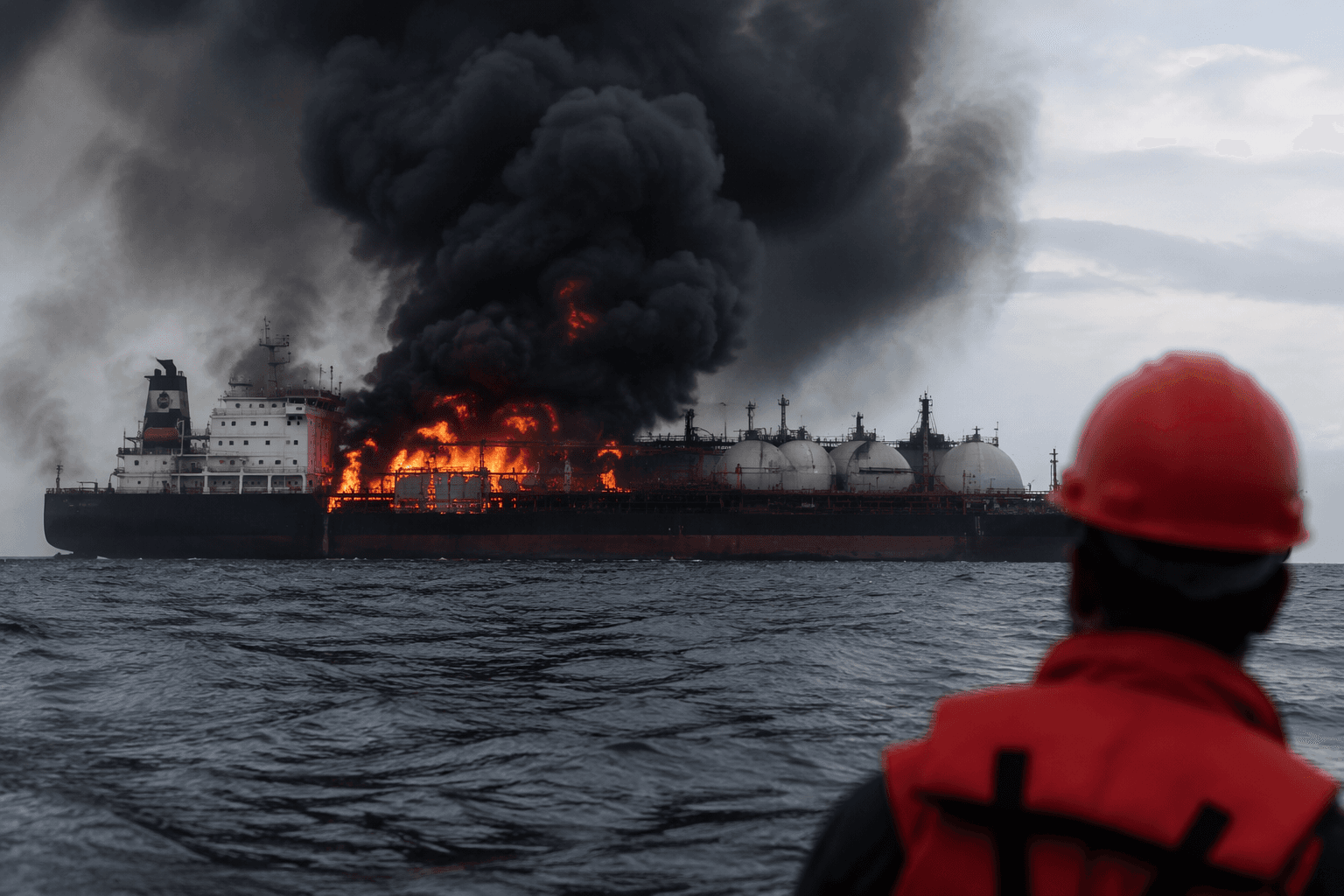
Romanian authorities rescued all 17 crew members after an LPG carrier bound for Ukraine was struck about 20 nautical miles, or roughly 30 kilometers, off Romania’s coast, outside Romanian territorial waters. Three sailors were injured and needed emergency medical care after the vessel caught fire, turning a routine fuel transit into a maritime rescue operation in the middle of the Black Sea.
The ship was identified as the Liberian-flagged Gas Lisbon, sailing from Egypt to Ukraine with more than 3,790 metric tons of liquefied petroleum gas on board. Romanian rescue services evacuated the crew from the vessel as fire spread after the strike, adding another dangerous episode to a shipping corridor that has become increasingly exposed since Russia’s full-scale invasion of Ukraine in 2022.
Romanian President Nicușor Dan said the attack was likely linked to Russia’s war on Ukraine and described it as a serious incident. Authorities launched a probe to determine the cause. The fact that the strike happened so close to Romania, a NATO member, gives the episode a wider political edge: the ship was hit outside Romanian territorial waters, but still close enough to require rapid intervention from Romanian maritime and rescue teams.
The Black Sea has become a regular theatre of confrontation, and this incident shows how quickly commercial traffic can be pulled into the conflict. The corridor is vital for cargo moving to and from Ukraine, including grain, fuel and industrial goods. A hit on a merchant vessel carrying LPG does not only threaten the crew and the ship itself; it also raises the odds of higher insurance costs, rerouting and delays for carriers already operating under wartime risk.
That pressure matters for exports as well. Ukraine’s access to the Black Sea remains central to moving bulk commodities, especially grain, and every attack on shipping or port-linked traffic adds another layer of uncertainty for traders, insurers and port operators. When a vessel can be struck near Romania’s shoreline, even ships that never enter Ukrainian ports must factor in the possibility of military risk along the route.
The rescue off Romania also underscores the security burden on Black Sea states bordering the war zone. Romanian authorities were forced to respond not only to the fire and the injuries aboard Gas Lisbon, but also to the wider message sent by a strike so close to NATO territory. Each such incident pushes the region closer to a maritime environment where ordinary commercial passage is no longer routine, and where one attack can ripple through shipping, insurance and regional security at once.
This article was produced by Prism’s automated news system from verified source data, official records, and press releases, then run through automated quality and moderation checks before publishing. The system is built and supervised by the people who set the standards it runs under. Read our full AI policy.
Did this article answer your question?