Lucid Group Misses Delivery Targets After Supplier Seat Defect Halts Gravity Sales
A seat supplier changed its manufacturing process without Lucid's approval, triggering a 29-day Gravity sales halt and dragging Q1 deliveries to 3,093 vehicles, nearly half of what Lucid produced.

A single unauthorized manufacturing change by a seat supplier cost Lucid Group roughly six weeks of Gravity SUV momentum, leaving the electric automaker with a widening gap between what it built and what it actually sold during the first quarter of 2026.
Lucid produced 5,500 vehicles in the three months ended March 31 but delivered only 3,093, falling well short of the Visible Alpha consensus that had forecast approximately 5,237 deliveries and around 5,967 units produced. The company disclosed the figures on April 3.
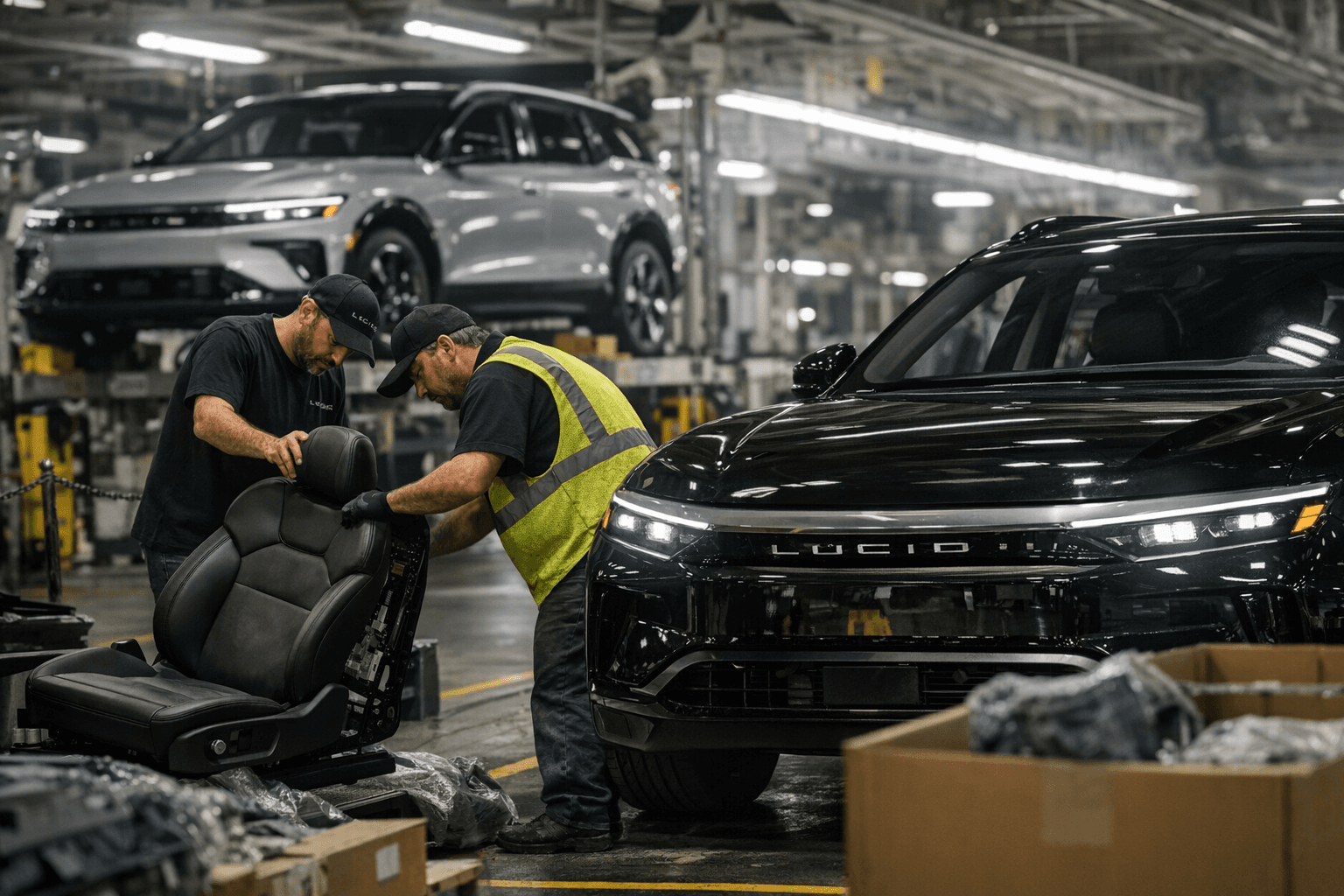
The root cause was a quality defect in the Gravity's second-row seats. Supplier Camaco Automotive altered its manufacturing process without notifying or obtaining approval from Lucid, resulting in improperly welded seat belt anchors in vehicles produced before February 14. The flaw prompted a formal recall covering 4,476 Gravity SUVs and triggered a 29-day halt in deliveries of the model. Lucid said the supplier has since reverted to the original design specification and that vehicles built after February 14 are unaffected.
The disruption carried particular weight because the Gravity is central to Lucid's effort to diversify beyond the Air sedan and broaden its customer base in the premium SUV segment. A nearly month-long sales freeze during a critical early production ramp does not simply reduce one quarter's revenue; it erodes dealer confidence, pushes back customer wait times and puts pressure on a company that has limited margin for operational error. Lucid's cash position, estimated at roughly $3 billion heading into the year with a liquidity runway extending into the second half of 2026, makes sustained execution increasingly non-negotiable.
Despite the delivery shortfall, Lucid reaffirmed its full-year production guidance of 25,000 to 27,000 vehicles for 2026. The company also disclosed a methodological change: starting this quarter, it is including all vehicles produced at its AMP-1 facility in Arizona in its production totals, including units destined for export to Saudi Arabia. That accounting shift adds context to the production figure but does not change the delivery gap.
Lucid has scheduled a full Q1 earnings call and investor question-and-answer session for May 5. That presentation will draw scrutiny well beyond standard financial metrics. Analysts want specifics on how Lucid plans to tighten supplier oversight protocols, whether the Gravity delivery backlog can be cleared in Q2 and how margins hold up as AMP-2, its Saudi Arabian manufacturing facility, moves toward full-scale production. The broader competitive landscape offers little patience for repeat disruptions: Tesla, Rivian and a growing field of premium EV entrants are all competing for the same segment of buyers Lucid is targeting with a vehicle that just won the 2026 World Luxury Car award, even as it was being recalled.
The Q1 delivery number, at 3,093 units, is almost identical to the 3,109 Lucid delivered in Q1 2025, suggesting the Gravity ramp has yet to translate into measurable year-over-year delivery growth. Whether May's earnings call reframes that stagnation as a one-quarter anomaly or an early signal of structural supply-chain fragility will define investor sentiment through the rest of 2026.
Sources:
Know something we missed? Have a correction or additional information?
Submit a Tip