Magyar names key ministers, signals fiscal repair and EU reset
Peter Magyar’s first cabinet picks hint at budget discipline and an EU thaw, but his pressure on judges and state media suggests a deeper institutional fight.
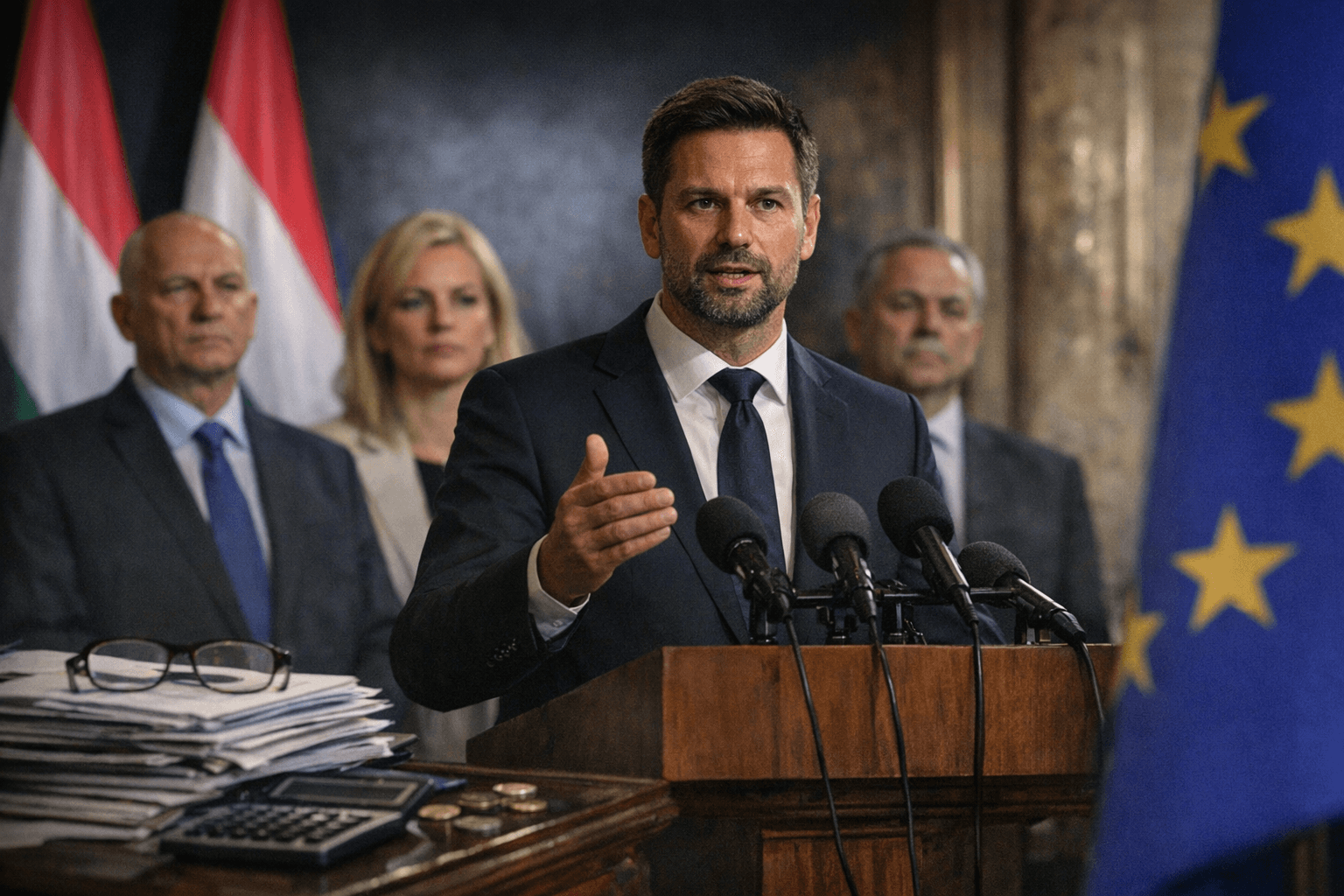
Péter Magyar used his first ministerial picks to send a clear message: Hungary’s next government will be judged on whether it can steady the budget, unlock frozen EU cash and ease the pressure of rising living costs. He named András Kármán as finance minister, Anita Orbán as foreign minister and István Kapitány as economy and energy minister, a lineup that blends technocratic experience with a promise to break from Viktor Orbán’s rule.
The choices matter because Magyar won power with unusual strength. Tisza took 141 of 199 seats in the April 12 parliamentary election, giving it a two-thirds majority in the Hungarian National Assembly after the highest turnout in a Hungarian parliamentary election since 1990. Government formation was expected to move toward the week of May 11, giving Magyar a narrow window to turn an electoral landslide into a working state.
Kármán’s appointment points to fiscal repair as the first test. He helped develop Tisza’s wealth tax proposal, a sign that the new leadership wants to talk about revenue as well as restraint. That is a delicate balance in a country where the European Commission projects Hungary’s general government deficit at 5.2% of GDP in 2026 and debt to GDP rising to about 75% in 2027. Inflation is expected to moderate, but household pressure remains central to the political backdrop.
The foreign affairs post suggests a more immediate reset with Brussels. Anita Orbán, a former Vodafone board member with experience at the European Council on Foreign Relations, brings a profile that points toward engagement rather than confrontation. Ursula von der Leyen said on April 14 that there was “swift work” to be done on reforms needed to unfreeze EU funding, and European Commission officials have already held technical talks with Magyar’s team in Budapest about releasing billions in suspended money tied to rule-of-law and corruption concerns.
The economy and energy portfolio may prove equally revealing. István Kapitány spent 37 years at Shell, giving him deep experience in energy markets at a moment when Hungary remains exposed to regional shocks and disputes over Russian supplies. That makes the portfolio more than a cabinet slot. It is a test of whether Magyar will pursue practical diversification and market confidence, or merely repackage old dependencies in new language.
Yet Magyar’s first moves also show that this is not only a technocratic reset. On April 15 he announced plans to overhaul state media, and on April 20 he renewed his demand that President Tamás Sulyok and top judges resign by May 31 or face removal. The ministerial lineup may open the door to fiscal discipline and an EU thaw, but the real break with the Orbán era will depend on whether Magyar is willing to confront the institutions that sustained it.
This article was produced by Prism’s automated news system from verified source data, official records, and press releases, then run through automated quality and moderation checks before publishing. The system is built and supervised by the people who set the standards it runs under. Read our full AI policy.
Did this article answer your question?

