Magyar threatens legal move to oust Hungary’s president
Péter Magyar said he would start proceedings to remove Tamás Sulyok unless he resigned, putting Hungary’s new supermajority to an institutional test.
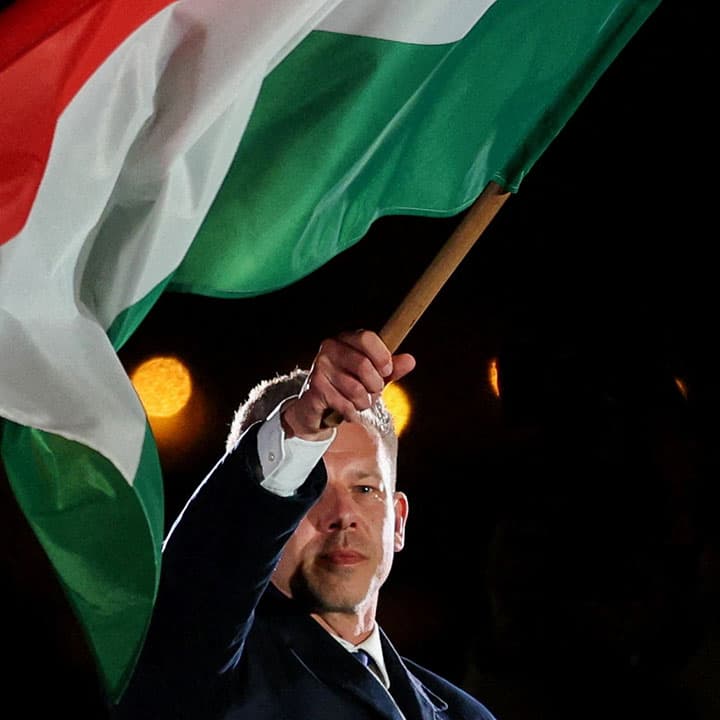
Péter Magyar said he would launch legal proceedings to remove President Tamás Sulyok if the head of state refused to resign, turning Hungary’s largely ceremonial presidency into an early test of the country’s new political order. The dispute puts the Tisza party’s April landslide and its 138-seat constitutional majority in direct conflict with an office still able to slow legislation by sending bills back to parliament or to the Constitutional Court.
Magyar made the threat after meeting Sulyok at Sándor Palace in Budapest. He said the process would take about a month and would not target Sulyok alone, but would instead be built into a broader constitutional framework that could also remove other state leaders. Magyar also said he wanted citizens to have a greater say in choosing the president, signaling that Tisza is not just trying to replace one officeholder but to redraw the rules around how power is chosen and checked.

Sulyok rejected the pressure. He said the matter should be handled according to the constitution and that he would wait for the Venice Commission’s opinion. He later warned on Facebook that the clash could deepen social division and damage Hungary’s international reputation. Fidesz, Viktor Orbán’s party, called Magyar’s demand an “unlawful ultimatum” and said Sulyok’s mandate runs until 2029.
The immediate stakes go beyond a single presidency. Tisza won about 53% of the vote in Hungary’s 12 April election, taking 138 of 199 seats in the National Assembly, while Fidesz-KDNP won 55 seats and the far-right Our Homeland took six. That result ended 16 years of Orbán-led rule and gave Magyar the parliamentary strength to rewrite the Fundamental Law if he can keep his bloc united. It also gave him a path, at least in theory, to challenge officials installed under Orbán’s long tenure in key state institutions.

Sulyok is one of those officials. He was elected president on 26 February 2024 by 134 lawmakers and took office on 5 March 2024 after Katalin Novák resigned over a pardon scandal. His office is formally restrained, but it still carries real leverage. In Hungary’s system, the president can sign legislation, return bills to parliament for reconsideration, or seek review from the Constitutional Court. That makes the post politically weak in everyday governance, but highly relevant when a new majority is trying to dismantle the structure left by its predecessor.
This article was produced by Prism’s automated news system from verified source data, official records, and press releases, then run through automated quality and moderation checks before publishing. The system is built and supervised by the people who set the standards it runs under. Read our full AI policy.
Did this article answer your question?

