Make Custom Bath Bombs with Adafruit's 3D-Printed D20 Plunger Molds
Adafruit explains how to 3D print D20 plunger molds and make custom bath bombs, offering step-by-step recipes, mixing tips, and packing and drying guidance for makers and classrooms.
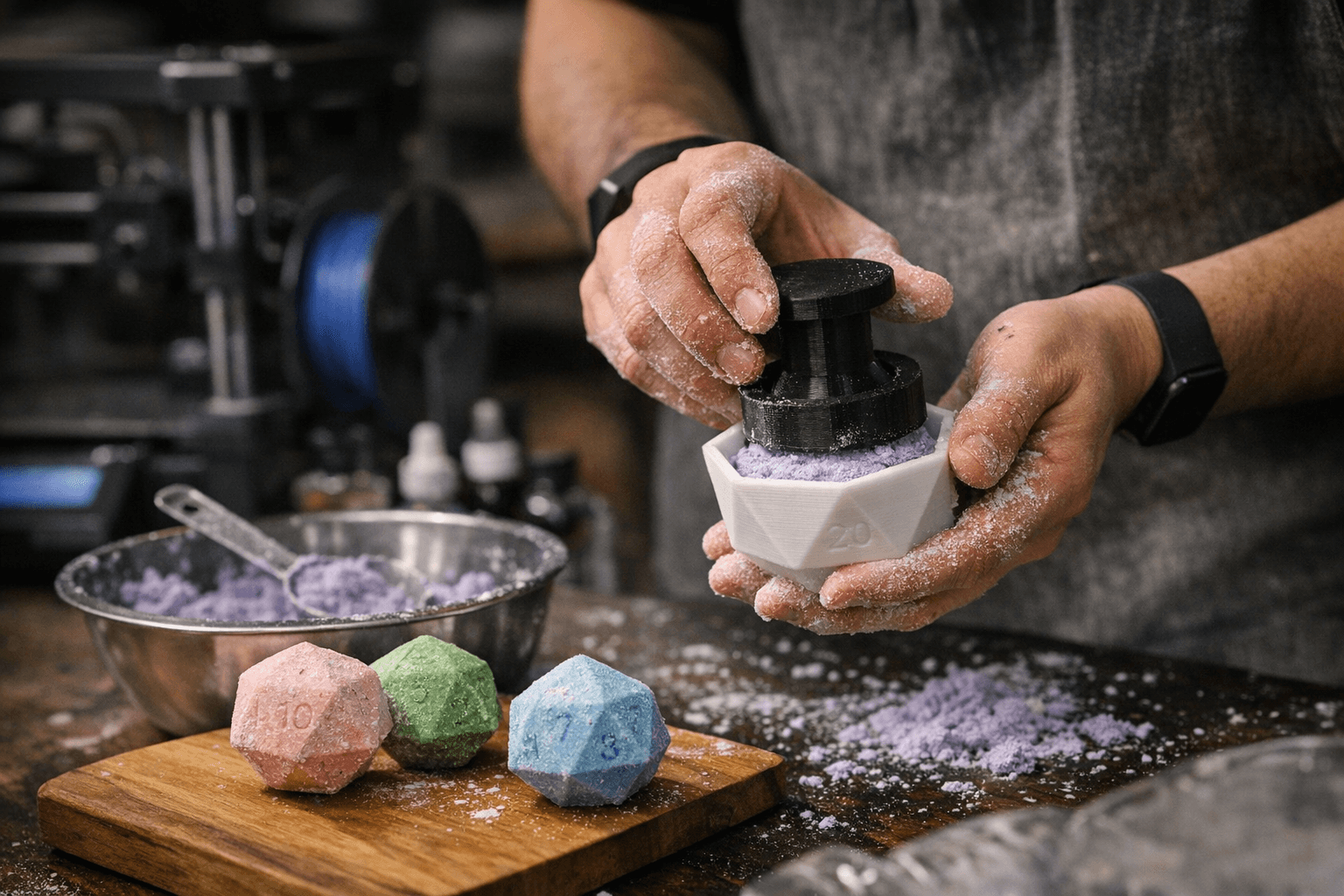
Adafruit has published a hands-on project that walks makers through 3D-printing and using D20 plunger-style molds to produce custom bath bombs. The project matters because it brings precision molding and repeatable results to small-batch crafters and classroom projects, turning a popular gaming shape into a practical way to standardize size, compression, and finish.
The project covers the full workflow. It includes a bath bomb recipe and ingredient ratios featuring baking soda, citric acid, corn starch, Epsom salt, and carrier oils, along with mixing tips to avoid premature fizzing. Instructions discuss packing and compression methods for plunger molds, demolding technique, and drying notes to help makers get consistent fizz and structural integrity. The process applies whether you print your own plunger molds or use commercial plunger-style molds.
Practical value is front and center. Adafruit’s notes on mixing technique and packing emphasize controls that hobby makers and teachers need to prevent activated fizz before the bath bomb is cured. The plunger mold format simplifies demolding compared with two-piece clamshell molds, allowing cleaner edges and repeatable compaction, which is useful when producing multiples for gifts, sales, or classroom demonstrations. The D20 shape also opens a niche for themed sets and gaming-community swaps, adding novelty without complicating the chemistry.
Classroom projects gain clear benefits from the approach. The tutorial is aimed at hobbyists and classrooms, so it frames steps that are easy to teach: measuring dry ingredients, blending to uniform texture, adding liquids carefully to control reaction, packing with consistent pressure, and allowing proper drying before use. These stages let teachers focus on safe handling and stewardship of materials while delivering a satisfying hands-on activity that touches simple chemistry and product design.
For makers with access to a 3D printer, the D20 molds add a low-cost path to custom tooling. For those without printers, the same plunger-style technique works with commercially available molds. Either route gives crafters repeatable results, faster production, and cleaner demolded surfaces.
This project brings together craft chemistry and digital fabrication in a way that’s accessible and practical. Try a small test batch, tune your packing pressure and drying time, and roll a D20 for your next bath bomb run to see how shape and compression change the fizz and finish.
Know something we missed? Have a correction or additional information?
Submit a Tip