Malinin Wins Third Straight World Title, Rebounds From Olympic Collapse
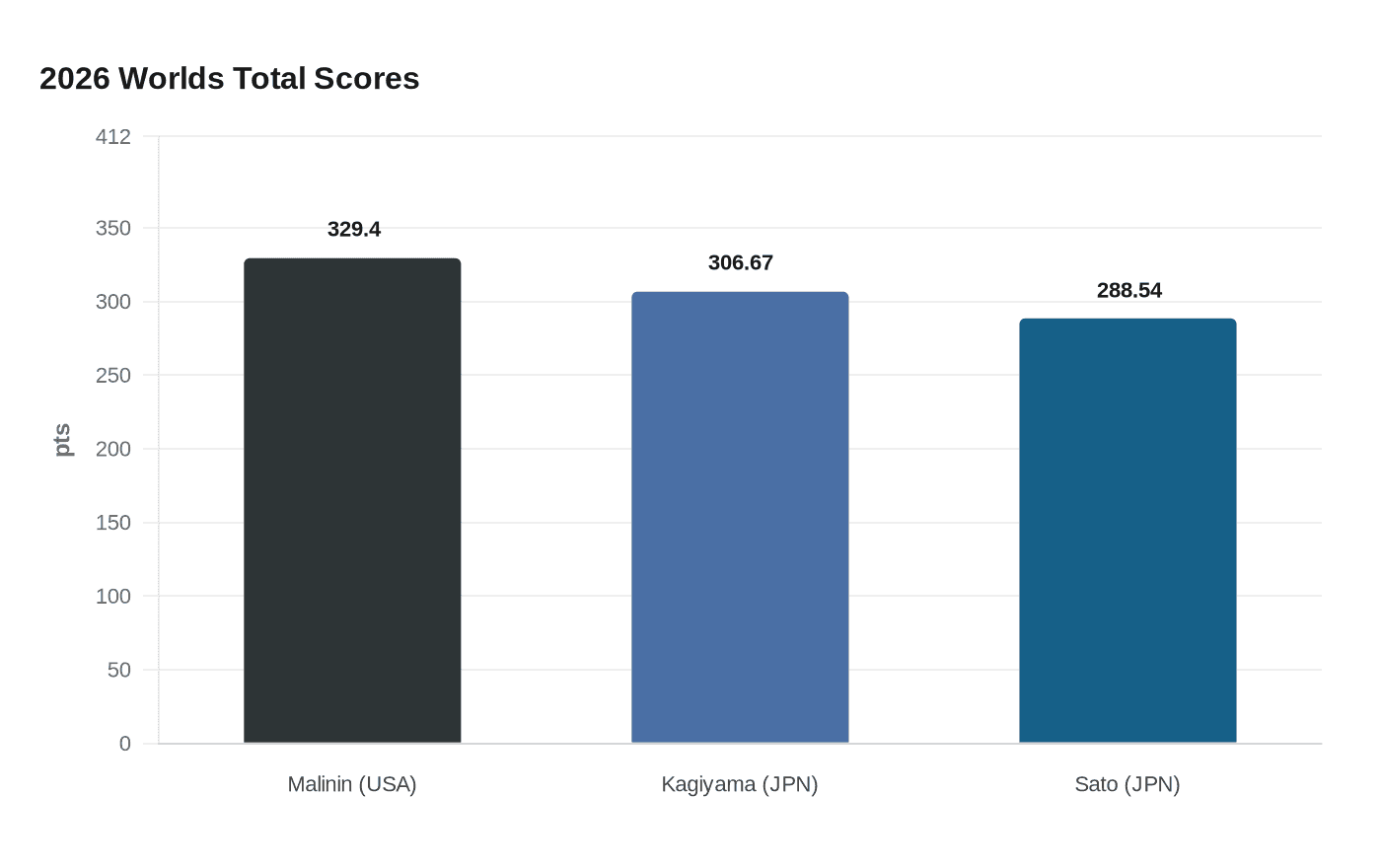
Malinin's 329.40 total at Worlds was 22.73 points clear of the field, five quads and no quad Axel, making his margin the loudest argument in skating's difficulty-vs.-artistry debate.
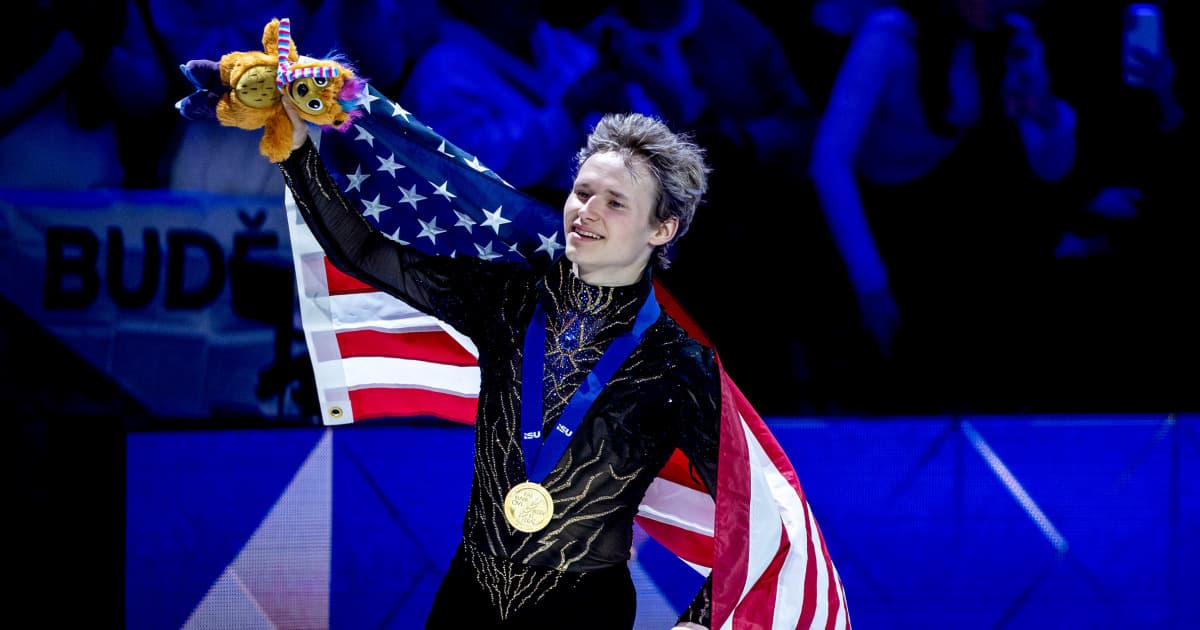
Six weeks after covering his face with his hands at the finish line in Milan, Ilia Malinin stood at center ice in Prague and screamed.
Fists pumping, voice raw, the 21-year-old American completed a near-flawless free skate at the 2026 ISU World Figure Skating Championships on Saturday to claim his third consecutive world title, answering the sport's most uncomfortable question of the past month: whether his Olympic collapse had damaged something deeper than his medal count.
It had not. Malinin's total score of 329.40 points eclipsed silver medalist Yuma Kagiyama of Japan by 22.73 points, a margin that was less a result than a statement. His free skate alone, 218.11 points built around five quadruple jumps and punctuated by his trademark backflip, stood as the kind of performance that reshapes expectations for what the sport's technical ceiling actually looks like. "My expectation was to leave the long program in one piece, and I definitely think that happened," he told reporters afterward.
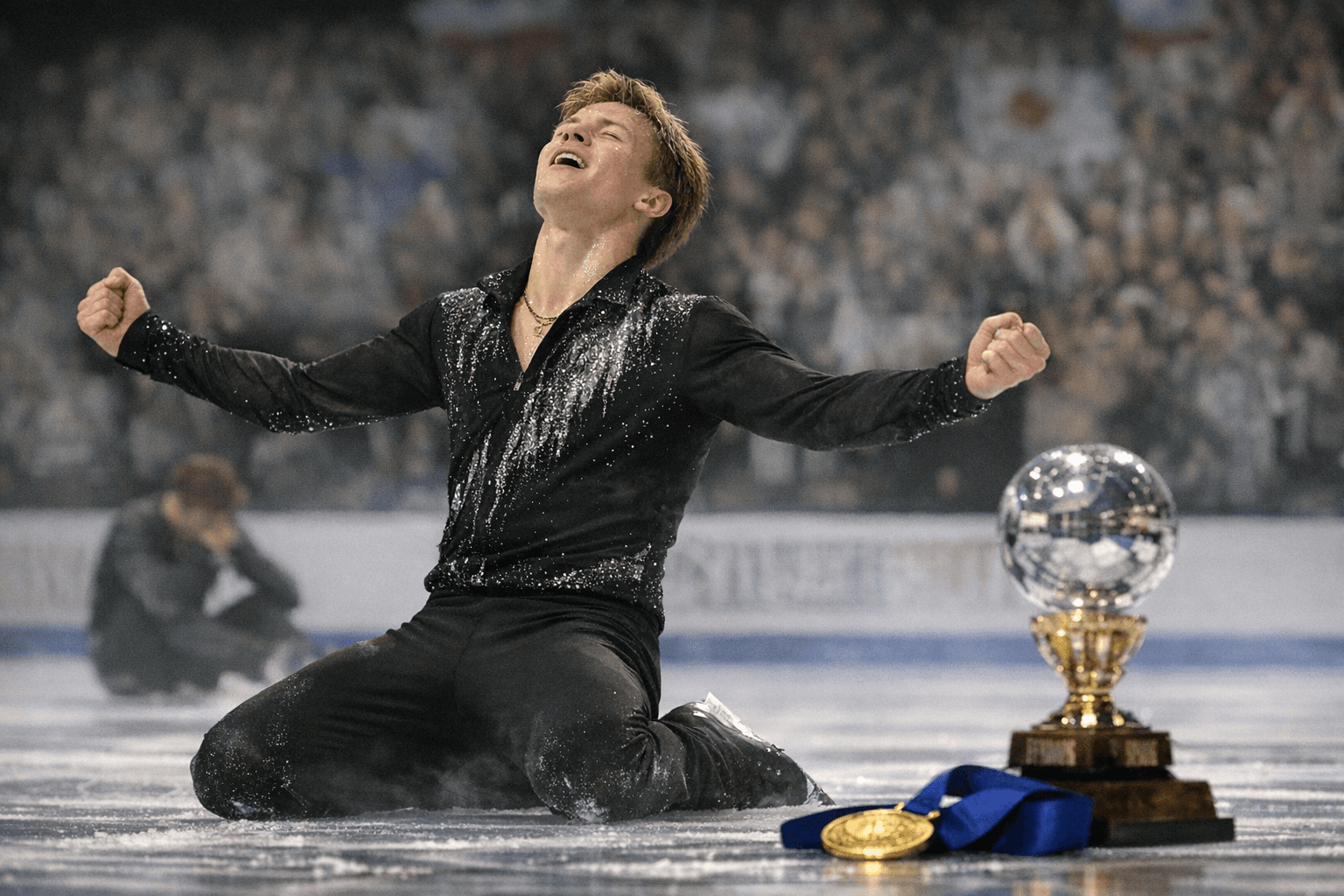
What made the dominance more striking was what Malinin chose to leave out. He did not attempt the quadruple Axel, the jump he became the only skater in history to land in competition and the weapon he brought to the Olympic free skate in Milan. Skating without it, he still outscored the field by more than 22 points, which means his five-quad floor sits comfortably above everyone else's ceiling. The tactical decision, by a skater trained since childhood by his parents, both former elite competitors, signals a maturation that technical scorecards alone cannot fully capture.
The short program had already reset the narrative. Malinin posted 111.29 points Thursday, a personal best and the sixth highest score in that segment's history. Only Nathan Chen's 113.97 sits above it among men who have ever competed. His quad flip, triple Axel and quad Lutz-triple toe loop combination drew high grades of execution across the panel, sending him into the free skate with a lead of nearly 10 points.
Kagiyama, the Olympic silver medalist who finished sixth in the short program before surging through the free skate, took silver at 306.67. Fellow Japanese skater Shun Sato earned bronze at 288.54. Both produced multi-quad programs of genuine quality; neither came close. The gap between Malinin and the rest of the field raises pointed questions the sport is increasingly unable to defer: if the scoring system rewards technical difficulty and one skater's difficulty is categorically separate from all others, what exactly are the judges measuring when they evaluate the rest of the field?
The backdrop of Mikhail Shaidorov's absence added context. The Kazakhstani skater who won Olympic gold after Malinin's collapse opted not to compete this season, a common choice for figure skating champions navigating the post-Games commercial and media wave. There was no rematch to resolve the unfinished business from Milan. Malinin resolved it on his own terms, against the field that showed up.
For U.S. figure skating, the three-peat steadies the men's program heading into a four-year Olympic cycle that will be defined, more than any other factor, by whether any competitor can match the quad load Malinin deploys on an off night. Saturday in Prague confirmed that the answer, for now, remains no.
This article was produced by Prism’s automated news system from verified source data, official records, and press releases, then run through automated quality and moderation checks before publishing. The system is built and supervised by the people who set the standards it runs under. Read our full AI policy.
Did this article answer your question?
.jpg&w=1920&q=75)