March 3 Blood Moon Visible in Yuma County; KYMA Shares Safe Viewing
Yuma County viewers saw the lunar "Blood Moon" totality in the pre-dawn hours; KYMA published local weather and science guidance while totality ran roughly 4:04–5:03 a.m. MST.
Yuma County watched the Moon go copper-red during the total lunar eclipse that peaked in the pre-dawn hours of March 3, with totality lasting about an hour locally — roughly 4:04–5:03 a.m. Mountain Standard Time — and the full event spanning about 5.5 hours according to Time and Date. KYMA published local weather and science guidance for when and how to view the eclipse in Yuma County as clouds and timing questions circulated across regional outlets.
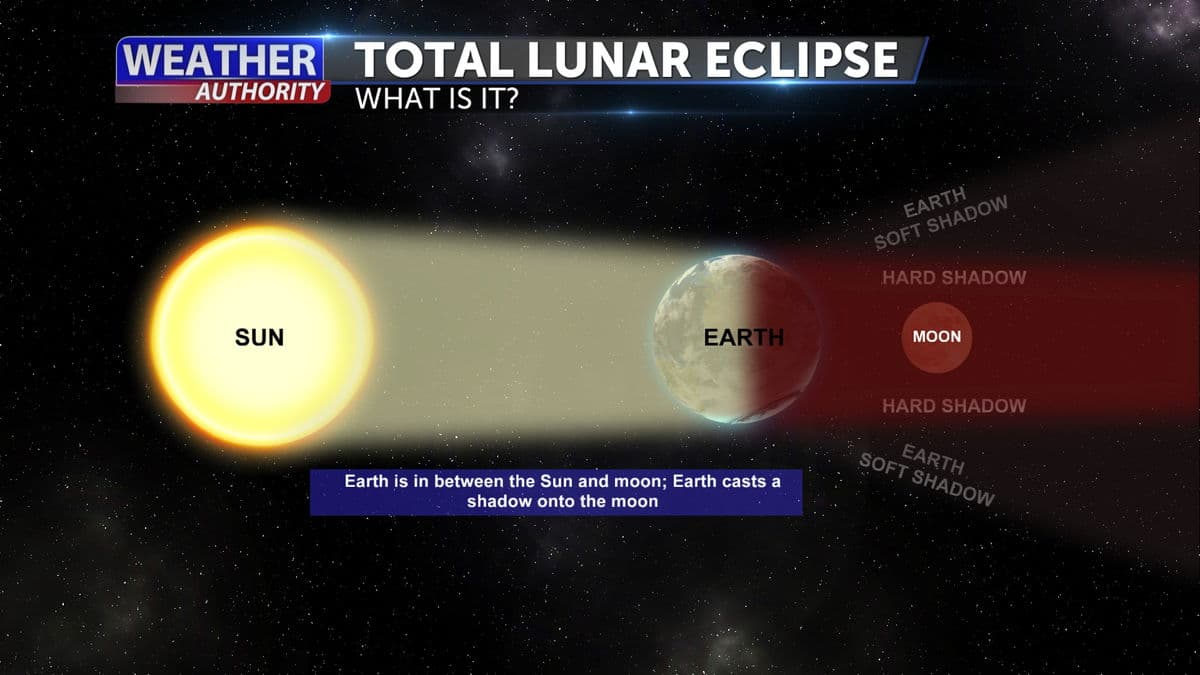
The color and timing drew explanation from national experts. Griffith Observatory director Dr. E.C. Krupp described the reddening as “all the world's sunrises and sunsets sort of filtering through the atmosphere and getting on to the face of the moon even though it's in shadow.” Space and FoxWeather noted the Blood Moon occurs when Earth sits between the Sun and Moon and only atmosphere-filtered sunlight reaches the lunar surface.
Local clock conversions bring penumbral entry into view for Yuma before 2 a.m. MST. Time and Date, cited by LiveScience, lists the eclipse from 3:44 a.m. to 9:23 a.m. Eastern, which converts to a penumbral start near 1:44 a.m. MST for Yuma; FoxWeather and ABC7 regional times align on a totality window around 4:04–5:03 a.m. MST. ABC7’s Southern California coverage emphasized that no telescopes or special eye protection were required for naked-eye viewing.
KYMA’s guidance amplified those conversions for county viewers and highlighted safe viewing practices; national outlets offered complementary resources for photographers and streamers. FoxWeather ran a “TOTAL LUNAR ECLIPSE GEAR GUIDE” for capturing the event, and the Griffith Observatory livestream appeared on multiple feeds for viewers who could not travel to dark-sky sites. LiveScience recommended switching between webcasts from North America, Australia and New Zealand when local visibility or daylight prevented viewing.
Access to dark skies remained a local equity issue. Space noted Tucson’s surrounding stargazing resources — Kitt Peak, Mount Graham, Mount Lemmon and the Tucson Astro Trail — and that Saguaro National Park is open 24 hours as the world’s ninth Urban Night Sky Place. For Yuma neighbors without private transportation or time off in the pre-dawn hours, livestreams and KYMA’s localized timing were practical alternatives to traveling to distant observatories.
Weather complications altered plans for some observers. LiveScience warned that daylight, clouds or the Moon’s low horizon can block views; Space reported a 64 percent historical cloud chance for New Zealand’s Wairarapa Dark Sky Reserve as an example of how local conditions vary. StGeorgeUtah quoted NASA/JPL ambassador Patrick Wiggins noting the show “officially begins just before 2 a.m.” locally there, with most observers noticing darker shadowing nearer 2:50 a.m. if skies cooperate.
Photographers shared wide-ranging images and timelapses as the eclipse crossed time zones. FoxWeather’s gallery included credited shots from Jafet Rosado in Livonia, NY; Brian Coviello in Boynton Beach and Miami, FL; Tim Sullivan in Minden, NV; Marie Patriss in Vista, CA; and a Los Angeles timelapse captioned “GOODNIGHT MOON.” LiveScience linked a YouTube “LIVE: Total Lunar Eclipse (Blood Moon) - March 2–3, 2026” feed for viewers in regions where the sky hid the event.
This Blood Moon was the last total lunar eclipse until New Year’s Eve 2028 and the last one visible from North America until June 25–26, 2029, making the early-morning March 3 viewing a final full opportunity for several years. KYMA’s local timing and weather reporting helped Yuma County make the most of this rare pre-dawn spectacle.
Know something we missed? Have a correction or additional information?
Submit a Tip