Marine veteran and Pulitzer winner Philip Caputo dies, war memoir defined Vietnam generation
Philip Caputo landed in Danang with the first Marine ground unit in 1965, then turned Vietnam into a memoir about what war does to the mind.
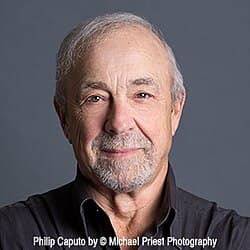
Philip Caputo’s legacy rests on a single hard-eyed achievement: he made American readers confront war as a psychic wound, not a cleanly remembered campaign. He died Thursday at 84, leaving behind “A Rumor of War,” the memoir that took his Marine service in Vietnam and turned it into a national language for combat, trauma and moral damage.
Caputo was born June 10, 1941, in Westchester, Illinois, and landed at Danang in March 1965 with the first ground combat unit deployed to Vietnam. He served about 16 months on the line as a Marine Corps infantry lieutenant, then came home physically intact but emotionally shattered, the emotional reckoning that would drive the book published in 1977. In its plain-spoken accounting, the memoir relentlessly detailed “the things men do in war and the things war does to them.”
“A Rumor of War” became more than a bestseller. It sold more than 1.5 million copies, was published in 15 languages and was adapted into a two-part CBS miniseries in 1980. That reach helped fix Caputo’s account in the public mind long after Vietnam, giving later generations a frame for how to talk about fear, guilt, survival and the unseen cost of combat. The memoir’s endurance shows how one Marine officer’s private disillusionment became part of the country’s shared memory of war.
Caputo’s career before and after Vietnam also tied him to another crucial American institution, the press. He shared a Pulitzer Prize in 1973 as part of a Chicago Tribune staff investigation that exposed flagrant violations of voting procedures in the March 21, 1972 Chicago primary election. He later worked as a foreign correspondent for the Tribune, carrying the same unsparing eye into international reporting that he brought to his war writing. That combination of battlefield experience and investigative journalism is why his work still matters in a country that keeps debating how wars are remembered, narrated and justified.
This article was produced by Prism’s automated news system from verified source data, official records, and press releases, then run through automated quality and moderation checks before publishing. The system is built and supervised by the people who set the standards it runs under. Read our full AI policy.
Did this article answer your question?