Marinella, Beloved Icon of Greek Song, Dies at 87
Greece's beloved singer Marinella died at 87 on Saturday, 18 months after collapsing on stage; her 66-album catalog is her country's common language.
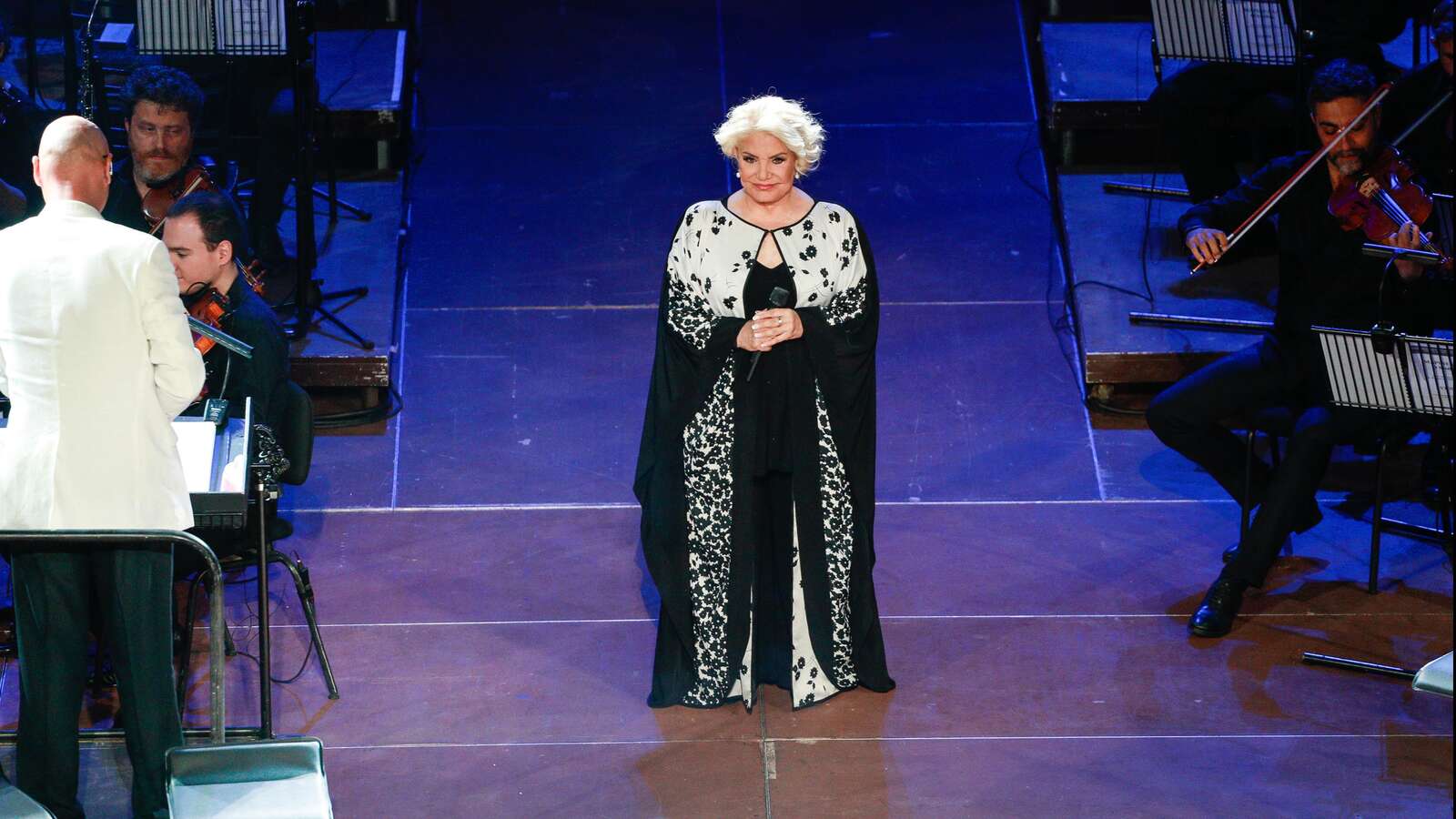
The tribute concert at Athens' Odeon of Herodes Atticus on September 25, 2024, had been designed to celebrate seven decades of Marinella's voice. Partway through her third song, that voice faltered, her balance gave way, and she fell to the stage. Greece held its breath. Eighteen months later, on Saturday, March 28, 2026, that breath ran out. Marinella, born Kyriaki Papadopoulou in Thessaloniki in 1938, died at her home at 6:00 p.m. at the age of 87.
Her family's announcement was spare: "With deep sorrow we announce the loss of Marinella, our beloved mother and grandmother, who passed away at home today, March 28, 2026, at 6:00 p.m." The country's reaction was not. Politicians from across Greece's fractious political spectrum issued tributes describing her as a figure who had transcended music to become part of the national fabric, while Greek communities from Melbourne to Chicago began sharing her recordings on social media within hours.
Born into a refugee family from Constantinople that had settled in Thessaloniki, Marinella appeared on Greek radio for the first time at age four. By 1956 she had launched her professional career, and over the following seven decades she released 66 solo albums, a catalog spanning laiko, entehno and mainstream pop that made her simultaneously the music of the corner café and the concert hall. In 1974 she became the first Greek artist to represent the country at Eurovision, performing "Krasi, Thalassa ke t' Agori Mou" in Brighton and placing eleventh; that same year she became the first Greek singer to perform at the International MIDEM Festival in Cannes.
Her command of the live stage was the quality most cited by contemporaries. She introduced elaborate costuming, choreography and theatrical lighting to the Greek nightclub circuit in the 1980s, building a template that Anna Vissi and Despina Vandi would each adopt as the standard architecture for Greek pop performance. Jon Pareles, reviewing her 2003 concert run in The New York Times, wrote that "her voice was earthy and strong, and she had the presence of an actress."
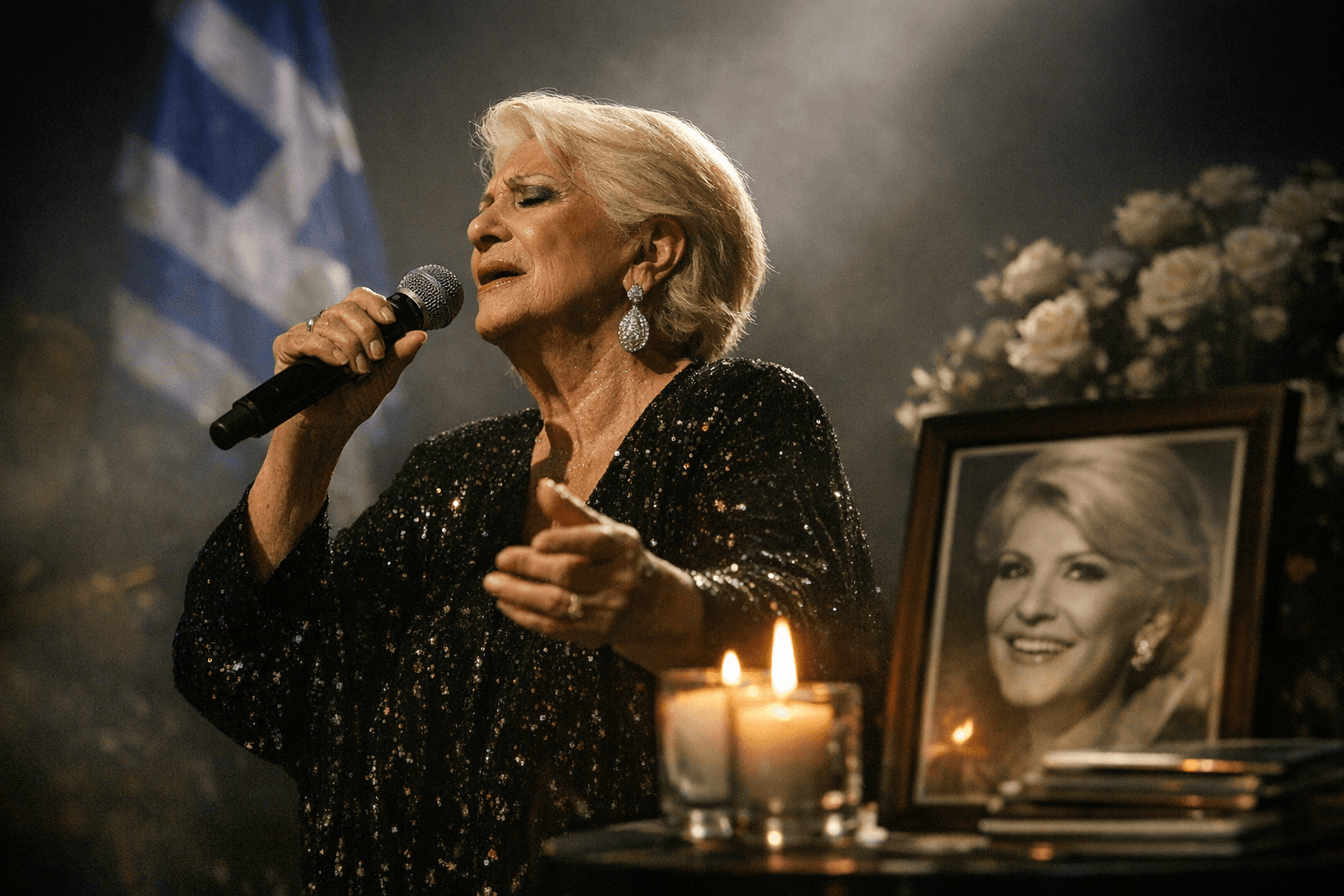
The 2002-2003 collaboration with George Dalaras, a tour titled "Mazi" ("Together"), produced a platinum live CD and became one of the most commercially successful joint projects in recent Greek music history. Those recordings, along with her August 29, 2004 performance at the Athens Summer Olympics closing ceremony alongside Haris Alexiou, Dimitra Galani and Yiannis Parios, have emerged as the reference points most frequently cited in the tributes flooding in since Saturday's announcement. Her death has already prompted renewed interest in her back catalog on streaming platforms, particularly among younger diaspora listeners encountering her work for the first time.
The loss also reopens a long-deferred question about archival preservation. Marinella recorded with Mikis Theodorakis and Stavros Xarhakos, collaborated with Greece's most important lyricists, and left behind live recordings and master tapes that have never been systematically archived. Cultural institutions typically step in after the death of a national figure to organize conservation efforts; whether Greece's archival infrastructure can match the scale of what she left behind now falls to those institutions to answer. She is survived by her daughter, Georgina, and her grandchildren.
This article was produced by Prism’s automated news system from verified source data, official records, and press releases, then run through automated quality and moderation checks before publishing. The system is built and supervised by the people who set the standards it runs under. Read our full AI policy.
Did this article answer your question?