Mariners Lock Up Shortstop Prospect Colt Emerson on 8-Year, $95 Million Deal
Seattle locked up 20-year-old switch-hitter Colt Emerson on an $95M pre-debut deal that can reach $130M, the richest extension ever for a player yet to play in the majors.
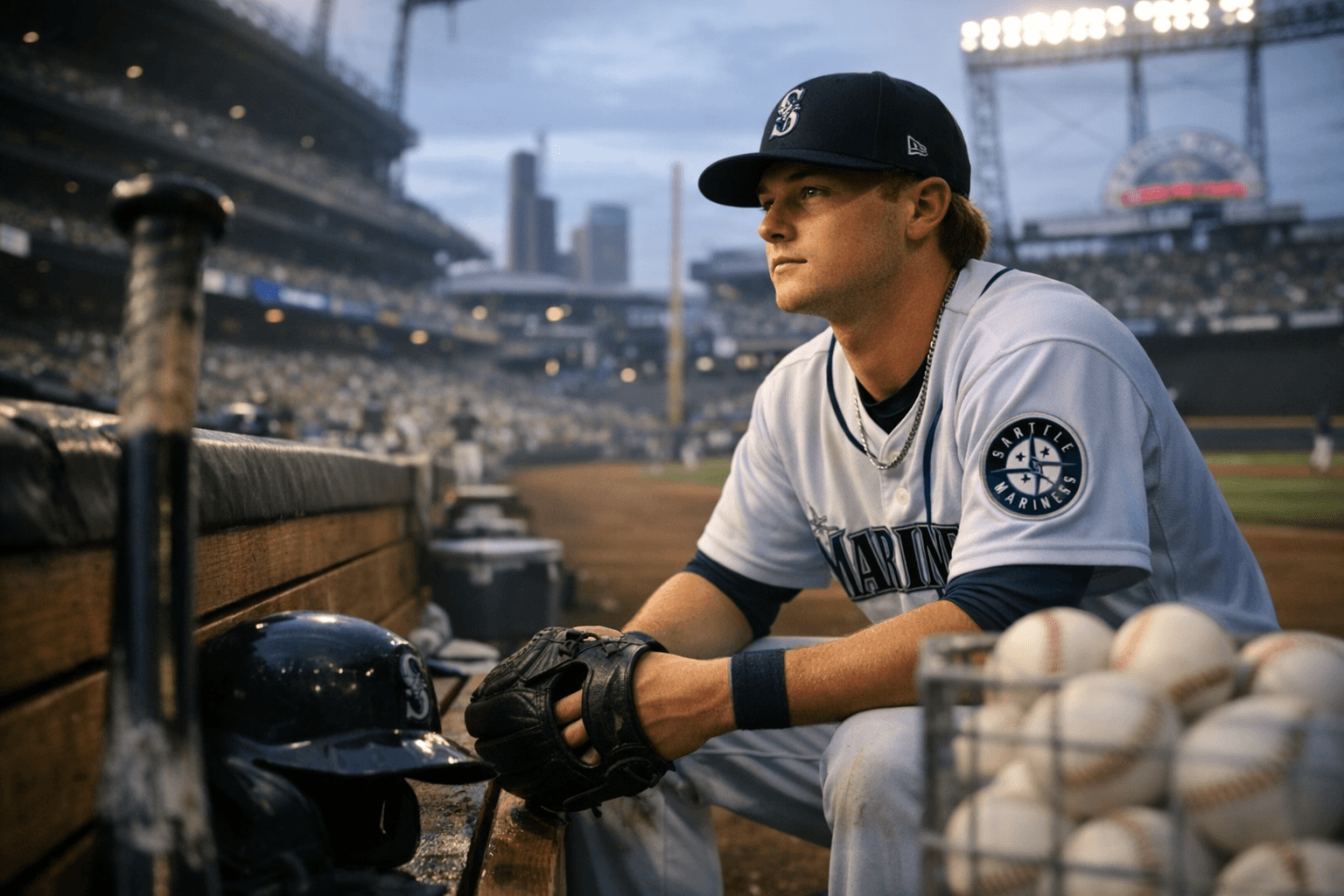
The Seattle Mariners agreed to an eight-year, $95 million contract extension with shortstop prospect Colt Emerson on Monday, a deal that sets a record for the largest pre-debut guarantee in MLB history and crystallizes an accelerating front-office philosophy: lock up franchise cornerstones before they ever take an at-bat in the majors.
Emerson, who turned 20 last July, has not yet appeared in a regular-season big-league game. Yet the Mariners committed to him at a scale that reflects both his ceiling and a fundamental shift in how teams manage roster economics. The contract, first reported by Robert Murray of FanSided, includes a ninth-year club option, a full no-trade clause, and performance escalators that can push the total value north of $130 million. Emerson is represented by ACES.
The deal's structure is the defining feature. By signing Emerson before his service clock starts, Seattle acquires cost certainty across what project to be his prime years while bypassing three rounds of arbitration that could have cost the club considerably more on a piecemeal basis. For Emerson, the trade-off is surrendering the right to test free agency until his early 30s in exchange for generational wealth before his first MLB pitch. Both sides are hedging: the Mariners against a bidding war they might lose, Emerson against injury or a development plateau that never materializes.
His track record makes the bet credible. Ranked sixth among all prospects entering 2026, Emerson posted an .842 OPS across three minor-league levels last season, capped by a six-game Triple-A cameo in which he registered 11 hard-hit balls. In spring training this year, he hit .268/.340/.488 with two home runs in 41 at-bats, and scouts who once questioned whether his profile could hold at shortstop came away convinced after watching him play the position cleanly throughout the Cactus League.
The path to Seattle's lineup is slightly complicated by the presence of J.P. Crawford, who remains under contract through 2026 but opened the season on the injured list with shoulder inflammation. Leo Rivas is currently playing shortstop for the Mariners, and Crawford's return timeline is uncertain, meaning Emerson could get an earlier call than anticipated. Whether he arrives in April or June, the organization has made clear through this investment that he sits alongside Cal Raleigh, Julio Rodriguez, and Josh Naylor as the core of their next competitive window.
The broader precedent matters beyond Seattle. Pre-debut extensions were once considered outliers; they are now becoming a standard instrument in front offices willing to absorb short-term outlay for long-term roster control. The question the Emerson deal forces onto the table is what happens to collective bargaining if teams routinely monetize service-time rules this aggressively. The current CBA already contains provisions designed to discourage artificial suppression of prospect debuts, including the Prospect Promotion Incentive system that awards draft picks for early callups of elite prospects. A contract of this magnitude, signed before a single MLB pitch, sidesteps that framework entirely. It converts a structural arbitration advantage into a negotiated settlement, and that is exactly what the Players Association will be scrutinizing when the next round of labor talks arrives.
For now, Emerson's deal resets the market. The question for every other club holding a top-five prospect is whether to follow Seattle's template or gamble on arbitration, and the Mariners just made waiting look very expensive.
This article was produced by Prism’s automated news system from verified source data, official records, and press releases, then run through automated quality and moderation checks before publishing. The system is built and supervised by the people who set the standards it runs under. Read our full AI policy.
Did this article answer your question?
.jpg&w=1920&q=75)