Mark Kennedy, 74, Australian Session Drummer for Spectrum and Leo Sayer Dies
Mark Kennedy, Melbourne-born drummer and first-call session player who recorded on Spectrum’s debut and — according to one account — worked on over 300 albums, has died at 74 in palliative care.
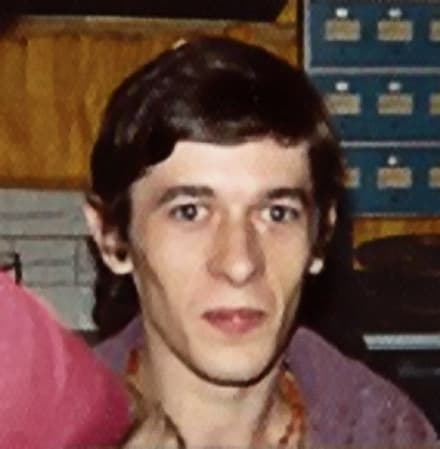
Mark Kennedy, the Melbourne-born drummer who helped define Australian rock and jazz-fusion from the late 1960s onward, died on 21 February 2026 at McCulloch House, the palliative care unit at Monash Medical Centre in Clayton, Victoria, a report said. Cxnetwork described his final months as a protracted battle with lung cancer and said his wife Doris (Dori) was with him at the end; other accounts described a long, terminal illness and noted his wish for no publicity during his illness.
Kennedy turned professional in April 1969 as a founding member of Spectrum, playing on the band’s first album and recording the single "I’ll Be Gone" while still in the group; that single later reached No. 1 on the Go-Set National Top 60 singles chart in January 1971 despite Kennedy having left the band before its release. Spectrum listed him as a member in 1969–70 and his place in the lineup was later filled by Ray Arnott, who had played with Chelsea Set, The Browns and Co. Caine.
Across the 1970s Kennedy moved between high-profile outfits and session work: he played in King Harvest with Leo De Castro and Duncan McGuire, joined Doug Parkinson In Focus in 1971, worked with Leo de Castro through 1973, and in 1973 formed Burton, McGuire & Kennedy with Ray Burton and Duncan McGuire, a trio that evolved into Ayers Rock. Ayers Rock recorded its second album, Beyond, in Los Angeles in 1976, and Kennedy was listed as a member of Ayers Rock from 1973 to 1976 before going on to work with Marcia Hines (he was engaged to Hines by November 1976 and played as her drummer through 1983), Men at Work in 1985, Renée Geyer in 1985–86 and 1995–96, and later Jimmy Barnes in 2005.
Beyond his bands, Kennedy was described as a first-call session musician and producer whose credits touched rock, pop and jazz-fusion. Cxnetwork credited him with work on over 300 albums and said he contributed to countless film and television soundtracks and advertising jingles; Latestdeaths and other summaries echoed that he amassed hundreds of album credits during the 1970s and 1980s. In the 1990s he was part of the supergroup Blazing Salads with Brian Cadd and Glenn Shorrock, and Noise11 called him the "go-to" drummer for Australia’s elite rock and jazz-fusion players in the 1970s.
Peers remembered both Kennedy’s technical command and musical feel. Mike Rudd recalled that Kennedy "really carried us through the first year because people would say 'Wow, look at that drummer, they must be a good group' ... He used to play things like drum solos!, but he was very good." Brian Cadd said Kennedy had "the sort of funky, slinky, laid-back style we were looking for." Kennedy himself summed up his approach in a 2000 Drummer Magazine interview: "the best drummers are musicians who play the drums, not like the tradesman kind of mentality, the better guys are the guys who understand where the music is, the voicing of it and get amongst it and create a language."
Born in Melbourne on 20 August 1951, Kennedy studied classical piano for six years at the Melbourne Conservatorium of Music, played marching drum at school, and by 1968 was drumming in Gallery alongside Bill Putt. His partnership with Duncan McGuire was later hailed as one of the finest rhythm sections the country produced, and his resume included work with Renée Geyer, Jim Keays, Jimmy Barnes, Billy Thorpe, Glenn Shorrock, Brian Cadd, Max Merritt, Kevin Borich, Men at Work and, in headline listings, Leo Sayer.
Noise11 summed the reaction in blunt terms: the Australian music community is in mourning following the passing of Mark Kennedy, one of the most technically gifted and influential drummers in the nation’s history. Whether heard on Spectrum’s early recordings, Ayers Rock’s LA sessions for Beyond, or the hundreds of studio credits he accrued, Kennedy’s touch and musical philosophy left a trace across decades of Australian music.
Know something we missed? Have a correction or additional information?
Submit a Tip