Mark Ruffalo plays lawyer battling DuPont's toxic pollution legacy
Mark Ruffalo’s Robert Bilott turns one West Virginia farmer’s warning into a case that exposed DuPont’s decades of chemical pollution and still shapes PFAS oversight.
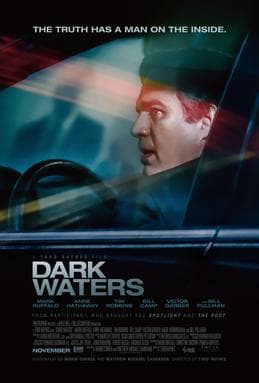
Mark Ruffalo plays Robert Bilott as a corporate lawyer who is pulled into a case that should never have existed: a West Virginia farmer’s complaint that his cattle were dying and his land and water were being contaminated. Todd Haynes’ Dark Waters uses that conflict to trace how one local fight opened into a federal lawsuit, a major settlement, and a lasting debate over chemical regulation and public-health accountability.
The film’s story is built around a real break with corporate loyalty
Dark Waters is a 2019 American legal thriller directed by Todd Haynes and released in the United States on November 22, 2019. Ruffalo stars as Robert Bilott, with Anne Hathaway, Tim Robbins, Bill Camp, Victor Garber, Mare Winningham, William Jackson Harper, and Bill Pullman in supporting roles. The setup is straightforward but severe: a lawyer who usually helps corporations ends up challenging one of the most powerful chemical companies in the country.
The film was shaped in part by Nathaniel Rich’s New York Times Magazine article, “The Lawyer Who Became DuPont’s Worst Nightmare.” That source material frames Bilott as a corporate defense attorney for eight years before he took on an environmental case that would upend his career and expose a long history of chemical pollution. The movie keeps that tension central, turning a legal record into a story about what happens when internal expertise is redirected toward accountability.
Wilbur Tennant’s complaint is the point of entry
The case begins with Wilbur Tennant, a West Virginia farmer whose cattle were dying and whose land and water were suspected of contamination. That local crisis is what brought Bilott into contact with DuPont’s environmental legacy, and it remains the most important human detail in the story because it connects an abstract industrial process to visible harm on a farm.
Bilott filed his federal suit against DuPont in 1999, and that filing launched years of toxic-tort litigation tied to chemical contamination in the Parkersburg, West Virginia area. The legal dispute was never just about one property. It became a broader challenge to how a major manufacturer used and handled perfluorooctanoic acid, or PFOA, also known as C8, in the production of Teflon and other products.
PFOA, Washington Works, and the industrial footprint behind the case
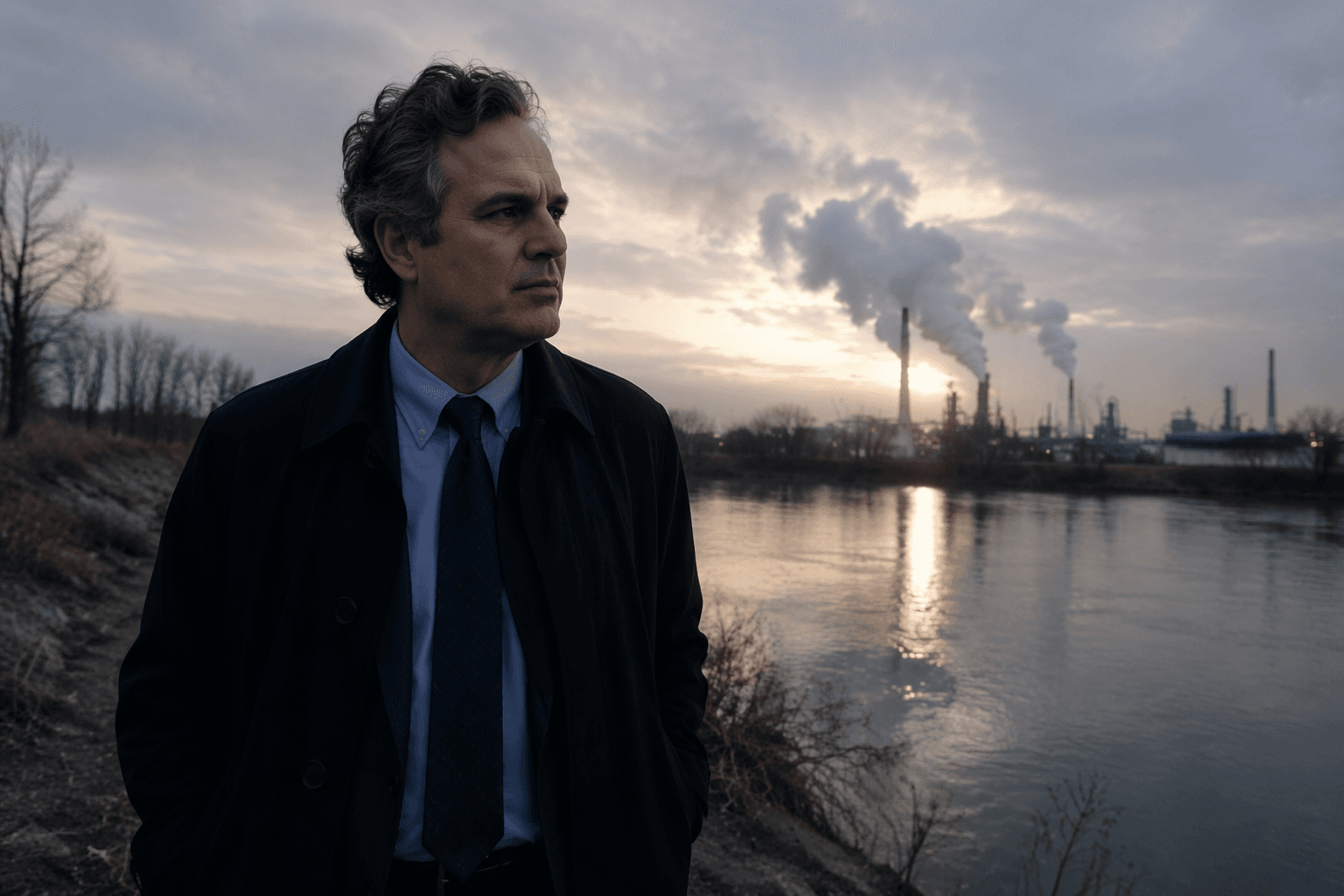
The U.S. Environmental Protection Agency says the Washington Works facility discharged industrial process water and stormwater to the Ohio River and its tributaries. That matters because it locates the case in a specific industrial system, not a vague allegation of pollution. The contamination story attached to DuPont is tied to a place, a manufacturing process, and a chemical with a long afterlife in environmental and health policy.
EPA materials also note that PFOA was previously used at Washington Works as a processing aid. That detail helps explain why the case remains so important in discussions of PFAS, the larger family of persistent chemicals that has become a major regulatory and public-health concern. Dark Waters dramatizes the legal fight, but the underlying issue is the same one that drives current scrutiny: what happens when industrial chemistry leaves a residue that does not quickly disappear from water, soil, or bodies.
The settlement showed the scale of the harm claims
A major turning point came in February 2017, when DuPont and Chemours announced a $670.7 million settlement resolving roughly 3,500 personal injury claims. That number matters because it shows how a dispute that started with one farmer expanded into a mass injury case with thousands of claimants. The settlement did not erase the underlying questions about exposure, responsibility, or the duration of the contamination.
The scale of the settlement also explains why the film resonates beyond the courtroom drama. It is not simply a story of one attorney taking on a giant company. It is a record of how individual harm allegations can accumulate into a broad challenge to corporate conduct, especially when the alleged contamination touches air, water, and food chains over many years.
EPA action keeps the story alive in regulatory terms
The U.S. Environmental Protection Agency finalized a human-health toxicity assessment for PFOA in 2024. That step gives the case a current policy dimension, because toxicity assessments are part of the scientific and regulatory framework that shapes how agencies evaluate exposure and set public-health standards. It reinforces why the DuPont litigation is still cited in conversations about PFAS oversight.
The regulatory relevance is straightforward. The Washington Works case is not only a historical example of industrial contamination; it is one of the episodes that helped define why federal agencies now treat PFOA and related compounds as a serious health issue. The EPA’s actions show that the legal record from Parkersburg still influences how government understands chemical risk today.
Why Dark Waters still lands as a civic warning
Dark Waters is often described as an environmental thriller and a star-driven drama about corporate accountability, but its lasting value is more practical than cinematic. It shows how a contamination dispute moves through institutions: first a farmer notices a problem, then a lawyer investigates, then a federal suit forces disclosure, and finally a settlement and regulatory action try to address the damage after years of exposure.
That sequence matters because it exposes the long delay between harm and recognition. Bilott’s case against DuPont began in 1999, yet the public-health and regulatory implications are still unfolding. The film’s enduring force comes from that lag, and from the uneasy fact that the damage was tied not to an accident in isolation, but to a manufacturing system that left contamination behind while continuing to operate.
This article was produced by Prism’s automated news system from verified source data, official records, and press releases, then run through automated quality and moderation checks before publishing. The system is built and supervised by the people who set the standards it runs under. Read our full AI policy.
Know something we missed? Have a correction or additional information?
Submit a Tip