Martha’s Garden growth shows Yuma dates find global market footing
Martha’s Garden, a Rogers family date farm started in 1990, now spans about 160 acres and exports roughly 70% of its medjool crop, boosting Yuma’s agricultural profile.
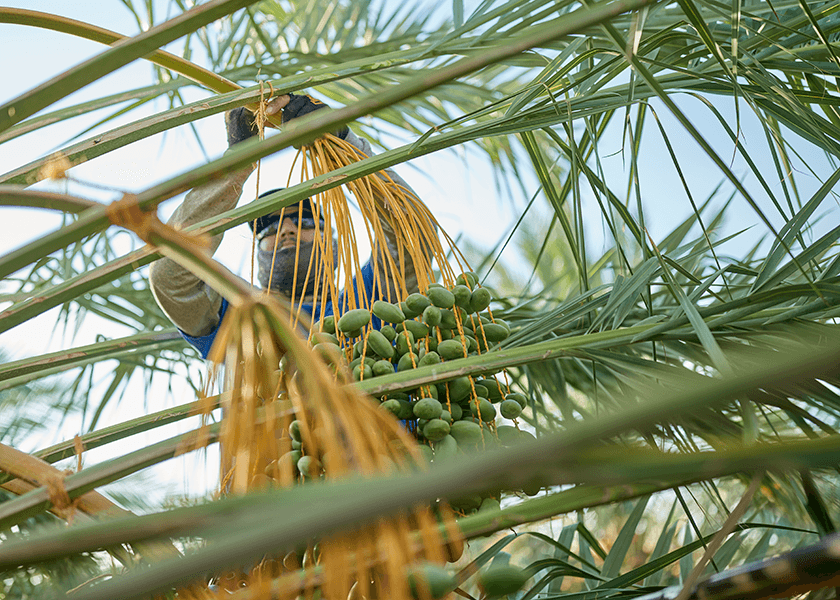
Martha’s Garden began as a small family experiment in 1990 and, as of Jan. 13 community attention, has become a roughly 160-acre producing medjool date operation that exports about 70 percent of its harvest to overseas buyers such as Australia. The farm’s evolution from first plantings to a commercial exporter illustrates how specialty crops have become an important niche in Yuma County’s agricultural mix.
The Rogers family’s multi-decade effort required building wells, developing irrigation systems and learning to manage young palms in a harsh desert environment. Those investments transformed initial plantings into a consistent producing orchard, and the farm’s export orientation ties local production to global demand. Sending roughly seven of every ten cartons abroad makes the operation sensitive to currency shifts, shipping costs and foreign market preferences, while also bringing foreign revenue into the local economy.
For Yuma County the significance is both economic and practical. A 160-acre medjool operation contributes acreage diversity beyond row crops and leafy greens that define much of the region’s seasonal profile. Export sales can lift farm revenues per acre, supporting the on-farm investments in wells and irrigation that sustained Martha’s Garden through early years of trial and error. At the same time, heavy reliance on international markets concentrates risk: changes to trade routes, quarantine rules, or freight pricing can quickly affect returns for a farm with about 70 percent of production destined overseas.
Water management remains central to the farm’s story and to the county’s agricultural future. The Rogers family’s emphasis on well development and irrigation demonstrates the upfront capital required to convert desert acreage into high-value perennial orchards. That model can generate long-term value when trees reach full production, but it also commits land and water resources for decades—factors Yuma planners and growers weigh as they balance short-term labor needs against longer-term resource stewardship.

Long-term trends favoring specialty, high-value crops and export channels have created opportunities for family farms willing to invest in infrastructure and market connections. For local workers, medjool harvests add seasonal employment and help sustain packing, trucking and logistics services in the county. For policymakers, the rise of operations like Martha’s Garden highlights the need to align water policy, trade facilitation and farm support with the realities of export-oriented specialty agriculture.
Our two cents? If you buy medjools this season, consider the local link: your purchase supports multi-decade farm investments and keeps a slice of Yuma’s desert economy growing.
Sources:
Know something we missed? Have a correction or additional information?
Submit a Tip