Marvell Bets on Photonics, Buys Celestial AI for 3.25 Billion
Marvell Technology lifted its stock after reporting quarterly results and announcing a 3.25 billion dollar acquisition of Celestial AI, a move intended to accelerate its push into silicon photonics for AI data centers. The deal, which includes a warrant for Amazon tied to future photonic purchases, signals hyperscaler interest and could reshape how data centers handle bandwidth, latency and power as demand for AI training grows.
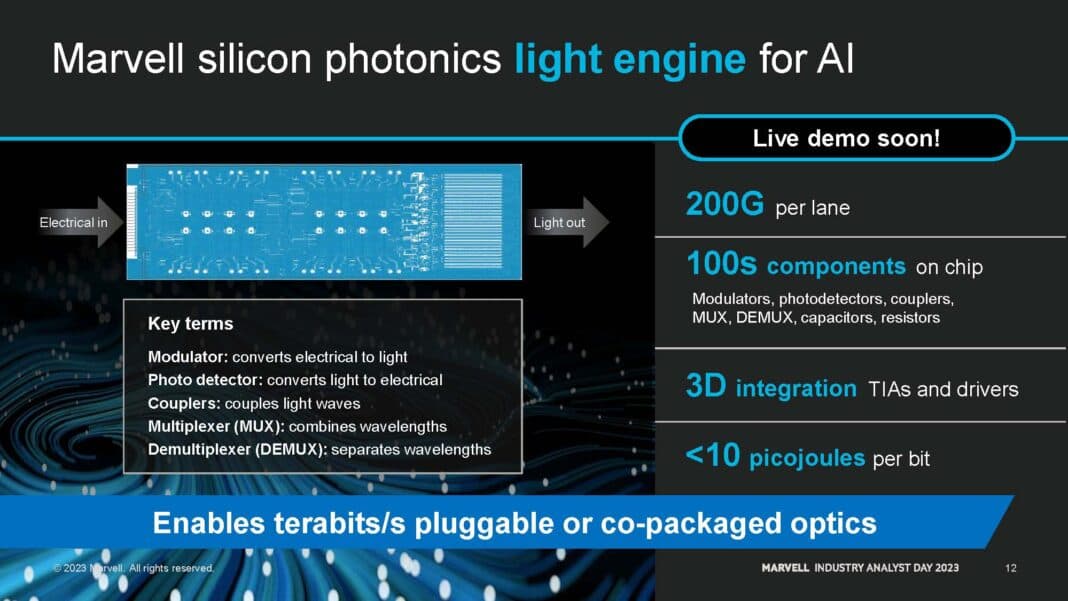
Marvell Technology on Wednesday moved aggressively into photonics by agreeing to acquire Celestial AI for 3.25 billion dollars, a strategic bet that the next wave of data center performance gains will come from light based interconnects rather than incremental improvements to traditional electrical chips. The announcement accompanied quarterly results that pushed Marvell shares higher in trading, as investors weighed the company’s expanded roadmap into high bandwidth, low power links for AI workloads.
The acquisition brings Celestial’s photonic fabric technology into Marvell’s portfolio and includes a warrant for Amazon that is tied to future purchases of photonic products. That element of the deal underscores interest from hyperscale cloud providers in the types of solutions Marvell says it will be able to deliver. Company management told investors that integrating Celestial’s technology could unlock a multi billion dollar opportunity and that initial revenue from the acquisition could begin in 2028 with meaningful scale expected by 2029. Marvell also forecast a sharp increase in data center revenue in the next fiscal year.
Silicon photonics and co packaged optics are gaining attention because they move optical transceivers closer to switching and processing elements, reducing the electrical bottlenecks that limit speed and increase power consumption in large AI training and inference clusters. For hyperscalers running thousands of GPUs or bespoke AI accelerators, those efficiency gains can translate into lower operational costs and the ability to scale model training more economically. Analysts have noted that Marvell’s move places it more directly in the competition to supply advanced interconnects for AI training and inference infrastructure.
The timing reflects broader industry dynamics. As model architectures grow and throughput demands escalate, data center operators are exploring new ways to increase link density and reduce energy per bit. Photonic approaches are capital intensive and require close integration of optics, packaging and silicon design, which helps explain Marvell’s willingness to make a large acquisition rather than build the capability in house. The Amazon warrant offers a practical route to commercial validation by pairing technology development with a potential first major buyer.

Key questions remain about integration complexity and the path to production at scale. Management’s 2028 revenue target places a multi year engineering and manufacturing effort ahead, including qualification for the rigorous reliability and yield standards required by cloud operators. Market observers will watch whether Marvell can convert Celestial’s laboratory demonstrations into reproducible, cost effective products.
If successful, the deal could accelerate a structural shift in how data centers are architected, with optics taking on a larger role in solving the scaling constraints of AI systems. That shift has implications for power consumption and for who controls the critical interconnect technology used by the world’s largest computing platforms. For now, Marvell has staked a sizable claim on that emerging frontier.
This article was produced by Prism’s automated news system from verified source data, official records, and press releases, then run through automated quality and moderation checks before publishing. The system is built and supervised by the people who set the standards it runs under. Read our full AI policy.
Did this article answer your question?