Mason Gordon Leads SlamBall Relaunch With Rule, Safety and Broadcast Changes
Mason Gordon has rehired original warehouse players as coaches, staged a Las Vegas residency at Cox Pavilion, and is remaking SlamBall for short-form streaming with 20-foot trampoline highlight moments.
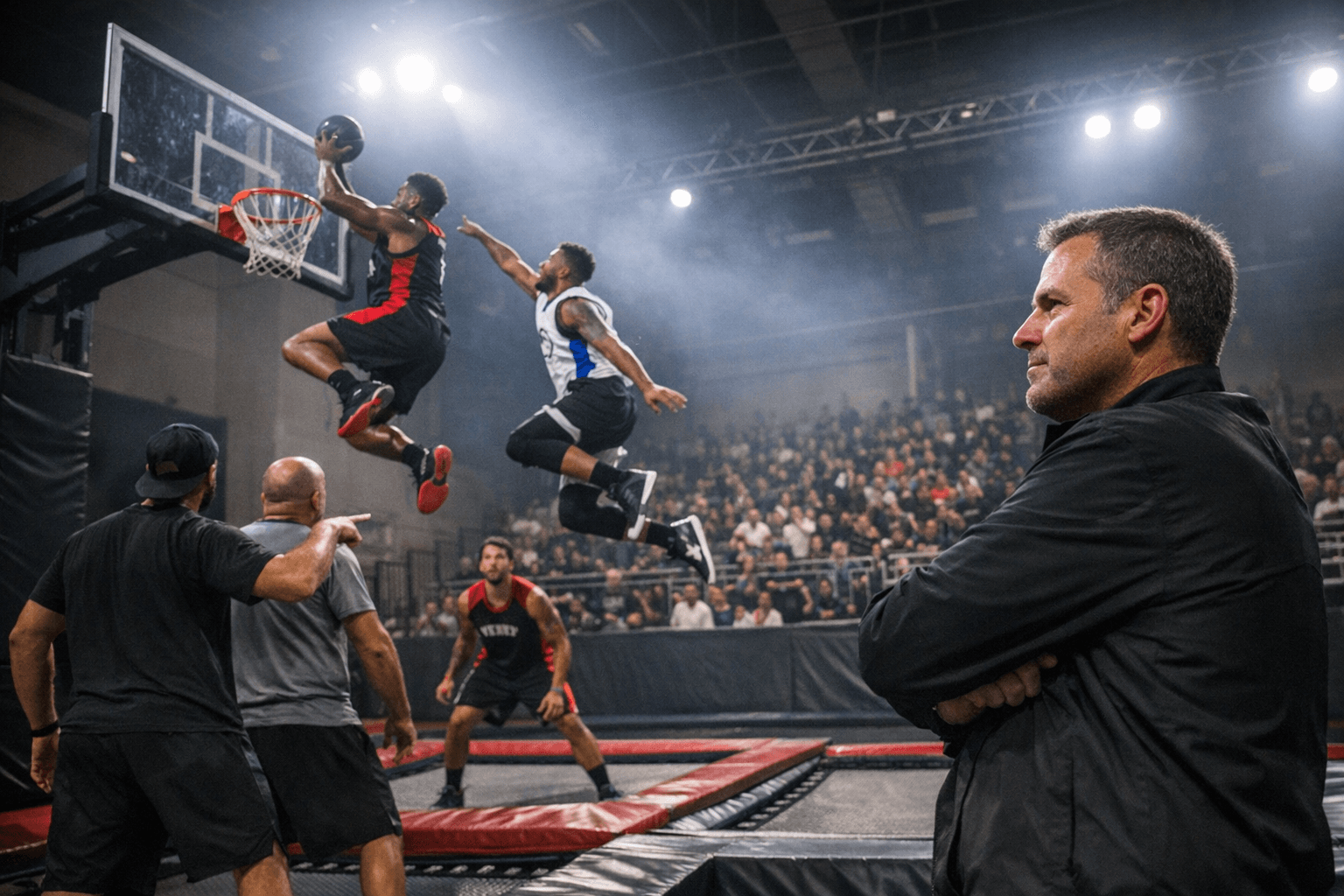
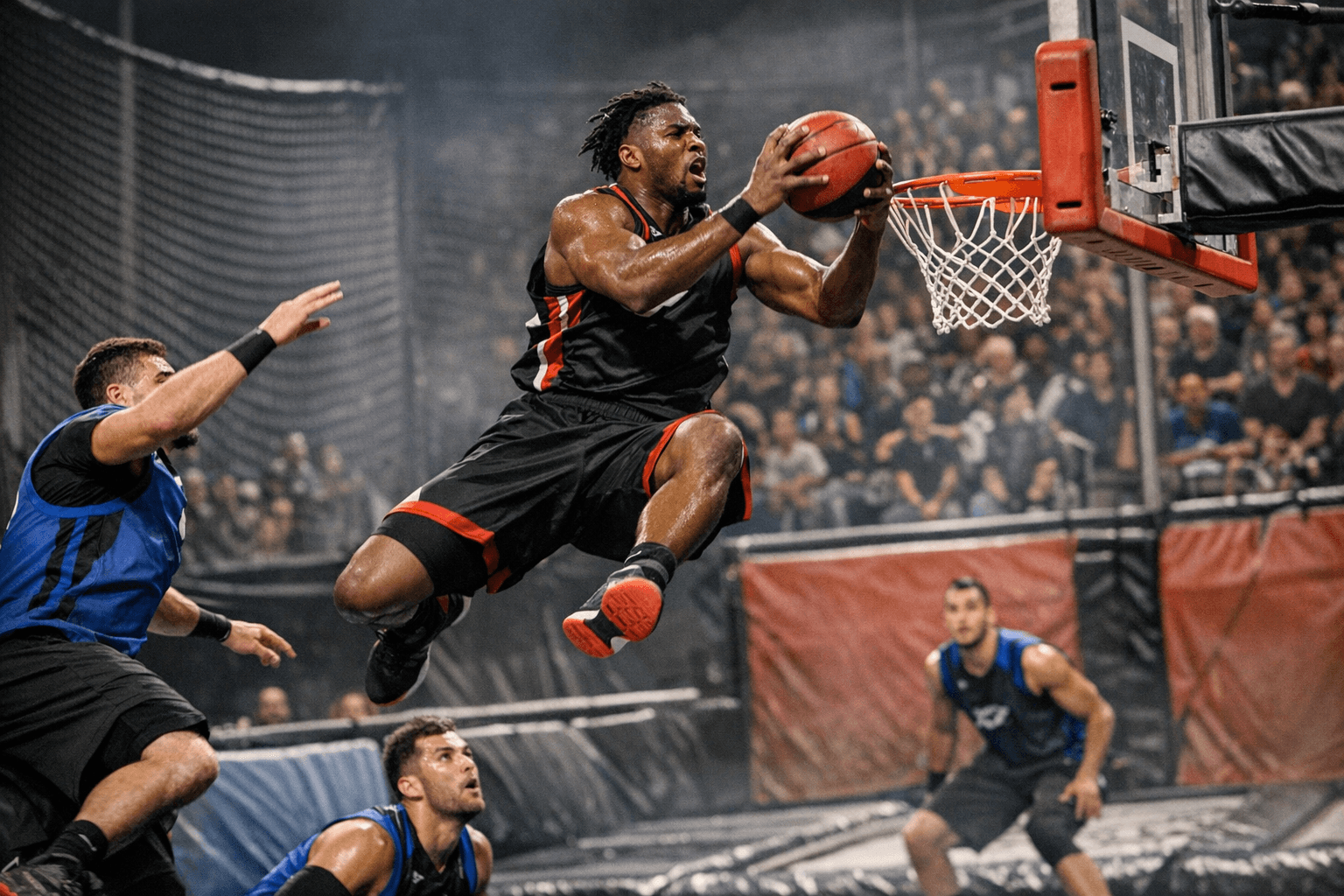
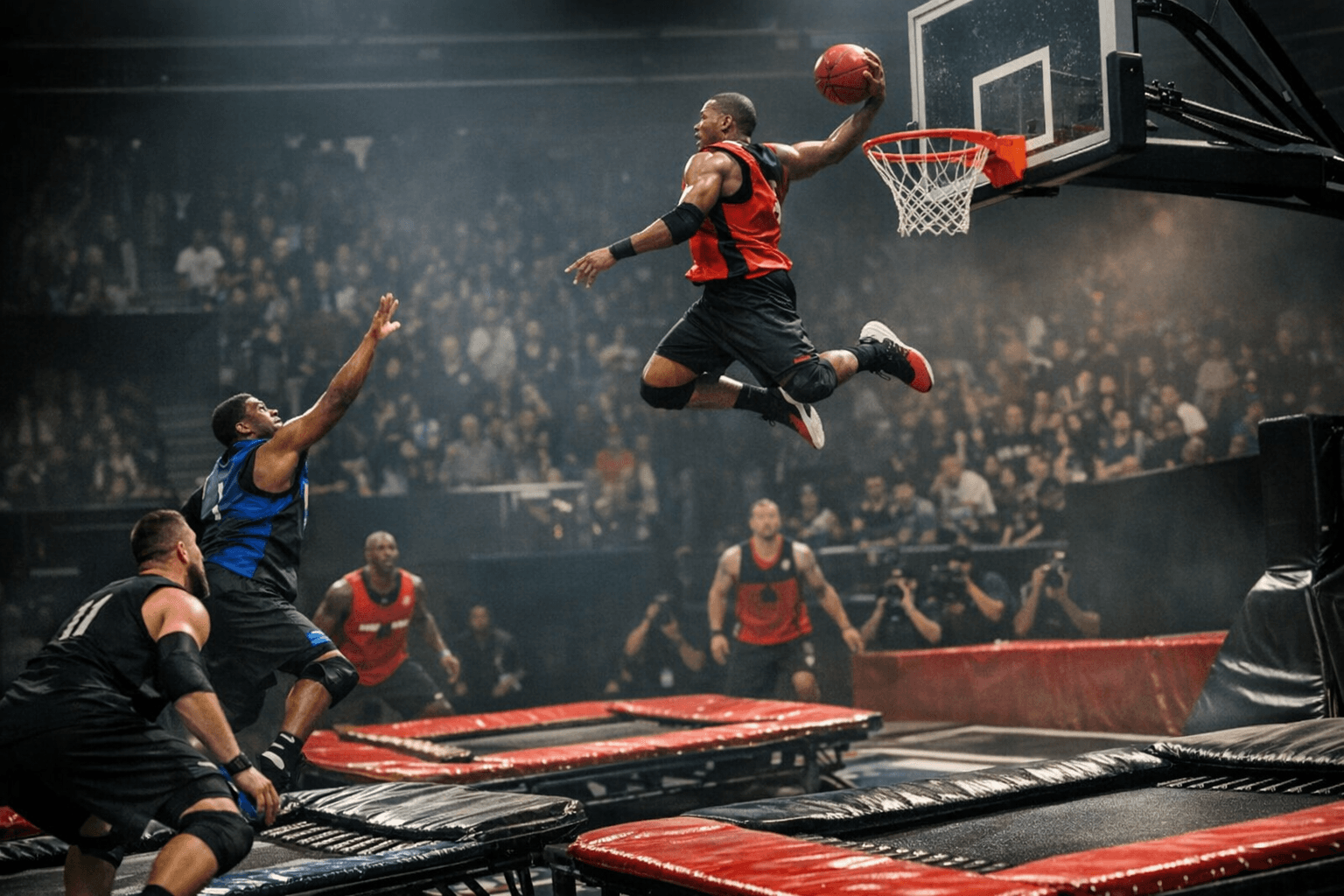
Mason Gordon has pushed SlamBall back into public view by rebuilding the league’s staff, staging a Las Vegas residency at Cox Pavilion on the UNLV campus, and leaning into shortened, social-friendly broadcasts while promising rule and safety adaptations. The relaunched product emphasizes Olympic-caliber trampolines that lift play up to twenty feet off the game floor and the “did you see that?” viral moments that defined the sport’s original TV appeal.
The sport’s arc traces to Gordon’s 1999 napkin sketch, followed six months later by a prototype court financed by producer Mike Tollin and assembled in an East Los Angeles warehouse out of discarded gymnastics parts. SlamBall first reached national television in 2002 on The National Network with Pat Croce as a partner, six inaugural teams named Bouncers, Diablos, Mob, Rumble, Slashers, and Steal, and Reggie Theus serving as studio co-host and color commentator. The league dissolved after a 2003 dispute with co-producer Telepictures but resurfaced for an additional season roughly five years later.
Gordon frames the current relaunch around the contemporary media environment. “The why now for SlamBall after all this time is simple. We had built and paused a property really before its time. Driven by short form highlights and freakishly talented athletes combining the best of football and basketball. We decided now was the right time because of where we are in the media business . . . streaming, social media, short form content and the continued rise of football and basketball not just as sports but as pop culture hubs,” Gordon said. He has also described the Vegas residency as scaled for intimacy and family audiences. “This is a property that appeals to everyone. Athleticism, action, deep talent and most importantly, fun. We have also scaled the venue to be very intimate. We don’t see ourselves competing, we see ourselves as adding to the action,” Gordon said.
Operationally, Gordon has made staffing choices intended to protect SlamBall’s authenticity by hiring players from the original warehouse era as coaches and executives rather than pursuing celebrity-name coaches. “The idea that we have that kind of continuity and that I don’t have like, I don’t know, Chris Bosh pretending to coach a SlamBall team here … like, you can’t market that to people authentically. People see right through that. But the idea that these are the best SlamBall players and coaches who have ever lived, and they’re here teaching the next generation how to stand up SlamBall to be a global powerhouse sport, that’s the big swing,” Gordon said. He added a personal rationale: “People think SlamBall died, but for me, it never really died when we were done. People ask all the time why do you keep at this? Why don’t you just give up on this one? It’s because I’m ludicrously stubborn. I mean, stupid stubborn.”
Gordon pairs that operational playbook with production know-how from his tenure as President of Mandalay Sports Media, whose credits include The Last Dance, The Captain, Redeem Team, Stand, and Shaun White: The Last Run. The league’s event model is deliberately short and intense: set up in a city for seven to 10 days, build earned and social media buzz, peak at playoffs, then move on. “We want to establish our Australian Open, our Tokyo Cup, our Italian championships. By doing so, we’re gonna globalize the sport in a fraction of the time that legacy sports took to truly become global,” Gordon said.
Public records and past reports also point to expansion activity in China with claims of new facilities, five-team partnerships, and a fifth series staged in Beijing and Wuhan in 2016; those specific claims have not been fully verified and remain subject to confirmation. Key operational items still to be publicly detailed include the precise rule changes, the safety-protocol updates Gordon has signaled, and the league’s financial investment figures for the relaunch. For now, Gordon’s mix of original-era personnel, short-form broadcast strategy, and trampoline-fueled spectacle sets a clear play: turn 20-foot highlight flights into the short-form content that modern streaming and social platforms amplify.
Know something we missed? Have a correction or additional information?
Submit a Tip