Massachusetts town honors lone World War II veteran with 1,500 mourners
A line stretched out St. Joseph the Worker Church as 1,500 people came to bury a 98-year-old Navy veteran with no known living relatives.
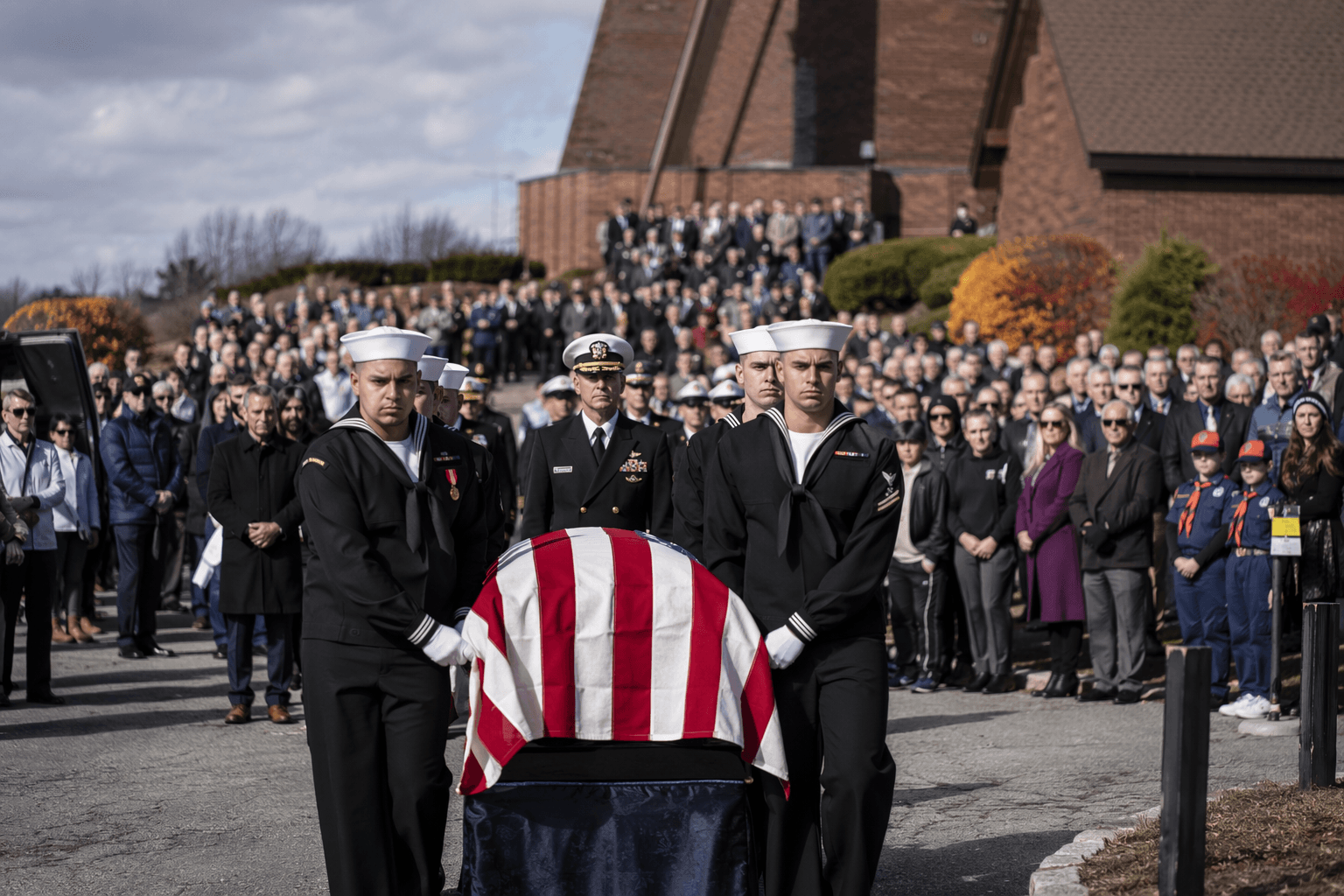
A line had already formed outside St. Joseph the Worker Church in Hanson before Terrance O'Keefe arrived, a sign of how quickly a public appeal turned into one of the larger farewell turnouts in recent local memory. Roughly 1,500 people came on May 18 to honor John Bernard Arnold III, a 98-year-old World War II U.S. Navy veteran whose funeral drew strangers, veterans, volunteer pallbearers and procession participants.
Arnold died on May 6 with no known living relatives. He had been living at the Garrison Home for Veterans in East Bridgewater, and local reporting identified him as formerly of Pembroke and Rhode Island. Hanover/Hanson Veteran Services had asked the community to show up for him, and the response filled the church and spilled outside, turning a funeral into a civic act of remembrance.
The gathering reflected more than respect for one man’s military service. It also exposed the quiet isolation that can surround the end of life, especially for older veterans who have outlived family and friends. In Arnold’s case, the institutions around him, the veterans service office, the church, the home where he lived, and neighbors who answered a call, became the family that history had thinned away.
Caregivers said Arnold had told them he served aboard the USS Houston and visited 27 countries during his military service. Those details gave the crowd a portrait of a sailor who had seen the world yet died far from the broad network of relatives that might normally gather at his grave. Instead, the mourners who packed Hanson made their own claim on his memory, insisting that no veteran should be left to go alone.
The scale of the turnout made the funeral stand out even in a state with deep military ties and a long tradition of honoring the dead. It also underscored a larger reality of aging in America: when family ties are absent or broken, civic memory often depends on local officials, veterans organizations and ordinary residents willing to step forward. For Arnold, that response arrived in force, and it gave a lonely death a collective farewell.
Know something we missed? Have a correction or additional information?
Submit a Tip