Math experts warn OpenAI's AI proofs threaten the field
OpenAI’s new proof jolted mathematicians, and 16 experts answered with a declaration warning that AI could outrun the field’s ability to verify, credit and trust its results.
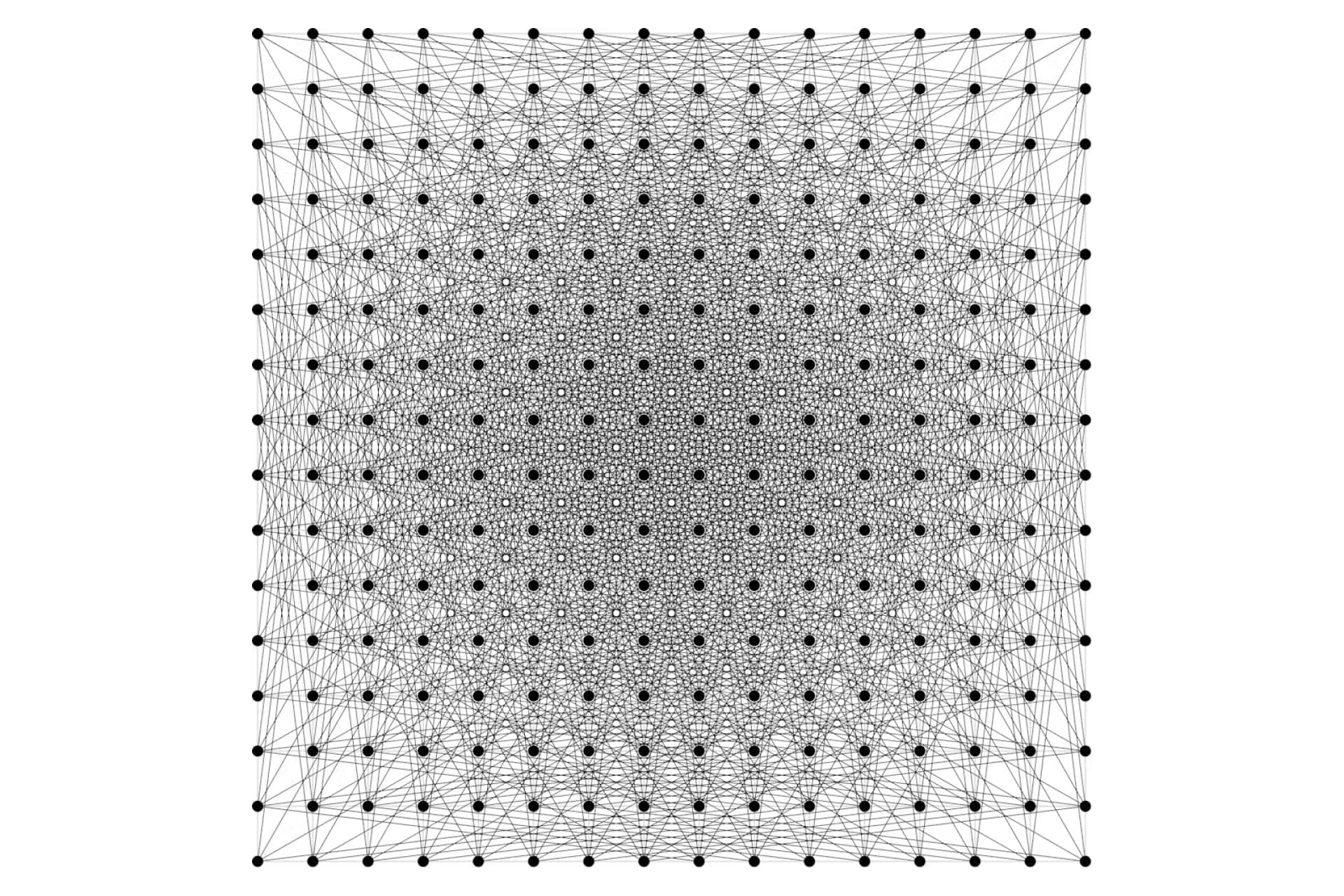
Speed is colliding with certainty in mathematics. OpenAI’s AI-generated proof of a problem posed by Paul Erdős in 1946 drew excitement for pushing into territory humans had not settled, but it also sharpened a more troubling question: if a machine can produce a result that experts struggle to verify, what counts as mathematical knowledge?
OpenAI announced on May 20, 2026 that an internal general-purpose reasoning model had disproved the planar unit distance conjecture in combinatorial geometry. The company said the model produced an infinite family of examples yielding a polynomial improvement, and said external mathematicians checked the proof. The result stood out not only because it resolved a longstanding Erdős problem, but because OpenAI said it came from a broad reasoning system rather than a tool trained specifically for mathematics or tailored to the unit distance problem. The work drew praise from mathematicians including Fields Medalist Tim Gowers and number theorist Arul Shankar.
Now a new response from the discipline itself is pressing for guardrails. The Leiden Declaration on Artificial Intelligence and Mathematics, published June 2, 2026, was signed by 16 researchers from 15 universities and is officially supported by the International Mathematical Union. The declaration argues that AI raises hard questions about responsibility for errors, credit for correct results and how to tell whether an AI-generated proof is genuinely new or simply a reworking of earlier work without proper attribution.
The signers did not call for banning AI from mathematics. Instead, they urged clear community norms for responsible use and said the future of mathematical research must be guided by human judgment, fair and transparent practices and the shared values of the global mathematical community. Leiden University said the idea emerged from a Lorentz Center workshop in Leiden and was developed over several months as researchers tried to reach consensus on how the field should respond.
The support behind the declaration gives it added weight. Peter Scholze described it as timely and said mathematics should remain centered on human understanding. Ulrike Tillmann, vice president of the International Mathematical Union, said the union takes AI’s rapid development and impact on mathematics very seriously. Taken together with OpenAI’s proof of Erdős’s 1946 conjecture, the declaration signals a new fault line in the field, where the next challenge may not be finding a proof, but deciding whether the proof can be trusted, taught and built upon.
This article was produced by Prism’s automated news system from verified source data, official records, and press releases, then run through automated quality and moderation checks before publishing. The system is built and supervised by the people who set the standards it runs under. Read our full AI policy.
Did this article answer your question?


