MATLAB creator Cleve Moler dies at 86, transformed numerical computing
Cleve Moler died at 86, leaving MATLAB behind as the tool that let students and engineers solve hard math without writing Fortran code.
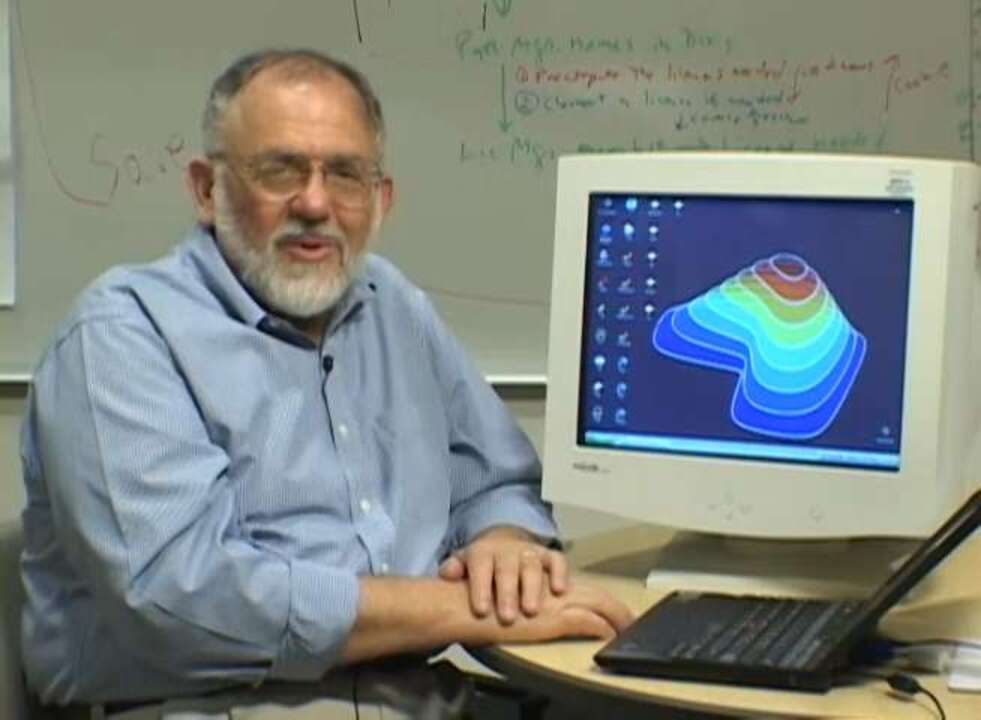
Cleve Moler helped move advanced numerical computing out of specialist code and into the hands of students, engineers and researchers who needed answers more than programming pedigree. The mathematician and computer scientist, who created the first version of MATLAB and co-founded MathWorks, died on May 20, 2026, at age 86. MathWorks said he died at home surrounded by his family.
Moler’s path ran through the institutions that shaped American computing. Born in Salt Lake City in 1939, he earned a mathematics degree from Caltech in 1961 and a PhD from Stanford University in 1965 under George Forsythe. He then spent nearly 20 years teaching at the University of Michigan, Stanford University and the University of New Mexico, while helping build the numerical tools that would define his career.
Before MATLAB, Moler coauthored LINPACK and EISPACK, foundational Fortran libraries that powered scientific calculation but required users to write code directly. His answer was MATLAB, short for Matrix Laboratory, which he created as a simple interactive calculator so students could use those libraries without having to write Fortran. That design choice became the central breakthrough of his career: it lowered the barrier to serious computation.
In 1984, Moler joined Jack Little and Steve Bangert to commercialize MATLAB and found MathWorks, with an early focus on the emerging IBM PC market. What began as a classroom utility grew into a broader computing environment that MathWorks said changed how mathematical algorithms are developed, analyzed and applied across science and engineering. The company also said Moler was elected to the National Academy of Engineering and later the National Academy of Sciences.
The Computer History Museum said MATLAB became a global ecosystem used by millions across aerospace, genetics, finance and engineering. It described Moler as a visionary who revolutionized numerical computing, and supercomputing pioneer Jack Dongarra said MATLAB changed how generations think about computation, experimentation and problem solving. Moler was named a Computer History Museum Fellow in 2017.
Moler’s legacy sits in the hidden infrastructure of modern research: software that let people work with matrices, models and algorithms without becoming elite programmers first. For decades, MATLAB gave classrooms, labs and companies a common language for turning mathematics into practical discovery, and it helped define how a generation learned to compute.
This article was produced by Prism’s automated news system from verified source data, official records, and press releases, then run through automated quality and moderation checks before publishing. The system is built and supervised by the people who set the standards it runs under. Read our full AI policy.
Know something we missed? Have a correction or additional information?
Submit a Tip

