Maureen Galindo’s rise shows how rage can become hateful paranoia
Maureen Galindo’s surge now looks less like insurgent momentum than a warning that conspiratorial politics can blow up a coalition.
From housing organizer to runoff contender
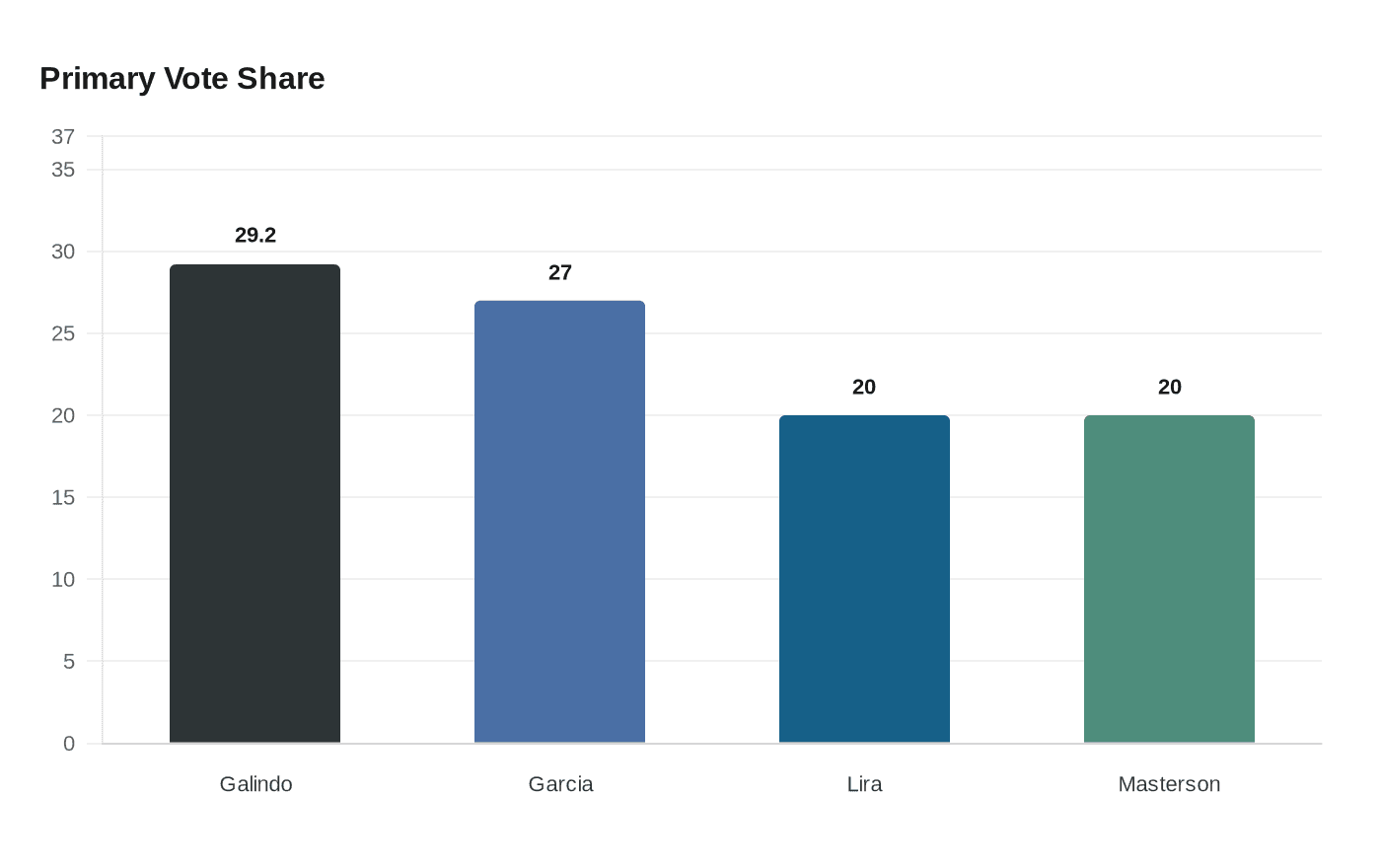
Maureen Galindo’s leap from local housing activism to the center of a congressional runoff is a reminder that protest energy can carry a candidate far before a broader electorate takes a closer look. Galindo is 38, a marriage and family therapist with graduate training in community psychology, and her political identity was shaped by a fight over displacement in downtown San Antonio, where she opposed the redevelopment of her apartment complex into a baseball stadium. She later ran unsuccessfully for San Antonio City Council in 2025, then entered the Texas 35th Congressional District race and finished first in the March Democratic primary with 29.2% of the vote, or 15,931 votes. Her campaign stayed remarkably small, with $9,451.78 raised, $11,389.56 spent, and $2,169.80 cash on hand by March 31.
Why the rhetoric is more than a side issue
What has turned Galindo into a party problem is not simple disagreement over foreign policy, but the way her online rhetoric has blurred criticism of Israel into conspiracism about Jews, Zionism and hidden power. Reporting has detailed a Facebook video in which she warned about Jews working with Christian Zionists to hasten the Rapture, along with social posts invoking claims about Jews controlling Hollywood and casting Israel-linked money in suspicious terms. That kind of language does not read as ordinary progressive dissent. It reads as a move from political anger into paranoia, and it is exactly the sort of material that gives party leaders reason to worry about a general-election collapse in a district they cannot afford to lose.
A runoff that exposed the coalition problem
Galindo’s primary lead did not come from commanding a broad party consensus. Johnny Garcia, a Bexar County sheriff’s deputy, finished second with 27.0%, while John Lira and Whitney Masterson-Moyes each landed around 20%, a split that pushed the race into a runoff and made the eventual nominee vulnerable to factional energy rather than coalition discipline. Both Lira and Masterson-Moyes have since endorsed Galindo, which only sharpens the question now facing Democrats: will the runoff reward the most activated lane of the party, or the candidate most likely to survive November? That question matters because the redraw made TX-35 a red-leaning district that stretches from San Antonio into Guadalupe, Wilson and Karnes counties, is 57% Hispanic, and would have gone to Trump by about 10 points under the new lines in 2024.
Why leaders are moving early to Garcia
National Democrats are not waiting for the runoff to settle the matter on its own. The Democratic Congressional Campaign Committee added TX-35 to its Districts in Play list and then placed Garcia into its Red to Blue program, which brings organizational support, staffing help, training and fundraising assistance. Democratic Majority for Israel has also launched an ad campaign for Garcia, an unusually direct intervention that shows how seriously pro-Israel Democrats view the risk of nominating Galindo. In effect, party leaders are signaling that electability now includes a moral test: criticism of Israeli policy may be tolerated, but rhetoric that treats Jews, Zionists or pro-Israel donors as conspiratorial actors is being treated as politically poisonous.
What this says about Democratic primary dynamics
TX-35 is becoming a case study in how crowded primaries can elevate candidates who thrive on online attention, low spending and ideological intensity even when their general-election appeal is uncertain. Galindo’s path through the field, built on a shoestring campaign, shows how a candidate can convert a narrow activist base into a first-place finish before broader vetting catches up. The district’s new map only heightens the stakes, because Democrats are trying to defend a seat that was drawn to favor Republicans while also proving they can keep Hispanic voters and moderates inside a workable coalition. If the party wants to win seats like this, it cannot keep pretending that every form of outrage is politically equivalent.
Where Democrats are drawing the line
The line inside the party is clearer than it sometimes looks from the outside. In 2023, the Texas State Democratic Executive Committee unanimously passed a resolution calling for a humanitarian ceasefire, the release of hostages, condemnation of terrorism, and stronger protections against antisemitic and Islamophobic hate crimes. At the same time, Texas Democrats are now considering a fresh round of resolutions that condemn Israel, call for an arms embargo, and even propose penalties for candidates who accept pro-Israel support. That split captures the central lesson of the Galindo race: there is still room in Democratic politics for criticism of war, occupation and U.S. policy, but once that criticism slides into demonization of Jews or conspiracies about hidden Jewish power, it stops being principled dissent and becomes a liability to the coalition itself.
This article was produced by Prism’s automated news system from verified source data, official records, and press releases, then run through automated quality and moderation checks before publishing. The system is built and supervised by the people who set the standards it runs under. Read our full AI policy.
Did this article answer your question?

