McCormick says Pennsylvania can power AI boom and energy future
McCormick is betting Pennsylvania’s gas, nuclear plans and data-center buildout can make it an AI powerhouse, but the same boom could strain grids and raise costs.
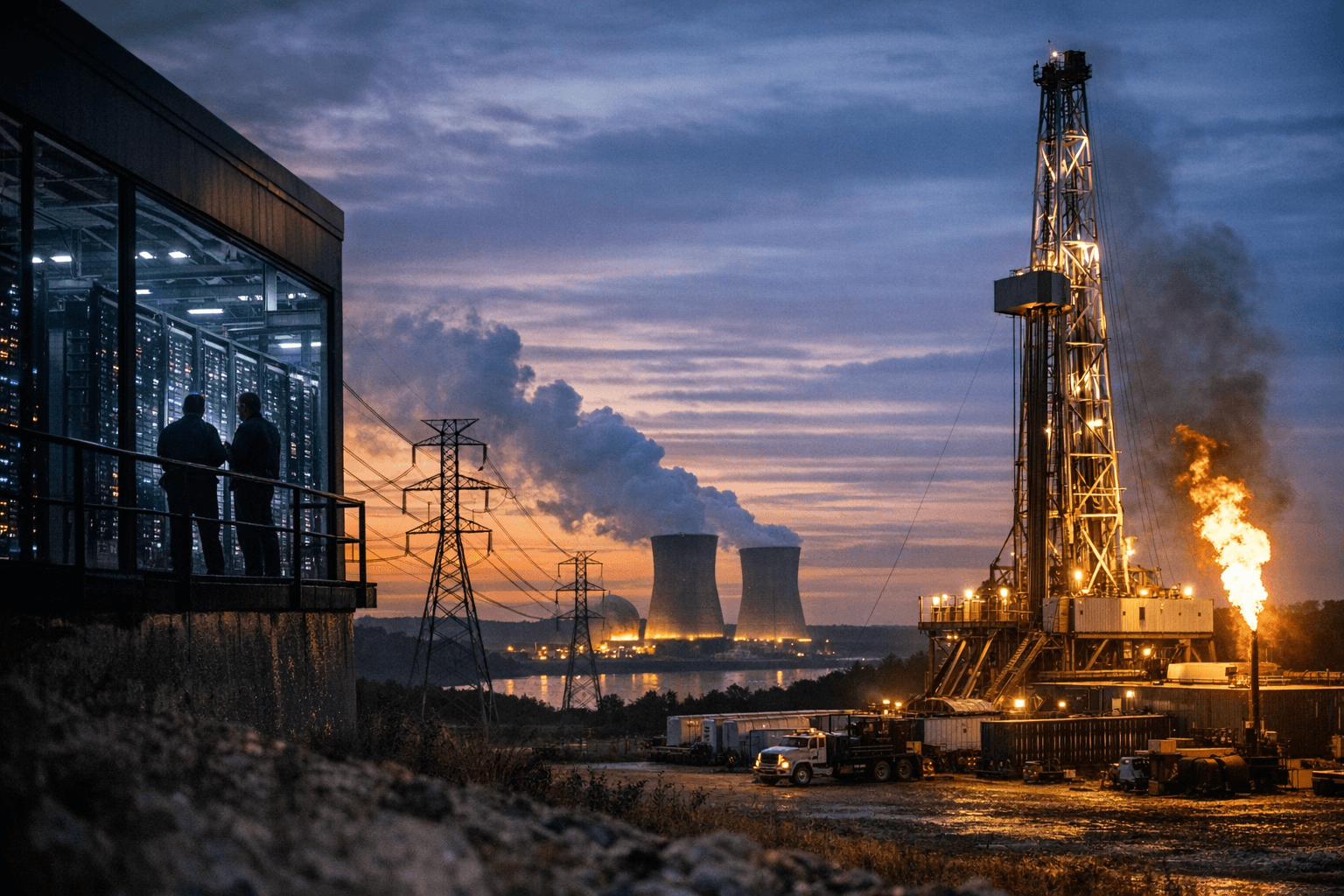
McCormick is making a blunt economic case: the next phase of artificial intelligence will be won not only in chip factories and software labs, but in places that can deliver enough electricity to keep giant data centers running. In a web exclusive interview with Robert Costa, the Pennsylvania Republican tied AI leadership to energy supply, rivalry with China and nuclear power, arguing that Pennsylvania is positioned to help power the boom.
Pennsylvania’s energy pitch
McCormick’s argument rests on scale. He has said Pennsylvania is the nation’s second-largest energy producer, holds the fourth-largest natural gas reserves in the world and already hosts 79 data centers hungry for power. That combination gives his case political force at a moment when AI demand is forcing states, utilities and tech companies to think less like software buyers and more like infrastructure builders.
The broader logic is straightforward: if AI companies need immense and reliable electricity, then energy-rich states have leverage. Pennsylvania’s pitch is that it can offer the fuel, the land, the industrial base and the transmission buildout to support new generation of computing. That makes the state part of the infrastructure race behind AI, where the bottleneck is increasingly not just chips but the power needed to run them.
The summit that turned a message into a market
McCormick turned that message into a public campaign at the inaugural Pennsylvania Energy and Innovation Summit, held July 15, 2025, at Carnegie Mellon University in Pittsburgh. At the event, companies announced more than $90 billion in investments spanning data centers, energy and power infrastructure, and workforce and AI training projects. McCormick and Donald Trump used the summit to present those commitments as a down payment on a larger industrial strategy.
McCormick later said the investments could create tens of thousands of jobs and help place Pennsylvania at the center of America’s AI and energy revolutions. That framing matters because it links the AI boom to wages, construction, manufacturing and long-term tax base growth, not just to software-sector expansion. For state leaders, the promise is that AI infrastructure can become a new engine for regional development, especially in places with existing industrial capacity and access to fuel.
The summit also underscored how intensely the AI economy is becoming capital-heavy. Data centers, grid upgrades, energy projects and training programs all require long lead times and large upfront spending, which means the states that can move fastest may capture the biggest share of future investment. Pennsylvania is trying to present itself as one of those states.
The backlash: grid stress, prices and lost open space
The buildout is not being welcomed everywhere. In Archbald, in northeastern Pennsylvania, community members have opposed proposed data centers, citing concerns about landscape and environmental loss. Their resistance reflects a broader unease that AI infrastructure, while economically powerful, can reshape local land use quickly and with limited public input.
Utilities and energy stakeholders have also raised a more system-wide warning: data-center growth could increase stress on the electric grid and raise costs for regular customers. That concern has taken on more weight with a Pennsylvania Public Utility Commission report released September 12, 2025, which identified data centers, electric vehicles and battery storage as key drivers of future electricity demand and reliability planning. The report makes clear that the AI boom is no longer a niche technology issue. It is becoming part of the state’s core planning for power adequacy and resilience.
That tension is central to McCormick’s pitch. The same projects that could generate investment and jobs may also intensify competition for transmission capacity, raise questions about who pays for new infrastructure and test whether the state can balance industrial growth with affordability. In other words, the AI opportunity and the grid challenge are the same story.
Why nuclear power is back in the frame
McCormick has pointed to nuclear power as a key part of that answer, saying Pennsylvania’s energy future includes new natural gas and nuclear power. He has also cited Westinghouse’s role in plans to build ten large-scale nuclear reactors by the end of the decade. Nuclear is appealing in this debate because it offers large-scale, steady power at a time when tech firms want round-the-clock electricity that can support data centers without the variability of some other sources.
That is part of a much bigger national trend. CBS News has reported that major tech companies including Microsoft, Google and Amazon have invested in nuclear power to support AI-related electricity demand. Their interest shows that the AI race is pushing some of the world’s largest firms toward long-duration power assets, not just cloud contracts and semiconductors.
The investment logic is clear: AI companies need reliable baseload power, and nuclear can provide it. For Pennsylvania, that makes its old industrial identity newly relevant. The state’s energy assets, if matched with permitting, construction and transmission capacity, could give it an outsized role in the next phase of the AI economy.
The U.S.-China competition behind the power race
McCormick’s comments on China point to the geopolitical dimension of all this. AI leadership is increasingly a contest over industrial depth, energy supply and the ability to scale physical infrastructure fast enough to keep up with computing demand. The United States may lead in many AI tools and companies, but the race still depends on who can build and power the system underneath them.
That is why Pennsylvania matters beyond state politics. If the U.S. wants to maintain an edge over China in AI, it will need more than model development and chip design. It will need power plants, grid upgrades, nuclear projects, fuel supply and the local permission to build them. McCormick’s argument is that Pennsylvania can supply a large share of that backbone.
The bet is ambitious, and the stakes are national. If Pennsylvania can turn energy abundance into AI infrastructure, it could become a model for how America competes in the next industrial cycle. If it cannot solve the grid, cost and siting problems that come with the boom, the AI race will expose the limits of even the strongest energy state.
This article was produced by Prism’s automated news system from verified source data, official records, and press releases, then run through automated quality and moderation checks before publishing. The system is built and supervised by the people who set the standards it runs under. Read our full AI policy.
Did this article answer your question?

