McDonald's Guide Explains U.S. Workplace Rights and How to Raise Concerns
A practical, step-by-step guide for McDonald’s crew, shift leads and managers on core U.S. workplace rights and exactly how to raise concerns in franchised and corporate settings.
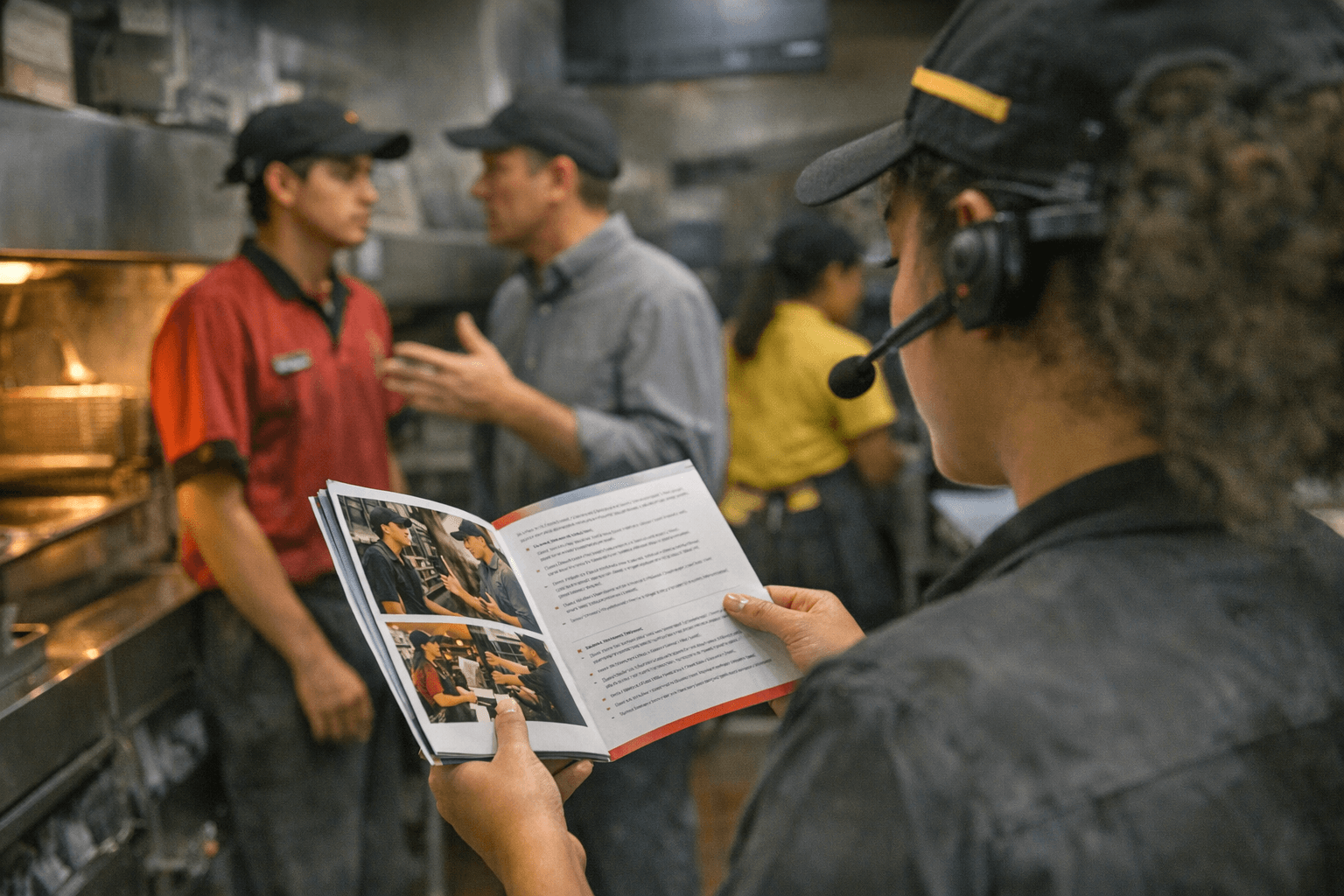
McDonald’s frontline employees, crew, shift leads and restaurant managers, need clear, usable steps when pay, safety, discrimination or scheduling problems arise. This guide lays out the core federal rights that apply to most U.S. restaurants and gives sequential, practical ways to raise concerns inside a franchised restaurant or at corporate-owned locations as of February 27, 2026.
1. Know your basic wage and hour rights (minimum wage, overtime, pay statements)
Workers covered by the federal Fair Labor Standards Act are entitled to a minimum wage and overtime pay for hours worked over 40 in a workweek; many states set higher minimums or different overtime rules. If your paycheck, hours or tip handling look wrong, record the dates, clock-in/out times, scheduled hours and the gross/net pay on each paystub; those documents are the primary evidence federal and state agencies use. When you raise the issue, present the records and ask your manager for a written explanation of timekeeping and pay adjustments.
2. Raise payroll and timekeeping issues first to your manager or shift lead
Start locally: tell your shift lead or the on-duty manager that a payroll discrepancy exists and ask for an immediate review; this is the fastest remedy for simple mistakes like missed punches or incorrect tips. If the manager cannot resolve it, request escalation to the restaurant owner/operator (franchisee) or the restaurant general manager and get an expected timeline in writing, an email or dated note will serve as documentation. If you work at a corporate-owned McDonald’s and the store-level manager does not act, request contact information for the location’s human resources or corporate liaison.
3. Understand how franchising affects who to speak with
Most U.S. McDonald’s restaurants are franchised, which means the owner/operator runs day-to-day operations and is the primary employer for crew and managers; corporate sets standards and brand programs but does not directly handle routine employment decisions at franchised stores. That distinction matters when you escalate: raise issues with the store owner/operator first, because they are typically the employer responsible for pay, scheduling and discipline. Keep a written trail of every step, who you spoke with, their title, date and outcome, so you can show whether you exhausted internal options.
4. Document safety hazards and use OSHA protections for serious risks
You have a right to a safe workplace; the Occupational Safety and Health Administration enforces protections against imminent threats such as unsafe equipment, severe chemical exposures, or unguarded machinery. If a hazard is immediate, tell the shift lead and manager and insist on corrective action; if the risk persists, document the condition with date-stamped photos where safe to do so, notes of who you alerted, and any responses. If the employer does not address the hazard, you may file a complaint with OSHA, retain copies of your internal reports when you do.
5. Report discrimination, harassment or retaliation to HR and external agencies
Title VII (race, sex, religion, national origin), the Americans with Disabilities Act and other federal laws prohibit workplace discrimination and harassment; state laws often provide additional protections. Raise the complaint with your store manager or owner/operator and request that it be handled according to company policy; if the restaurant has an HR contact for employees, follow that channel and get confirmation that your complaint was received. If internal processes fail, file a charge with the Equal Employment Opportunity Commission or your state civil rights agency, keep your internal complaint record and any witness names and statements for investigators.
6. Know your right to organize and discuss pay
Federal labor law protects most non-supervisory employees who discuss wages, benefits and workplace conditions; the National Labor Relations Board enforces those rights. If you face discipline after talking with co‑workers about pay or working conditions, document the context, time, place, who was present, and raise the retaliation with management in writing. If the problem continues, you can contact the NLRB to report unfair labor practices; again, preserve records of your internal complaints.
7. Request leave and accommodations correctly (FMLA, state leave, ADA)
Eligible employees can use the Family and Medical Leave Act for qualifying medical and family reasons; many states also have paid or unpaid leave laws with different eligibility. For a medical accommodation or leave, notify your manager or HR that you are requesting an accommodation or FMLA leave and specify the reason in writing; provide supporting medical documentation as required by policy. Maintain copies of all requests and medical forms; if the employer denies a lawful request, that documentation will be essential should you escalate to a state labor department or the Department of Labor.
8. Use a clear escalation path: who to contact and when
1. Tell your shift lead or on-duty manager immediately and request written acknowledgement of the complaint.
2. If unresolved in the timeframe given, escalate to the restaurant owner/operator or general manager and ask for a remedy in writing.
3. If the store is corporate-owned, request contact details for the location’s human resources representative or corporate HR.
4. After exhausting internal options, contact the appropriate external agency (DOL for wages, OSHA for safety, EEOC for discrimination, NLRB for union issues). At each step, keep copies of your written complaints and any responses.
9. What to do if you face retaliation
Retaliation, such as schedule changes, discipline, demotion or firing after you complained, is unlawful under many federal and state statutes when the complaint was protected activity. If you suspect retaliation, preserve evidence: prior schedules, performance reviews, messages, witness names and any disciplinary notices. File a written complaint internally first; if the employer retaliates externally, seek guidance from the relevant agency (DOL, EEOC, NLRB) and include your internal timelines and documentation when you file.
- Keep pay stubs, time cards, schedules and screenshots of shift app records in a folder.
- Date every written complaint and keep copies of emails, texts and messages with managers.
- Note witness names and short statements, who heard or saw the incident and when.
10. Practical documentation tips that strengthen your case
Consistent, chronological documentation is the most useful currency when investigators or lawyers review a case.
11. When to involve outside help: agencies, legal aid, and unions
Use government enforcement agencies for statutory violations: Department of Labor for wage disputes, OSHA for safety, EEOC/state agencies for discrimination, and the NLRB for collective activity issues. If an agency route is slow or complex, legal aid clinics, workers’ centers and employment lawyers can advise on strategy, many will evaluate cases without upfront fees. Remember that unions and collective bargaining change how disputes are handled; organizing or joining an existing union will alter the procedures for grievances and bargaining.
12. Corporate programs and real-world limits: what to expect
McDonald’s public programs like education and training can be helpful, examples such as Archways to Opportunity celebrate program milestones and give employees options, but they do not replace legal rights or the employer’s obligations under labor and safety laws. Celebrate or use corporate resources when they’re available, but when legal rights are at stake, pay, safety, discrimination, follow the statutory pathways and document every internal attempt to resolve the issue.
Conclusion You do not have to accept unclear pay, unsafe conditions, or illegal discipline. As a McDonald’s crew member, shift lead or restaurant manager, follow the sequence laid out here: document precisely, raise the issue locally, escalate to the owner/operator or HR in writing, and then bring the matter to the relevant federal or state agency if necessary. Keep records, names and dates, the legal protections are real, but they are enforced through facts and timelines you collect.
Know something we missed? Have a correction or additional information?
Submit a Tip