Meet the Artemis II Crew, Four Astronauts Who Stand Out Among Super Achievers
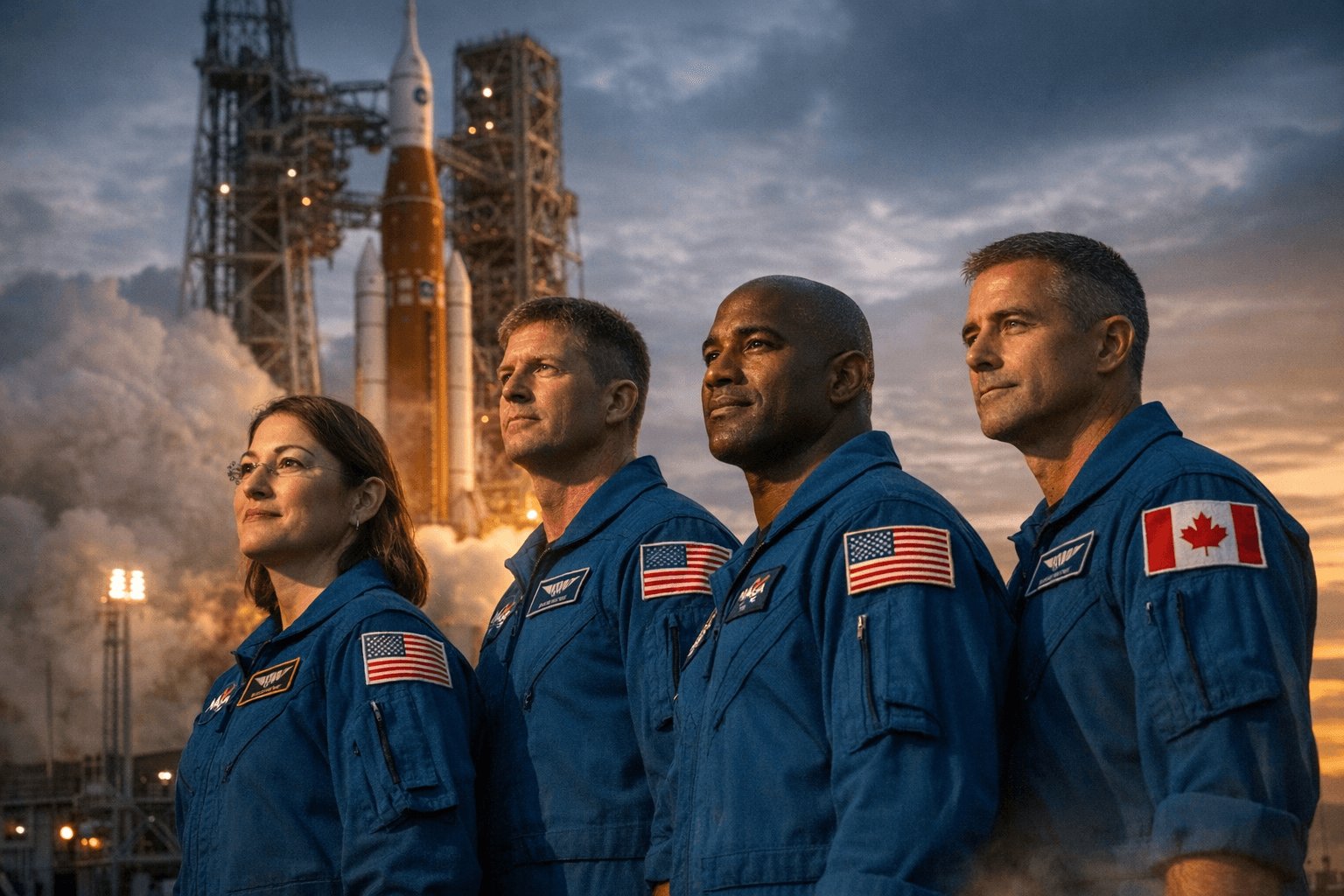
Four astronauts carrying a combined century of elite military and scientific training launched toward the Moon on April 1, 2026, making history in ways the U.S. hasn't seen since 1972.
Reid Wiseman: The Commander Who Has Thought of Little Else
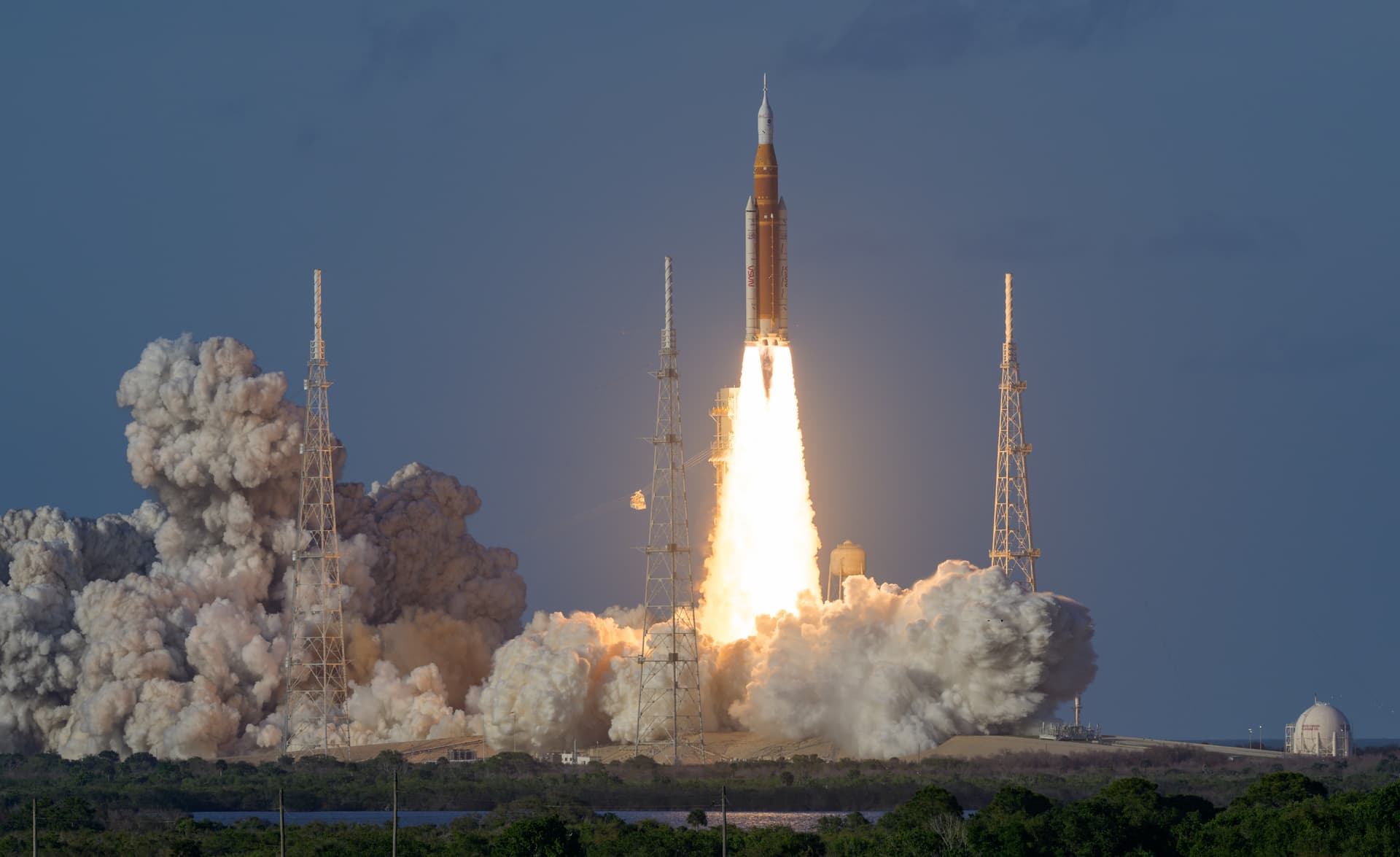
The moment the 322-foot Space Launch System ignited at Launch Complex 39B and cleared the tower on April 1, Reid Wiseman became the first commander of a lunar mission since Gene Cernan closed the Apollo 17 hatch in December 1972. At 50, he is also the oldest human to travel beyond low Earth orbit. Those two distinctions alone would mark him in the history books, but they only hint at the depth of preparation behind his selection.
Wiseman is a Navy captain and veteran aviator who deployed twice to the Middle East. He attended the U.S. Naval Test Pilot School at Patuxent River, graduating in 2004, and later earned a master's degree in systems engineering from Johns Hopkins University. His test work on the F/A-18 and F-35C Lightning II placed him in a tradition that has long served as a pipeline to the astronaut corps, alongside predecessors like John Glenn and James Lovell. NASA selected him in 2009, and he spent 165 days aboard the International Space Station during Expedition 41 in 2014, conducting more than 300 scientific experiments. He later served as Chief of the Astronaut Office from December 2020 through November 2022, shaping the very program he now leads from the commander's seat.
Personal resilience is woven into his professional profile. Since losing his wife in 2020, Wiseman has been raising two daughters as a single parent, a fact his official NASA biography names as his greatest challenge and most rewarding phase of life. For a mission that will take the crew farther from Earth than any human has ventured in more than 50 years, that kind of tested resolve matters as much as any flight certification.
Victor Glover: Precision Pilot, Barrier Breaker
Victor Glover will become the first Black person to fly to the Moon. He graduated from California Polytechnic State University with a degree in general engineering in 1999, was commissioned in the U.S. Navy, and flew combat missions during the Iraq War. His academic credentials extend well beyond that first degree: he also holds master's degrees in flight test engineering, systems engineering, and military operational art and science, a stack of qualifications that reflects a deliberate, methodical ascent.
Glover's path to NASA included a distinguished career in the U.S. Navy, where he logged more than 3,500 flight hours across over 40 aircraft and flew numerous combat missions. He flew the F/A-18 Hornet, Super Hornet, and EA-18G Growler, and graduated from the U.S. Air Force Test Pilot School, an unusual inter-service credential that speaks to the breadth of his technical portfolio. NASA selected him as an astronaut in 2013.
His first spaceflight, as pilot of SpaceX Crew Dragon "Resilience" on the Crew-1 mission in November 2020, made him the first Black astronaut to complete a long-duration stay on the ISS. During his 168 days in space as a station systems flight engineer, he contributed to scientific investigations, technology demonstrations, and participated in four spacewalks. That hands-on systems experience, earned in the actual operational environment of microgravity, directly supports his responsibilities piloting the Orion spacecraft through a high-speed lunar reentry profile no crew has executed in the modern era.
Christina Koch: Record Holder, Ready for the Next Frontier
Christina Koch spent 328 days in space from 2019 to 2020, setting the record for the longest continuous spaceflight by a woman and participating in the first all-woman spacewalk. She will now add another singular distinction: the first woman to travel to the vicinity of the Moon. Her path to that milestone was anything but linear, and the detours are precisely what make her such a capable mission specialist.
Koch holds dual bachelor's degrees in electrical engineering and physics, as well as a master's degree in electrical engineering, and has a diverse professional background, having worked at the NASA Goddard Space Flight Center and NOAA. Before joining the astronaut corps, she spent more than three years working at some of Earth's most remote Antarctic research stations, gaining firsthand experience of isolation, equipment failure in brutal conditions, and decision-making with limited resources: conditions that map directly onto what a crew faces hundreds of thousands of miles from the nearest rescue.
Aboard the ISS during Expeditions 59, 60, and 61, she surpassed Peggy Whitson's record for consecutive days in space, and she and Jessica Meir completed the first all-female spacewalk, spending more than seven hours outside the station. Koch's deep familiarity with Orion's predecessor systems, life support protocols, and the physiological demands of long-duration spaceflight makes her a critical resource for a crew that must operate autonomously at lunar distances, where communication delays with mission control are not a bureaucratic inconvenience but a genuine operational constraint.
Jeremy Hansen: The Rookie Who Earned His Seat
Jeremy Hansen carries a distinction that sets him apart from every other astronaut in Canadian history: he will be the first Canadian, and the first non-American, to travel beyond low Earth orbit. As a mission specialist aboard Artemis II, he arrives at the Moon's doorstep without a single prior spaceflight on his record, making him the lone rookie on a crew of hardened veterans.
That label is largely cosmetic. Hansen is a mission specialist representing the Canadian Space Agency, and his background as a Royal Canadian Air Force CF-18 fighter pilot reflects a career built on high-stakes decision-making under pressure. Selected by the CSA in 2009 in the same class cycle that brought Wiseman into the NASA corps, Hansen has spent more than 15 years in astronaut training, simulation, and support roles, including serving as Capcom, the astronaut voice communicating with crews aboard the ISS from mission control. He understands how human judgment intersects with spacecraft systems from both sides of the radio link.
His role on Artemis II is not ceremonial. The mission's primary objective is to validate Orion's systems with a live crew, confirming that the spacecraft performs as designed under the actual stresses of deep space: radiation exposure, high-speed reentry at roughly 25,000 miles per hour, and the psychological weight of operating far beyond any rescue threshold. Every crew member, regardless of seniority, carries direct responsibility for monitoring systems, responding to anomalies, and exercising independent judgment. For Hansen, the Moon mission is also a down payment on a larger Canadian commitment to the Artemis program, which includes Canadian contributions to the Gateway lunar space station and, eventually, a Canadian landing on the lunar surface.
A Crew Built for What Comes Next
Artemis II is not a science mission. It is a certification flight, designed to prove that the SLS, Orion, and the people inside it can do what future missions will require. The 685,000-mile, 10-day journey around the Moon will mark the first crewed mission beyond low Earth orbit in more than 50 years. The crew's combined profiles, test pilots who understand systems at the margins of their design, a record-setting endurance flier who has lived the physiological reality of deep space isolation, and a mission specialist trained for precisely the kind of autonomous decision-making the far side of the Moon demands, represent a deliberate construction rather than an accidental assembly.
NASA's goal is a crewed lunar landing by the mid-2020s. The four people inside Orion's capsule are the first human proof-of-concept for whether that timeline is achievable. Every system check they run, every manual procedure they execute, and every judgment call they make under real mission conditions will feed directly into the planning for Artemis III and beyond. History made on April 1 is history that clears the path for history still to come.
This article was produced by Prism’s automated news system from verified source data, official records, and press releases, then run through automated quality and moderation checks before publishing. The system is built and supervised by the people who set the standards it runs under. Read our full AI policy.
Did this article answer your question?