Menominee County's Adjacent Cultural and Logging Camp Museums Preserve Tribal History
Menominee Cultural and Logging Camp museums protect repatriated artifacts and logging heritage on the Wolf River, bolstering local education, tourism, and cultural stewardship.
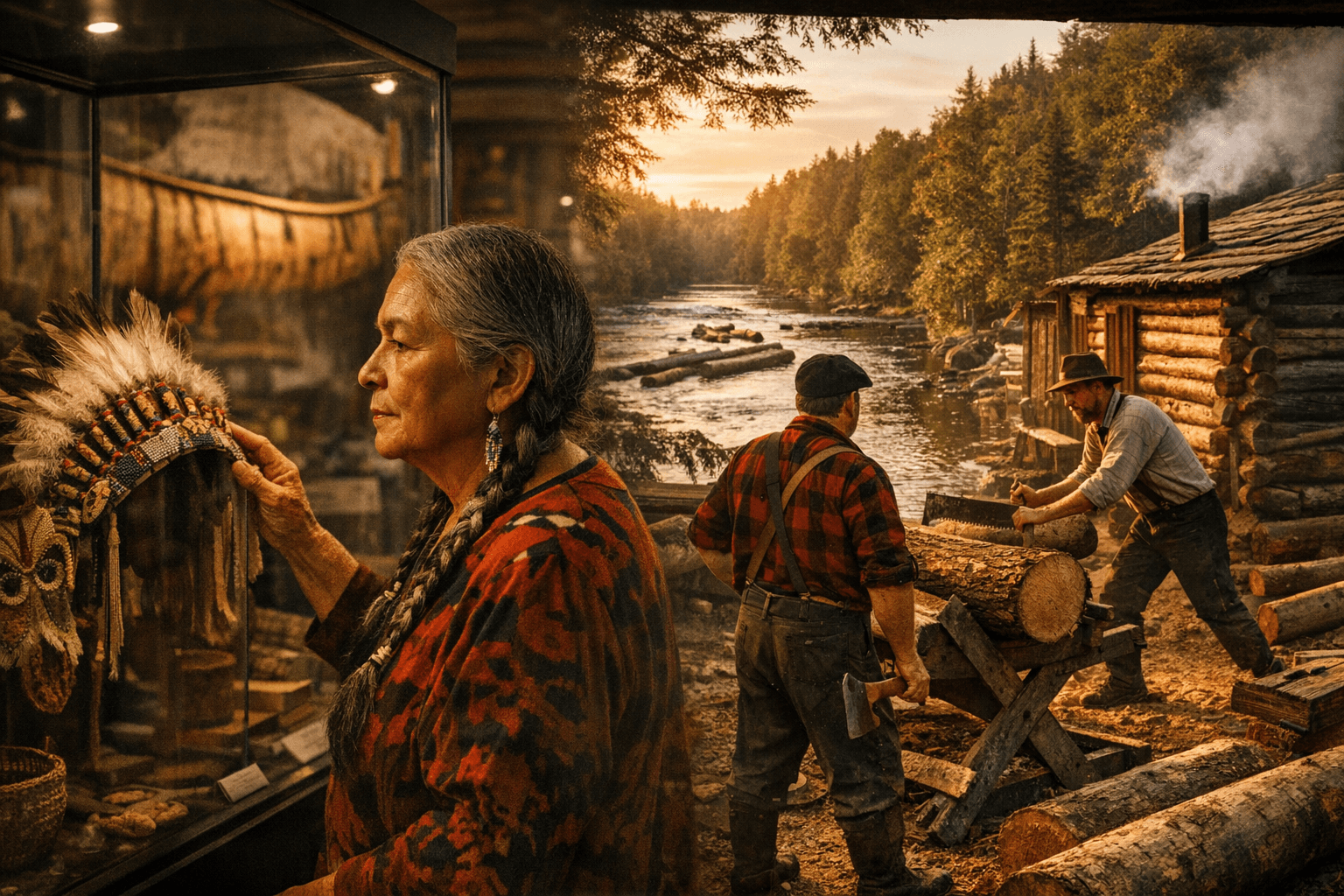
Nestled on tribal historic preservation grounds along the Wolf River at Grignon Rapids, just below Keshena Falls, two adjacent institutions anchor Menominee County’s cultural tourism and heritage work. The Menominee Cultural Museum is a state-of-the-art, environmentally controlled 6,000-square-foot building completed in spring 2010 that houses artifacts repatriated under the Native American Graves Protection and Repatriation Act. Next door, the Menominee Logging Camp Museum preserves seven original log buildings and a vast archive of logging tools and equipment.
The Cultural Museum’s weekday hours are Monday–Friday, 8:00 a.m. to 4:30 p.m., and group tours are available by appointment. The Logging Camp Museum traditionally operates seasonally, open May through October from 8:00 a.m. to 4:30 p.m., also offering guided tours by appointment. Published admission figures list Cultural Museum rates at $5 for adults, $3 for children ages 5–7, $3 for seniors 55+, and $4 for groups of 10 or more. Logging Camp admission is listed at $10 for adults, $5 for children 5–7, $8 for seniors, and $7 for groups. The street address in public materials is W3426 County Hwy. VV, Keshena; a primary public phone contact appears as (715) 799-5258.
The Logging Camp complex is presented as an immersive reconstruction of Wisconsin’s early logging industry. Museum materials promise that “the seven log buildings of the complex will bring back the roaring times of the earliest days of Wisconsin’s first industry, logging,” and a regional visitor guide even proclaims it holds “the largest collection of logging artifacts in the world; yes, we said ‘IN THE WORLD!’” The camp’s bunk-house, cook shanty, wood butcher’s shop, blacksmith shop, saw filer’s shack, horse barn, and old-time camp office are each reported to contain thousands of artifacts, including crosscut saws (so-called “misery whips”), peaveys, cant hooks, and specialized axes that trace the shift from hand-logging to early mechanization.
Beyond tourism, these sites are central to tribal stewardship and education. The Menominee Tribal Historic Preservation Office will maintain and enhance both museums and run cultural craft workshops, youth culture camps, and community events such as the Sturgeon Feast & Celebration Powwow under a Cultural Treasures initiative funded through regional philanthropic partnerships. The museums are also pitched as an economic asset: the tribe’s long record of sustainable forest management—more than 150 years, according to interpretive material—supports a reputation that local guides say connects Menominee wood to flooring markets worldwide and underpins a living-classroom narrative for forestry policy and practice.
For Menominee County, the museums combine cultural preservation with steady educational visitation—materials target Grades PK–12 for field trips—and modest admission revenue. Residents and local businesses benefit from the museums’ draw to Keshena Falls and the Wolf River corridor, but some promotional claims (for example, competing “largest” superlatives) and phone-contact discrepancies in public listings merit confirmation with museum staff. For visitors planning a trip, verify current hours, seasonal openings, and ticketing before you go; the museums’ location at W3426 County Hwy. VV and the listed phone contact (715) 799-5258 are the most consistently published details. Preserving artifacts and logging buildings today helps protect Menominee knowledge systems and supports a tourism and education pipeline that will matter to the county’s cultural economy for years to come.
Sources:
Know something we missed? Have a correction or additional information?
Submit a Tip