Messi leads Argentina past Netherlands in World Cup thriller
Messi scored, won man of the match and survived a 17-card quarter-final, then carried Argentina to its third World Cup title and his first.
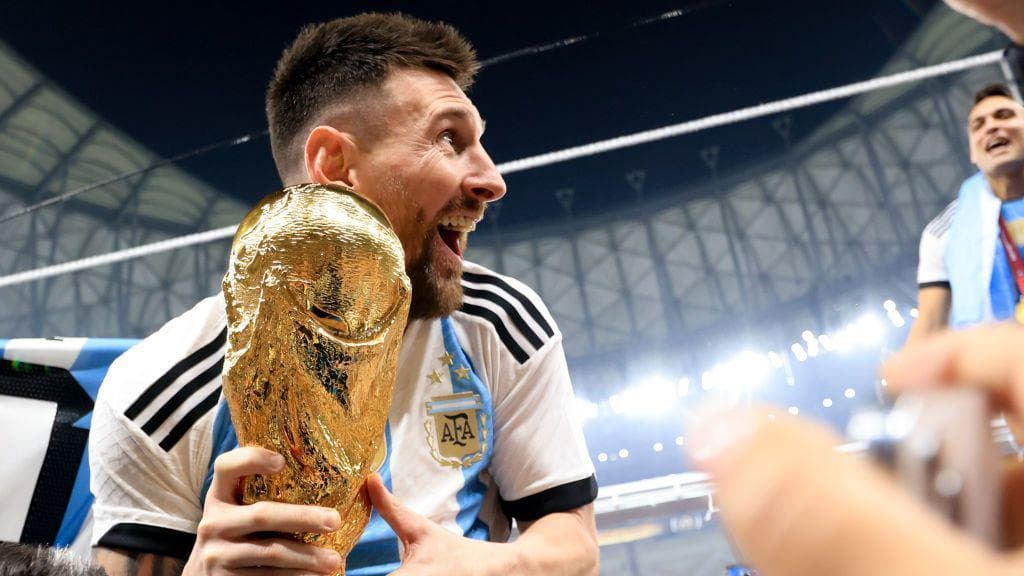
Lionel Messi was still the name that mattered most, even with Kylian Mbappe and Erling Haaland shining on the world stage. In a World Cup built around a changing of the guard, Messi controlled the narrative again, dragging Argentina through one of the tournament’s most volatile nights and into a run that ended with the trophy in his hands.
Argentina’s quarter-final against the Netherlands on December 9, 2022, in Lusail, Qatar, finished 2-2 after extra time and 4-3 on penalties, with Messi scoring once and taking man of the match honors. It was a game defined by pressure and disorder as much as skill: 17 yellow cards were shown, a World Cup record for a single match. Messi later criticised referee Antonio Mateu Lahoz, underscoring just how combustible the contest had become.

That result mattered beyond the score line. It kept Argentina’s pursuit of a third men’s World Cup title alive and showed that, even in a tournament crowded with elite young forwards, Messi remained the player most capable of bending the biggest stage to his will. The Netherlands match was not just a wild quarter-final; it was a signature Messi performance, one that combined execution, emotion and control when the margin for error was gone.

He carried that momentum all the way to the final on December 18, 2022, where Argentina and France played out another 3-3 thriller before Argentina won 4-2 on penalties at Lusail Stadium. The victory gave Messi the one major trophy that had eluded him and secured Argentina’s third men’s World Cup title, following triumphs in 1978 and 1986. Messi also set the record for the most FIFA World Cup appearances by any player, reaching 26 matches and passing Germany’s Lothar Matthäus.

The scale of the final only sharpened the moment. With a reported 1.5 billion viewers watching on television worldwide, Messi’s run was not just a personal payoff but a global sporting event that reinforced his place in the game’s history. Mbappe and Haaland may have represented the future, but in Qatar, Messi still defined the present, and in the process helped define the tournament itself.
This article was produced by Prism’s automated news system from verified source data, official records, and press releases, then run through automated quality and moderation checks before publishing. The system is built and supervised by the people who set the standards it runs under. Read our full AI policy.
Did this article answer your question?
.jpg&w=1920&q=75)