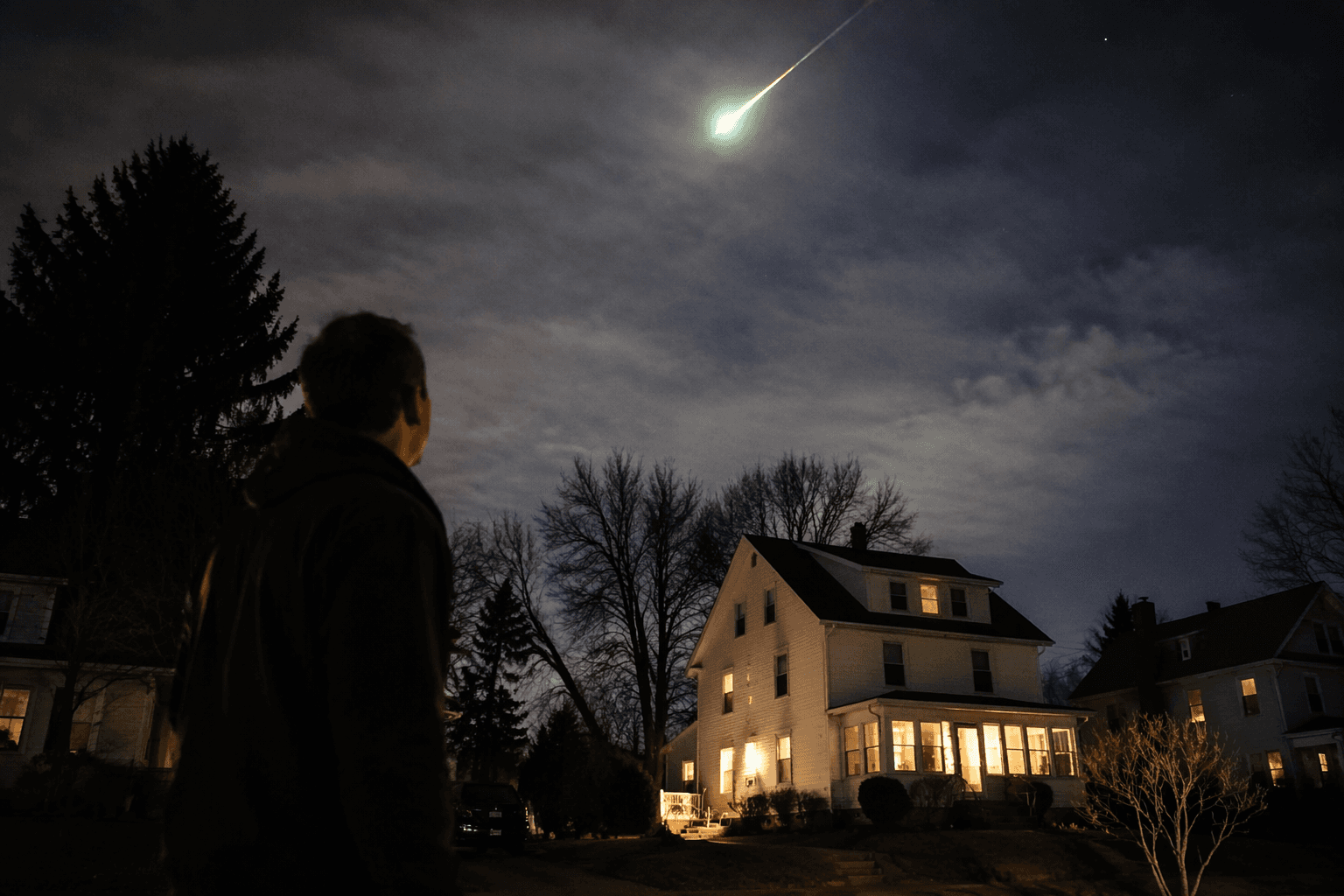
Meteor explodes over Massachusetts, rattling homes across Southern New England
A double boom rattled Southern New England on Saturday, and scientists later traced it to a meteor breakup that sent calls and confusion from Delaware to Montreal.
A sudden double boom rolled across Southern New England on Saturday afternoon, rattling windows, shaking some homes and startling pets before anyone could explain why. Within minutes, people from Boston to Ipswich and Johnston, Rhode Island, were calling newsrooms and emergency agencies as the sound seemed to race across the region.
The reports came in between about 2:06 p.m. and 2:11 p.m. ET, with witnesses describing either one sharp bang or two distinct booms. In Massachusetts and beyond, residents said the noise was strong enough to make them look outside, check for storms and worry about a possible explosion. Dozens of calls went into the WBZ-TV newsroom as police agencies and other local authorities tried to sort out what had happened.
The answer came from the sky. The American Meteor Society said the object was about 3 feet wide and entered the atmosphere near the Massachusetts-New Hampshire border, north of Boston. Robert Lunsford, the society’s Fireball Program Monitor, said the organization received dozens of reports stretching from Delaware to Montreal, including accounts of a daylight fireball, a ground-shaking thump and a double boom heard far from the object’s path.
Later scientific analysis sharpened the picture. NASA said the fireball was detected around 2:06 p.m., traveling about 75,000 miles per hour before it fragmented at an altitude of roughly 40 miles over extreme northeast Massachusetts and southeast New Hampshire. NASA estimated the breakup released energy equal to about 300 tons of TNT, enough to explain the loud booms heard on the ground. Satellite data from NOAA showed a signature consistent with a meteor, and the trajectory suggested the object likely entered over the South Shore near Boston.
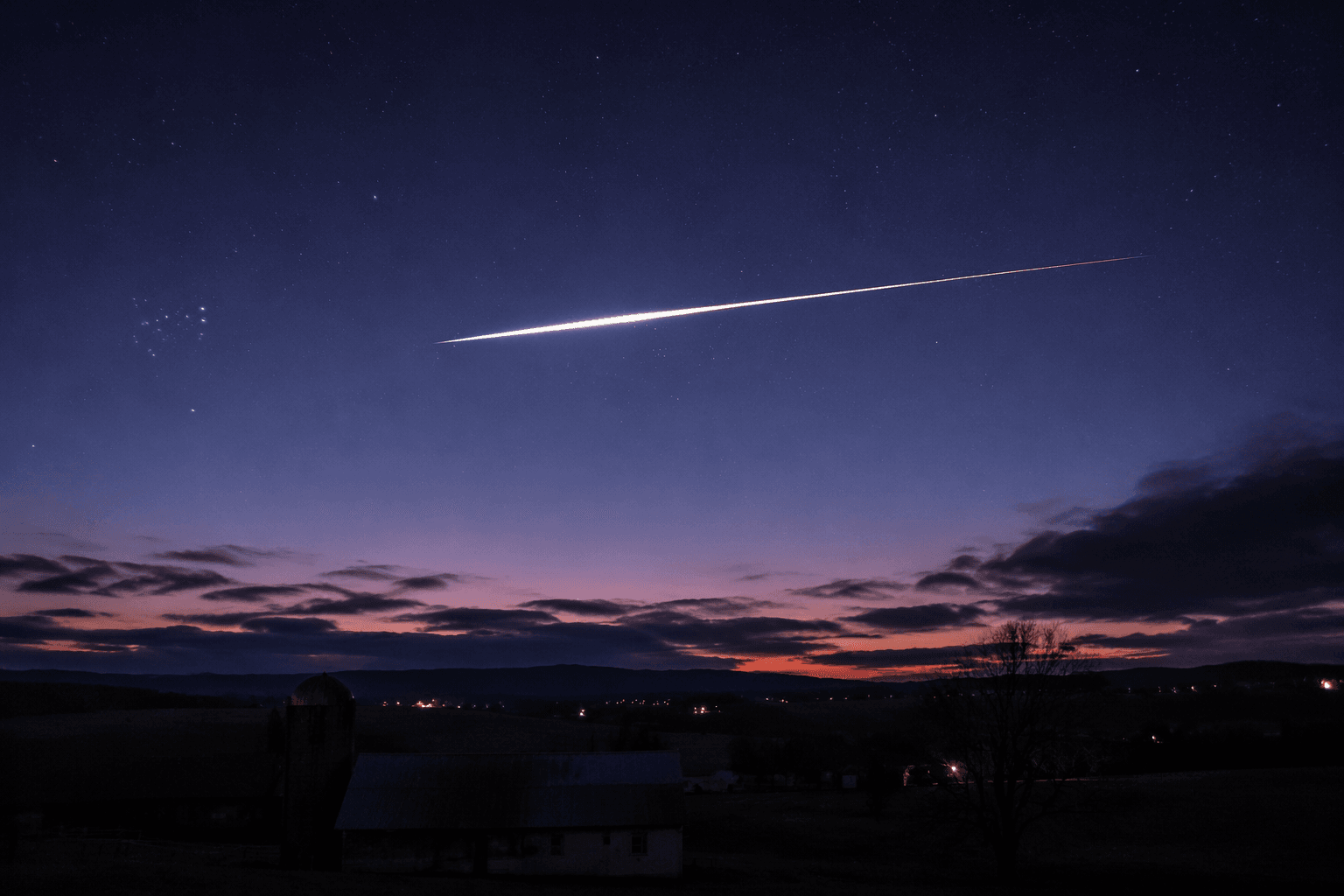
The episode showed how quickly uncertainty can spread when a bright fireball breaks apart in daytime. People heard the shock wave without seeing the source, while others saw the meteor and had no idea where it might land. Lunsford said it was unlikely the object reached the ground, and if it did not burn up completely, it would have fallen into the ocean.
The Massachusetts blast also fit a busy year for fireballs. The American Meteor Society’s first-quarter analysis of 2026 recorded 2,322 total fireball events, including 40 that drew 50 or more reports and 16 that drew 100 or more. In a year already packed with large entries, Saturday’s meteor stood out because it turned a brief flash over New England into a regional alarm that moved faster than the explanation.
This article was produced by Prism’s automated news system from verified source data, official records, and press releases, then run through automated quality and moderation checks before publishing. The system is built and supervised by the people who set the standards it runs under. Read our full AI policy.
Know something we missed? Have a correction or additional information?
Submit a Tip