Mexico City races to finish upgrades before 2026 World Cup kickoff
Mexico City is ripping up Calzada de Tlalpan and scrambling on airport upgrades as it braces for more than five million World Cup visitors and a June 11 kickoff.

Mexico City is racing to finish metro work, airport renovations and street upgrades before the first whistle of the 2026 World Cup, a deadline that has turned the capital into a live test of how much public disruption a global tournament can absorb. With the opening game set for June 11, officials are betting that the city can handle more than five million tourists while keeping people moving through one of Latin America’s most congested capitals. The pressure is especially high because Mexico City is the only city to have hosted three FIFA World Cups, and this tournament is being framed as both a civic showcase and a stress test for transport, crowd flow and public spending.
On Calzada de Tlalpan, work crews are building a pedestrian-and-bicycle corridor that runs for about two kilometers and is scheduled to open in late May. The project has already brought lane closures and heavy congestion to one of the city’s busiest routes, adding to the daily burden on commuters who have little choice but to absorb the disruption. Blanca Abascal, a local teacher, said the roadworks were meant to improve the city for visitors but have left traffic “somewhat chaotic.” For many residents, the message is blunt: the upgrades are being built for the tournament first and for Chilangos later.
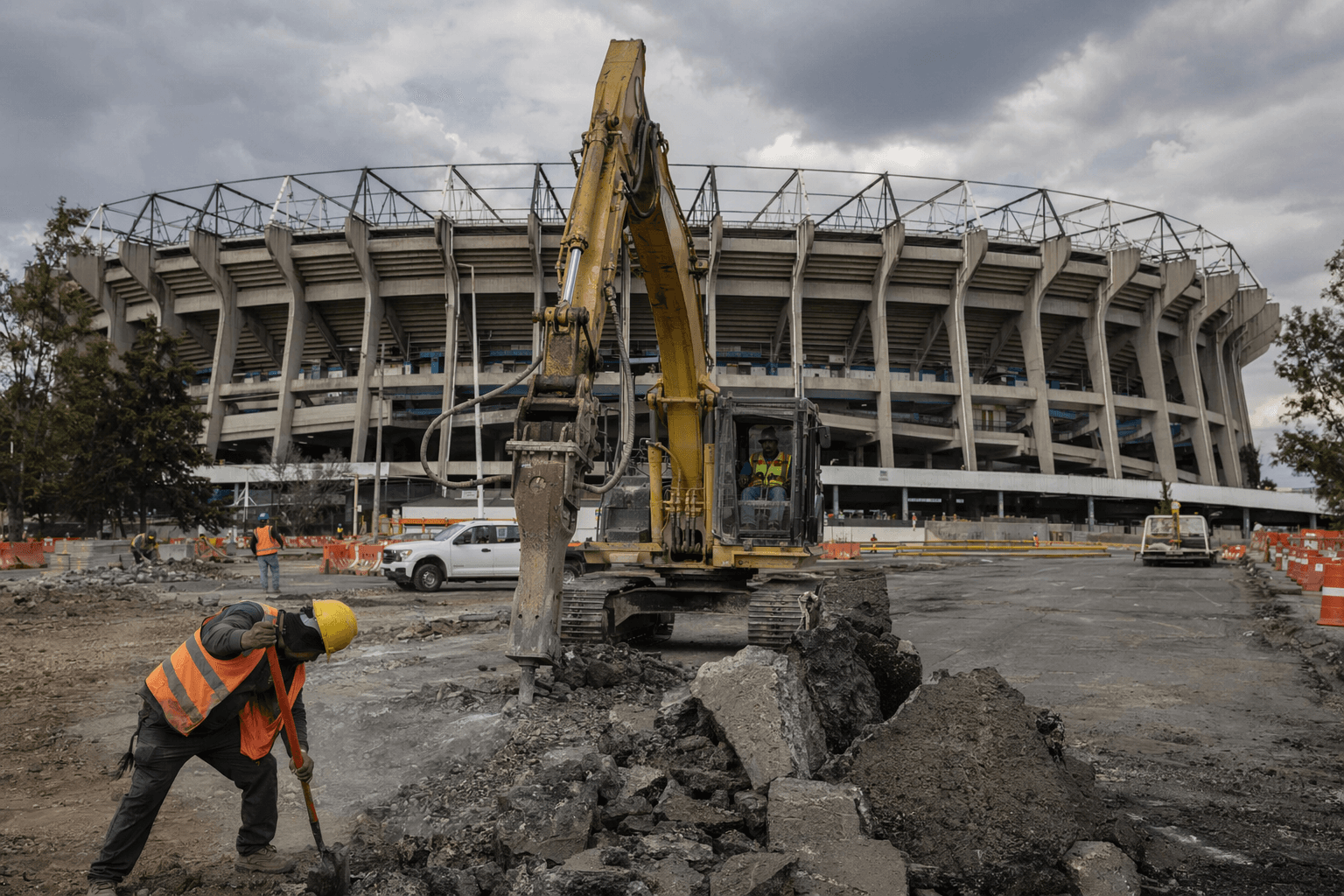
City leaders insist the spending is meant to leave something behind. Clara Brugada said on May 7, 2025, that the World Cup would allow the capital to carry out works that would “remain forever.” Mexico City installed its World Cup committee on October 23, 2024, with a stated goal of preparing for six million tourists, and the city has also described the event as an opportunity to reinforce its cultural identity through legacy infrastructure. That broader plan includes the first phase of a floating pedestrian corridor on Calzada de Tlalpan, the recovery of underpasses and lighting along 32 kilometers of the avenue from the Zócalo to Periférico.
The biggest single mobility challenge is the Mexico City International Airport, which handled 45.4 million passengers in 2024. Renovations to both terminals have been budgeted at about US$386 million, or MX$8.5 billion, and were 15% complete in October 2025, with officials aiming for 70% to 80% completion by the World Cup. The airport work is meant to modernize the country’s main air gateway just as fan traffic, media and support crews begin arriving in force. If the city finishes on time, it will have turned a rushed construction cycle into a durable upgrade. If it slips, Mexico City risks exposing how fragile its readiness still is.
This article was produced by Prism’s automated news system from verified source data, official records, and press releases, then run through automated quality and moderation checks before publishing. The system is built and supervised by the people who set the standards it runs under. Read our full AI policy.
Did this article answer your question?